
Suzaku (ASTRO-EII) — Japanese X‑ray astronomy satellite
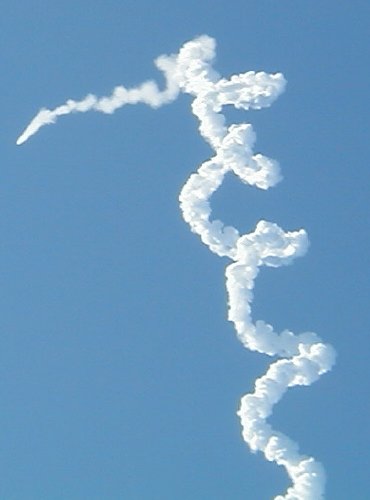
Suzaku (ASTRO‑EII) was a Japanese X‑ray astronomy satellite launched on July 10, 2005 by ISAS. It carried X‑ray telescopes and detectors to study high‑energy astrophysical phenomena and operated until 2015.
Overview
Suzaku, also designated ASTRO‑EII, was a Japanese artificial satellite dedicated to X‑ray astronomy. Launched on July 10, 2005, it was designed to observe high‑energy phenomena such as black holes, supernova remnants, and clusters of galaxies. The mission combined imaging and spectroscopic instruments to measure X‑ray emission across a broad energy range and improve understanding of energetic processes in the universe.
Image gallery
8 Images



Organization and launch
The project was led by the Institute of Space and Astronautical Science (ISAS), then associated with the University of Tokyo, and later part of Japan’s national space agency framework. Suzaku was an example of a national scientific satellite effort: it was funded, built and operated by Japanese institutions and launched into low Earth orbit on July 10, 2005. For more context about Japanese space programs see related resources.
Instruments and capabilities
Suzaku carried a suite of instruments engineered for sensitive spectral and timing measurements. Key payload elements included:
- X‑ray Imaging Spectrometers (XIS) — CCD cameras for imaging and moderate‑resolution spectroscopy;
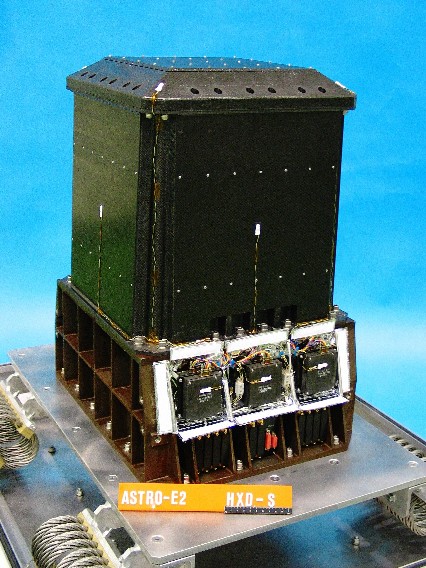
- Hard X‑ray Detector (HXD) — non‑imaging detectors extending sensitivity to higher energies;
- X‑ray telescopes (XRT) — focusing optics to concentrate X‑rays onto the detectors.
These instruments worked together to provide broad energy coverage and improved signal‑to‑noise for faint sources. Technical summaries and data archives are available through institutional pages and mission documents (mission overview).
History and mission outcome
Suzaku was the follow‑up to an earlier Japanese X‑ray mission and carried the ASTRO‑EII name to emphasize continuity with prior projects. During its operational life it produced observations that contributed to studies of cosmic plasmas, relativistic jets, and elemental abundances in supernova remnants. After roughly a decade of service the mission ended when contact and control were lost and the satellite was formally retired in 2015. Mission reports and scientific results can be consulted via institutional archives (mission timeline, research summaries).
Significance and legacy
Suzaku advanced X‑ray spectroscopy and expanded the dataset available to astronomers studying high‑energy astrophysics. Its observations complemented other space observatories and fostered international collaborations. The mission left a legacy of instrument designs, calibration techniques, and a large public archive of X‑ray observations that continue to inform research in the field.
Related articles
Author
AlegsaOnline.com Suzaku (ASTRO-EII) — Japanese X‑ray astronomy satellite Leandro Alegsa
URL: https://en.alegsaonline.com/art/95337
Sources
- isas.ac.jp : "Catalogue of ISAS Missions"