
Summer solstice
The summer solstice is the annual moment when the Sun reaches its greatest declination toward a hemisphere, producing the longest day and inspiring scientific study and cultural celebrations worldwide.
The summer solstice is the instant — and by common usage the day — when the Sun attains its greatest angular distance north or south of the celestial equator. At that moment the Sun appears highest in the sky for observers in the affected hemisphere, and daylight reaches its maximum duration for locations outside the polar circles. Many people use the same word to refer both to the exact astronomical event and to the full day on which it occurs.
Image gallery
7 Images





Astronomical basis
The solstice happens because Earth’s axis is tilted relative to its orbital plane. When one hemisphere is tilted most directly toward the Sun, the Sun reaches its maximum declination there. Astronomers often describe this as the Sun standing still because the apparent daily motion of the Sun northward or southward reverses direction around the solstice; the word derives from Latin solstitium. The precise instant can be calculated, while the popularly observed "longest day" depends on location and is influenced by atmospheric refraction and the definition of sunrise and sunset.
Dates vary slightly from year to year. In the Northern Hemisphere the event typically falls around 20–21 June (sometimes 22 June), when the Sun appears over the northern tropic. In the Southern Hemisphere the summer solstice occurs around 20–22 December, when the Sun is above the southern tropic. The instant of culmination and the civil day can differ because of time zones and leap-year corrections.
Cultural significance and observances
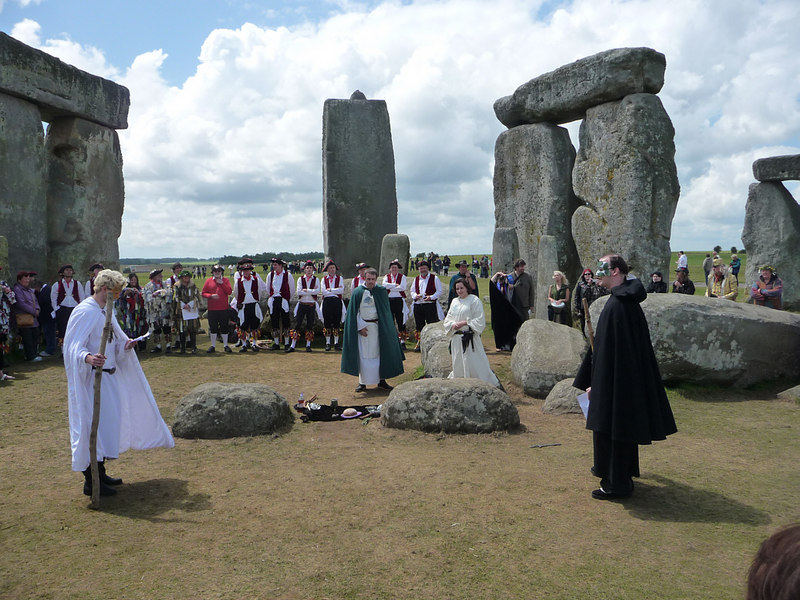
Across history and cultures the summer solstice has attracted attention as a marker of seasons, agricultural cycles and religious rites. Well-known examples include ancient monument alignments, midsummer festivals in northern Europe, and high-sun ceremonies in other regions. Archaeological sites and modern gatherings often mark sunrise or sunset alignments on the solstice.
- Stone monuments and solar alignments have long been associated with the solstice.
- In the north it is often called Midsummer; in parts of the Andes it coincides with important winter/summer rites.
- Inside the Arctic and Antarctic circles the solstice relates to continuous daylight or long polar day.
For clarity, note that the term "solstice" can appear with different emphases: the astronomical instant (the solstice), the pair of seasonal opposites (summer and winter solstices), and the culturally observed day. The Sun itself is central to the definition (Sun), and the hemispheric distinction is important—what is summer in one hemisphere is winter in the other (Southern Hemisphere).
Questions and answers
Q: What is the summer solstice?
A: The summer solstice is when the Sun is at its highest point in the sky during the year.
Q: Does the summer solstice always happen on the same day?
A: No, the summer solstice does not always happen on exactly the same day.
Q: What does the word solstice mean?
A: The word solstice comes from Latin and means "the Sun stands still".
Q: When does the summer solstice occur in the northern hemisphere?
A: The summer solstice occurs around 21 June (20, 21 or 22 of June) in the northern hemisphere.
Q: What does it mean when the sun is at the northern tropic during the summer solstice in the northern hemisphere?
A: When the sun is at the northern tropic during the summer solstice in the northern hemisphere, it means that it's the longest day of the year and the shortest night of the year.
Q: When does the summer solstice occur in the southern hemisphere?
A: The summer solstice occurs around 21 December in the southern hemisphere.
Q: What does it mean when the sun is at the southern tropic during the summer solstice in the southern hemisphere?
A: When the sun is at the southern tropic during the summer solstice in the southern hemisphere, it means that it's the shortest day of the year and the longest night of the year.
Related articles
Author
AlegsaOnline.com Summer solstice Leandro Alegsa
URL: https://en.alegsaonline.com/art/94789