
Sulayman Pasha Mosque (Cairo)
Early 16th‑century mosque in Cairo, built in 1528 by an Ottoman official; an example of early Ottoman influence on Egyptian urban and religious architecture.
Sulayman Pasha Mosque is a historic mosque in Cairo, Egypt, completed in 1528. Erected soon after the Ottoman conquest of Egypt, the building is regarded as part of the early Ottoman presence in the city's long tradition of Islamic architecture. Though relatively modest in scale compared with grand Mamluk monuments, it is valued for illustrating architectural and social shifts in the early 16th century.
Image gallery
6 Images


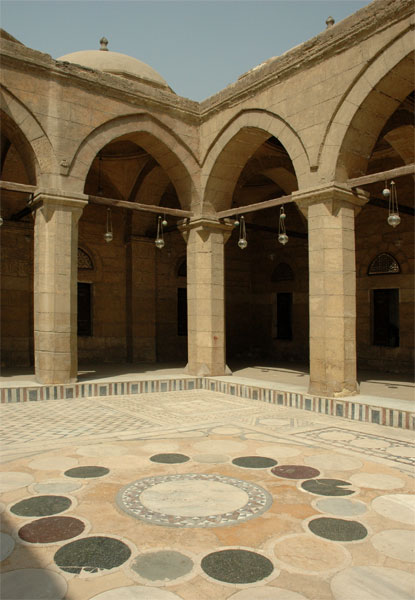
Overview and setting
The mosque served local neighbourhood worshippers and functioned as a focal point for communal life. Located within Cairo's historic urban fabric, it forms part of a dense streetscape of residential buildings, markets and older religious foundations. Its provenance connects it to an Ottoman governor, Sulayman Pasha, who commissioned the foundation to provide a place of prayer and communal gathering.
Architecture and features
The structure follows common mosque elements: a sheltered prayer hall oriented to the qibla, a mihrab indicating the direction of Mecca, and a minaret to call the faithful to prayer. Decorative details show a synthesis of local Egyptian (often called Mamluk) building traditions and new Ottoman tastes introduced after 1517. Typical features include stone and brick construction, restrained exterior massing, and interior ornament such as carved stonework and calligraphic panels.
Historical context
Built in 1528, the mosque belongs to a period when Ottoman rule began to reshape administrative and religious life in Egypt. New patrons from the Ottoman elite funded mosques and charitable complexes, producing buildings that blended imported ideas with established local craftsmanship. The Sulayman Pasha Mosque exemplifies this transitional moment rather than the later large imperial Ottoman mosques of the 17th century.
Function, significance and conservation
Over centuries the mosque remained a working neighborhood house of worship and a marker of Ottoman-era heritage in Cairo. It has attracted attention from historians and conservators for its illustrative value: it helps explain how Ottoman patronage interacted with established Egyptian architectural practice. Like many historic structures in dense urban settings, it has required periodic repairs and conservation efforts to preserve its fabric and use.
Visiting and further reading
- When visiting, observers often note the mosque's compact scale and its integration into surrounding streets.
- Scholars place it among early Ottoman religious buildings in Egypt that warrant comparison with both earlier Mamluk mosques and later Ottoman examples.
- For more context on Cairo's monuments and Ottoman-era changes, consult architectural histories and local guides.
Related articles
Author
AlegsaOnline.com Sulayman Pasha Mosque (Cairo) Leandro Alegsa
URL: https://en.alegsaonline.com/art/94703