
Sung Wong Toi — historic Song-era memorial in Kowloon, Hong Kong
Sung Wong Toi is a carved stone monument in Kowloon commemorating fleeing Southern Song royalty. It survives as a protected relic within Sung Wong Toi Garden and is a local cultural landmark.
Overview
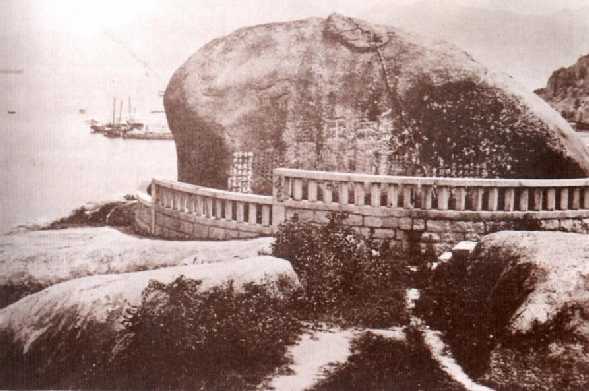
Sung Wong Toi (Chinese: 宋王臺) is a historic carved stone and memorial site located in the Kowloon City area of Hong Kong. The name is commonly translated as "Terrace of the Sung (Song) Kings" and refers to the late-Song dynasty princes who, according to local tradition, took refuge in this region while fleeing the Mongol conquest in the 13th century. The stone stands today in a small landscaped setting called Sung Wong Toi Garden, where it is preserved as a tangible reminder of that period in regional history.
Image gallery
7 Images


History and legend
The monument is associated in local memory with Emperor Duanzong of Song and his younger brother, who are said to have passed through or sheltered near present-day Kowloon while the Song court retreated southward. This oral tradition ties the boulder to the turbulent end of the Southern Song dynasty in the 13th century. Over succeeding centuries the site acquired local reverence, and the stone's inscription served as an emblem of the area's connection to broader Chinese history.
Physical characteristics and changes
The core of Sung Wong Toi is a large granite block bearing the three-character inscription that gives the feature its name. The original rock was larger than the fragment now visible and at various times has been altered, moved or reduced because of human activity and development. During the 20th century urban works and infrastructure projects in Kowloon required careful management of the relic; portions of the original outcrop were relocated and incorporated into the present garden to protect what remained.
Protection, setting and access
Today the stone is set within a purpose-built garden with signage and measures to shelter it from weather and vandalism. It is treated as a historic relic and an effort has been made by local authorities and heritage groups to conserve the carving and its immediate surroundings. The site is reachable from nearby streets and public transport; references to Sung Wong Toi also persist in local toponyms and transit names that recall the monument's place in the urban landscape.
Cultural significance and interpretation
Sung Wong Toi functions as both a physical remnant and a focal point for stories linking Hong Kong to events in southern China during the late imperial era. Scholars and local historians use it as an example of how folk memory, place-naming and material culture intersect: the carved characters express a concise identity, while the monument's survival amid rapid urban change highlights tensions between conservation and development. Visitors often encounter the site as part of a broader exploration of Kowloon's historic neighborhoods.
Nearby references and further reading
- Coordinates and map references are often provided for visitors; see the landmark location here.
- General information on the stone's Chinese inscription and local traditions is summarized in heritage guides and municipal materials; one summary overview is linked here.
- For accounts of the associated legend and the Song princes' flight, consult resources that discuss Southern Song history and regional folklore here.
Notable facts: the site bridges tangible archaeology and living memory, and despite changes to its original form it remains a frequently cited symbol of ancient connections between Kowloon and the last years of the Song dynasty.
Related articles
Author
AlegsaOnline.com Sung Wong Toi — historic Song-era memorial in Kowloon, Hong Kong Leandro Alegsa
URL: https://en.alegsaonline.com/art/94902