
Summer Palace (Beijing): imperial garden, landscape and history
The Summer Palace (Yiheyuan) in Beijing is a vast imperial garden dominated by Longevity Hill and Kunming Lake. A UNESCO World Heritage Site, it blends traditional Chinese landscape design, architecture and history.
The Summer Palace is a large historic garden and palace complex located in Beijing, China. Centered on a man-made Kunming Lake and the wooded rise of Longevity Hill, the site covers about 2.9 square kilometers, roughly three quarters of which is water. The ensemble is renowned for combining natural scenery with carefully arranged pavilions, bridges, corridors and temples to create a unified imperial landscape.
Image gallery
10 Images


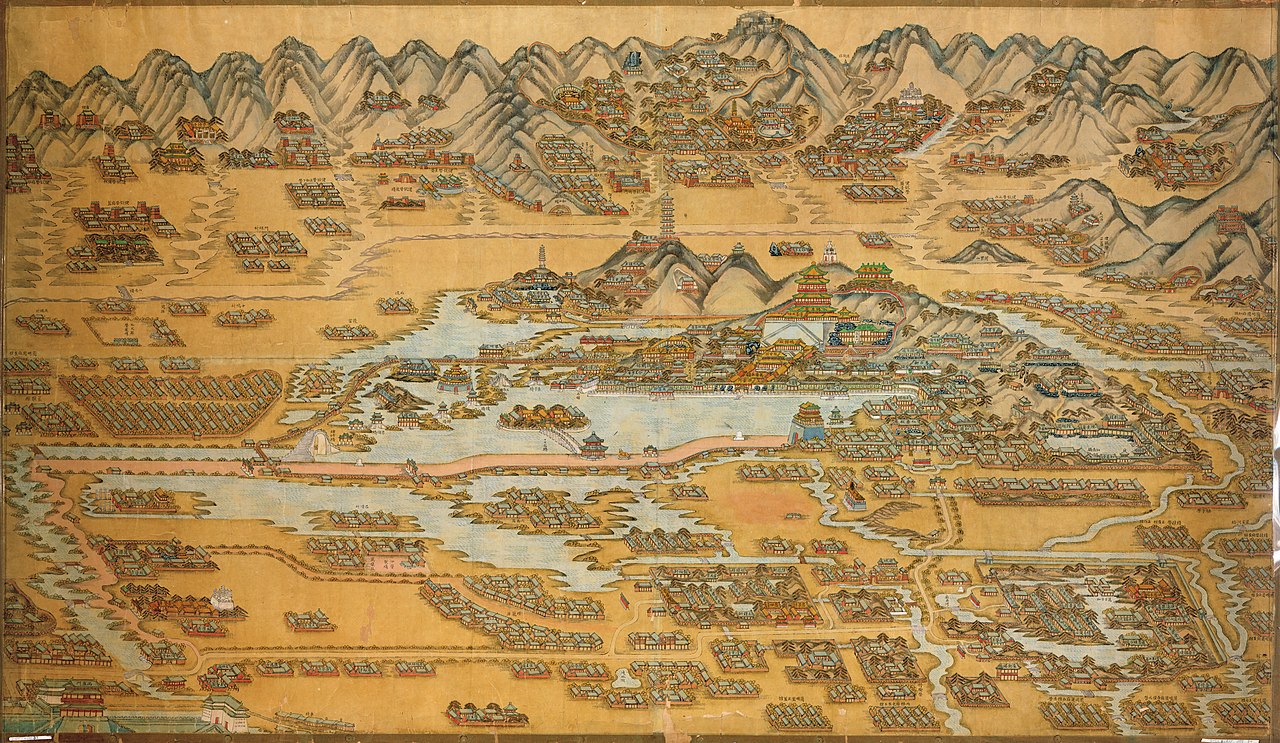


Layout and principal features
The design of the Summer Palace emphasizes borrowed scenery and harmony between architecture and nature. Longevity Hill rises about 60 meters above the lake and is studded with terraces, halls and shrines that provide viewpoints across the water. Kunming Lake occupies much of the site and was enlarged to provide boating and reflection. Notable built elements include long covered walkways, decorative bridges, hilltop halls and several temples.
- Longevity Hill – the central elevation with stairways, terraces and viewing pavilions.
- Kunming Lake – a broad artificial lake used for boating and visual depth in the composition.
- Architectural highlights – long corridors with painted panels, the stone "Marble Boat," and a series of halls and temples such as the Cloud-Dispelling Hall, the Temple of Buddhist Virtue and the Sea of Wisdom Temple.
History and development
The site in its present form grew from imperial garden projects in the 18th and 19th centuries. During the reign of the Qianlong Emperor (mid-18th century) landscaping works expanded the lake and integrated the hill into a designed garden often called the Garden of Clear Ripples. The complex suffered severe damage in the mid-19th century during the Second Opium War and again around 1900 in the international conflict that followed the Boxer movement. Major restoration and rebuilding took place in the late 19th century under the Guangxu reign and in association with the Empress Dowager Cixi.
From imperial retreat to public park
After the end of imperial rule, the Summer Palace ceased to function as a private imperial residence and was gradually opened to the public. It was formally converted into a public park in 1924. Today it is both a cultural relic and an active urban green space where visitors come to see historic architecture, take lakeside walks, ride small boats and study examples of traditional Chinese garden design.
Cultural significance and recognition
For its outstanding example of Chinese garden art and historical importance as an imperial landscape, the Summer Palace is listed as a UNESCO World Heritage Site. It is widely cited in studies of landscape architecture and Qing-period court life and remains one of the most visited heritage sites in Beijing. The collection of painted corridors, carved stone work and temple complexes reflects centuries of artistic and architectural practice.
Visiting and notable facts
Visitors typically experience the site by combining lakeside promenades, a walk up Longevity Hill and a passage along the famous covered corridor whose painted beams tell stories and scenes from Chinese literature. The Summer Palace’s mixture of engineered waterscape and hill-top buildings is often used as a textbook example of the Chinese approach to garden design: creating a sequence of changing views, framed vistas and symbolic structures that together form a coherent cultural landscape. For practical visitor information, conservation updates and research resources consult official guides and reputable conservation publications or follow links to museum and park authorities.
Related articles
Author
AlegsaOnline.com Summer Palace (Beijing): imperial garden, landscape and history Leandro Alegsa
URL: https://en.alegsaonline.com/art/94786