
Sydney Harbour Bridge
Steel‑arch bridge across Sydney Harbour linking north and south Sydney. Carries road traffic, trains, pedestrians and cyclists. Opened 1932; famous for its arch, BridgeClimb and harbour views.
The Sydney Harbour Bridge is a landmark steel‑arch crossing spanning Sydney Harbour that links the northern suburbs with the central city and southern shore. Commonly nicknamed the "Coathanger" because of its distinctive arch shape, the structure serves mixed transport needs: multiple road lanes, two rail tracks, a pedestrian walkway and a cycleway. It is an integral part of the city’s transport network and a widely visited sight.
Image gallery
10 Images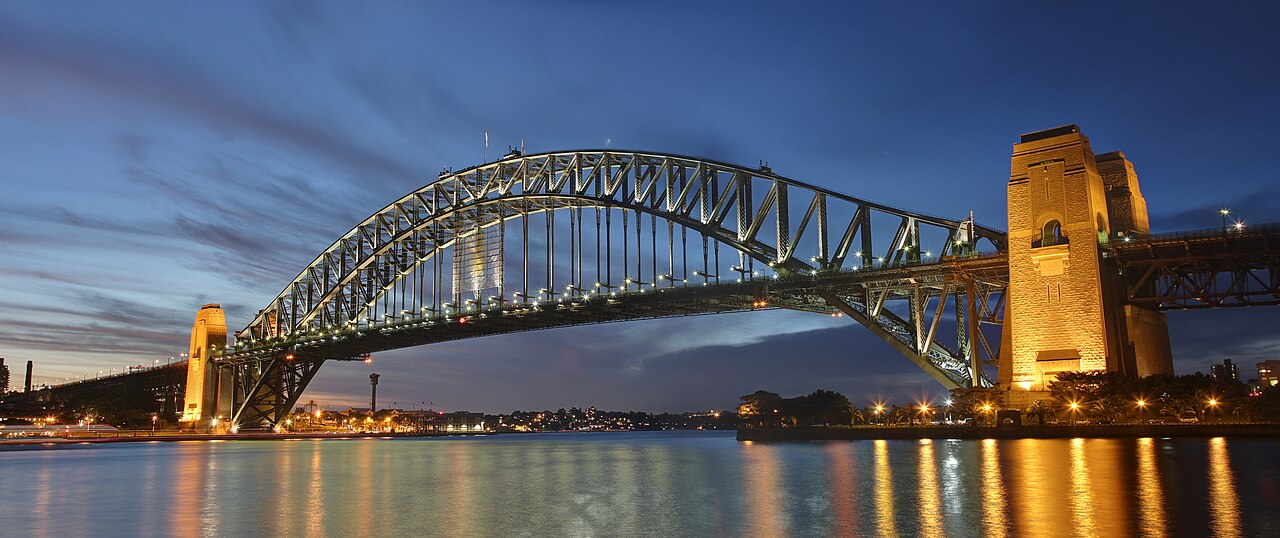



Design and principal dimensions
The bridge is a through arch constructed from riveted steel, with large load‑bearing pylons at each corner faced in granite. Its total length measures about 1,149 metres and the deck width is roughly 49 metres; the top of the arch rises to approximately 134 metres above the water. The central arch span is commonly given as about 503 metres. Across the deck there are eight road lanes configured to manage variable traffic demand, and two rail tracks that carry suburban trains.
Construction and early history
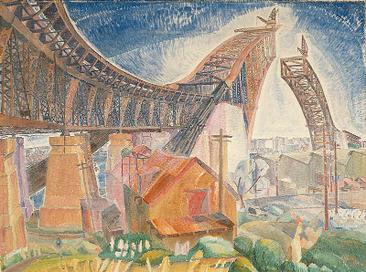
Work on the structure began in the 1920s under the direction of Chief Engineer John Bradfield and was completed and opened in 1932. The construction took place during a period of economic difficulty and required thousands of workers and large quantities of steel. Safety standards of the era were rudimentary compared with modern practice; sixteen workers lost their lives during the works and many others suffered injuries and long‑term effects from industrial conditions. Photographers and film makers recorded the building process and the images remain an important historical record.
Uses, modifications and surrounding infrastructure
Since opening the bridge has carried a mix of vehicle, rail and pedestrian traffic. Early tram tracks were later repurposed for additional road lanes, and adjustments have been made over time to manage changing transport patterns. A separate road tunnel beneath the harbour now provides an alternative crossing for some traffic, reducing congestion across the bridge. The bridge’s approaches and nearby attractions such as Luna Park contribute to the busy and scenic character of the precinct.
Tourism and cultural importance
Beyond transport, the bridge is a major tourist attraction. Organized climbs to the arch summit allow visitors to experience panoramic views of the harbour and city skyline. The bridge is a focal point for public celebrations and is frequently photographed for its visual relationship with the Opera House and the harbour. Its image is widely used as a symbol of Sydney and of Australia more broadly.
Notable facts and legacy
At the time of completion it was among the world's major steel‑arch bridges in span and scale, and its construction cost—about AU£6.25 million—was a substantial public investment that was not fully repaid until many decades later; the total financial history of the project is often cited when discussing large civic works. The bridge’s combination of engineering, civic ambition and ongoing public use has made it a lasting piece of urban infrastructure and an enduring element of Sydney’s identity. For technical summaries and visitor information see general resources on bridge engineering and local guides to north Sydney and harbour attractions.
- Length: ~1,149 m
- Arch height: ~134 m above water
- Main span: ~503 m
- Traffic: road lanes, 2 rail tracks, pedestrian and cycle paths
- Financial cost and construction legacy
Related articles
Author
AlegsaOnline.com Sydney Harbour Bridge Leandro Alegsa
URL: https://en.alegsaonline.com/art/95584