
Suchomimus: spinosaurid theropod of the Early Cretaceous
Suchomimus was a large spinosaurid theropod with a crocodile‑like snout and conical teeth, known from Early Cretaceous deposits in Africa; evidence suggests a primarily fish‑focused but opportunistic diet.
Suchomimus (meaning "crocodile mimic") is a genus of spinosaurid theropod dinosaur known from the Early Cretaceous of northern Africa. Named from material recovered in Niger, it is recognised for a long, narrow snout, conical teeth adapted to grasping slippery prey, and an enlarged thumb claw. Estimates place adult length at roughly 10–11 m, with weight likely in the low tonnes; exact figures vary by study and reconstruction.
Image gallery
10 Images



Key characteristics
- Skull and teeth: A long, low skull with conical, minimally serrated teeth suited to seizing fish and other aquatic prey; the jaws show adaptations for lateral snapping and a firm grip.
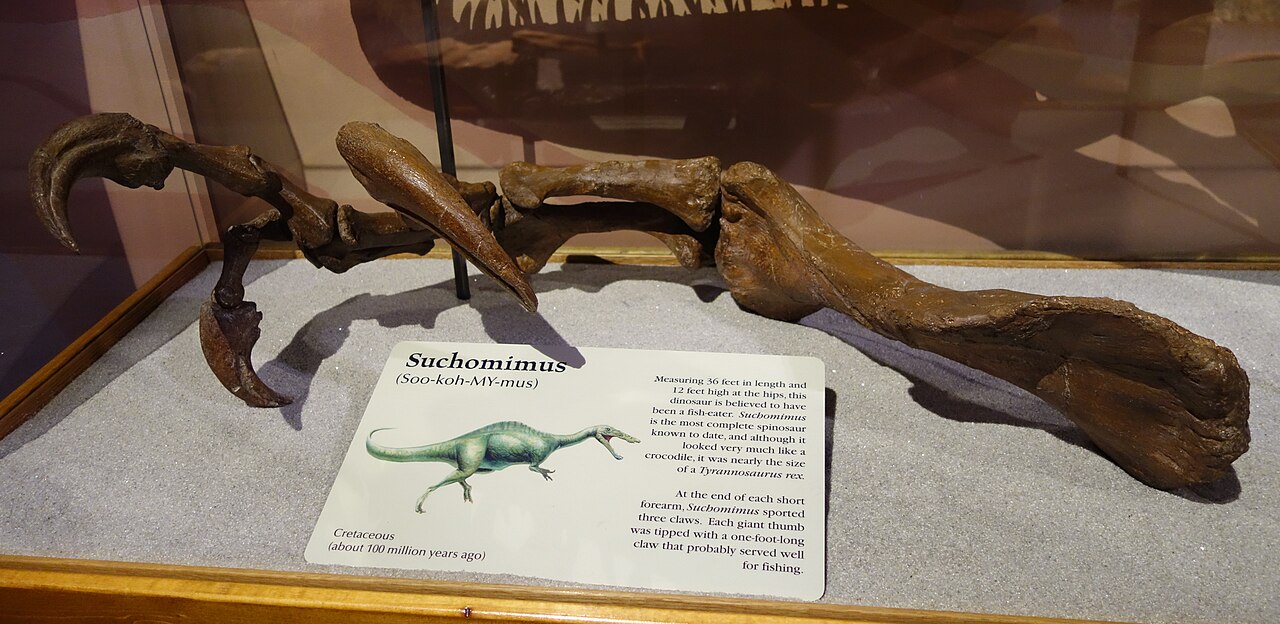
- Forelimbs and claws: Robust forelimbs with three clawed digits and an especially large first digit; the manus structure is characteristic of spinosaurids and useful for handling prey (fingers).
- Posture and size: Bipedal with powerful hind limbs; vertebral neural spines were elongated, producing a low sail or ridge along the back, less extreme than in Spinosaurus.
- Feeding ecology: Anatomical evidence supports a diet including fish and other meat, with adaptations for piscivory combined with the ability to take terrestrial vertebrates when available.
Discovery and naming
Fossils of Suchomimus were described from the Elrhaz Formation (often referred to in older literature together with the Gadoufaoua area) in Niger and are typically dated to the Aptian–Albian stages of the Early Cretaceous, around 112 million years ago. The genus name highlights the resemblance of its snout to that of modern crocodylians, a trait that shaped early interpretations of its lifestyle.
Paleobiology and diet
Functional morphology of the skull and teeth indicates specialization for catching aquatic prey. Tooth shape, jaw profile, and comparisons with related taxa (for example Baryonyx and Spinosaurus) suggest Suchomimus frequently fed on fishes but was not an obligate piscivore; the animal retained robust jaws and limb proportions able to subdue other vertebrates. Tooth wear and stomach‑content evidence from closely related spinosaurids support a mixed diet dominated by aquatic animals but including other meat sources.
Paleoecology
Suchomimus inhabited riverine and floodplain environments in what is now Africa. The Elrhaz and contemporaneous Lower Cretaceous deposits record rich aquatic ecosystems with diverse fishes, crocodyliforms, and other dinosaurs. In such settings, a semi‑aquatic or shoreline hunting mode would have allowed These animals to exploit abundant fish resources while still interacting with terrestrial prey and competitors.
Classification and significance
Suchomimus belongs to Spinosauridae, a clade of theropods notable for convergent crocodile‑like skulls and specialized feeding adaptations. Its combination of piscivorous features and retained terrestrial capabilities has made it important for understanding the ecological diversity within spinosaurids and how members of the group partitioned aquatic and terrestrial niches across different regions of the Cretaceous world.
Further resources: fish ecology, dietary studies, theropod overview, dinosaur classification, crocodile comparisons, Lower Cretaceous geology, African fossil localities, manus anatomy.
Related articles
Author
AlegsaOnline.com Suchomimus: spinosaurid theropod of the Early Cretaceous Leandro Alegsa
URL: https://en.alegsaonline.com/art/94555