
Sumatran rhinoceros (Dicerorhinus sumatrensis)
The Sumatran rhinoceros is the smallest, hairy rhino native to Southeast Asian rainforests. Critically endangered, it faces habitat loss and poaching; conservation relies on protected areas and captive breeding programs.
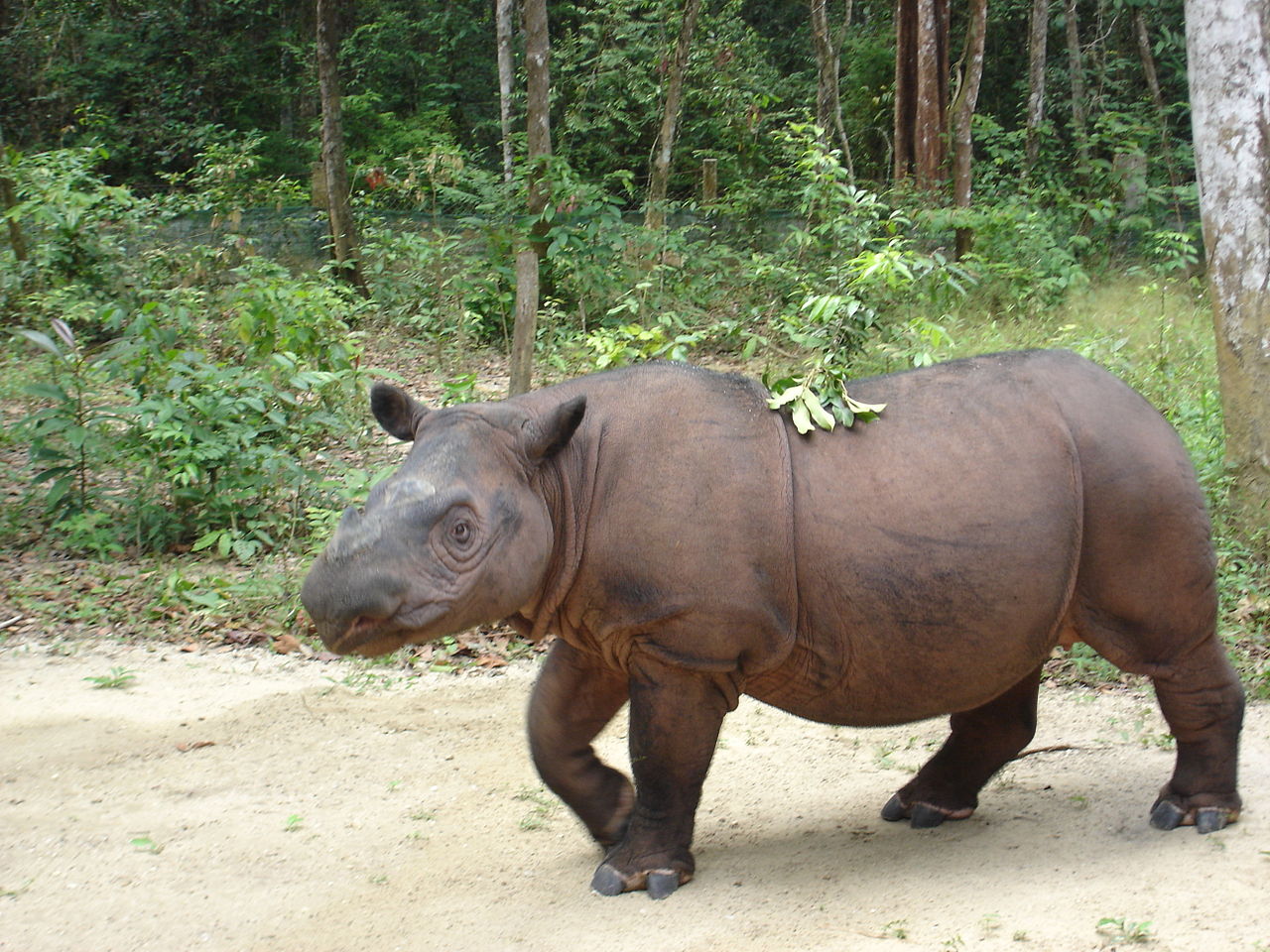
The Sumatran rhinoceros (Dicerorhinus sumatrensis) is a small, forest-adapted rhinoceros and one of the five extant rhinoceros species. It is notable for its relatively compact stature, dense coat of hair compared with other rhinos, and two horns. Historically widespread across parts of Southeast Asia, the species now persists only in scattered forest pockets and is regarded as critically endangered.
Image gallery
10 Images


Physical characteristics and behaviour
Adults are short at the shoulder compared with other rhinos and have a body covered in coarse hair that is more pronounced on calves and in colder or higher-altitude habitats. They have two keratinous horns, a prehensile upper lip suited to browsing, and robust bodies adapted to moving through dense vegetation. Sumatran rhinos are generally solitary except for females with young or during mating. Their diet consists mainly of leaves, shoots, twigs, fruit and bark.
Range, habitat and ecology
Today, remnant populations survive in fragmented rainforests of Indonesia and parts of Malaysia, including Borneo and Sumatra, where they prefer dense, wet lowland and montane forest with access to water and wallows. Loss and fragmentation of forest habitat has reduced their range and isolated small populations, increasing vulnerability to inbreeding and local extinctions.
Threats, history and conservation
Major historical and current threats include habitat conversion for agriculture and plantations, hunting for horns and flesh, and limited genetic exchange between isolated groups. Conservation efforts focus on habitat protection, anti-poaching patrols, and intensive management of the remaining animals. Captive breeding has been attempted with mixed success; in recent decades some institutions and sanctuaries have achieved live births through coordinated programs.
Captive programmes and protected sites
Ex situ conservation and managed sanctuaries complement in situ protection. A small number of facilities cooperated in breeding and care for the species; notable public or managed locations include the Cincinnati Zoo, a Los Angeles institution, and a dedicated Sumatran Rhino Sanctuary in Borneo. These programs emphasize veterinary care, reproductive research and eventual reintroduction where safe and feasible.
Key distinctions and importance
- Smallest living rhinoceros and the only Asian species with a dense hairy coat.
- Specialist browser adapted to closed-canopy forests rather than open savannas.
- Its survival is an indicator of health for Southeast Asian rainforest ecosystems.
Efforts to secure the Sumatran rhinoceros focus on combining habitat conservation, law enforcement, and scientifically managed breeding to prevent extinction. Continued international cooperation and long-term protection of forest landscapes are essential for the species' recovery.
Related articles
Author
AlegsaOnline.com Sumatran rhinoceros (Dicerorhinus sumatrensis) Leandro Alegsa
URL: https://en.alegsaonline.com/art/94764