
Stinkhorn (Phallaceae): foul-smelling fungi with insect-dispersed spores
Stinkhorns (family Phallaceae) are saprotrophic fungi known for their foul-smelling, insect-attracting fruit bodies. They appear worldwide, begin as 'eggs', and disperse spores via sticky gleba.
Overview
Stinkhorns are fungi of the family Phallaceae, a group within the order Phallales that occurs across the globe but is most diverse in tropical and subtropical regions. Commonly called stinkhorns because of the strong odors produced by their mature fruit bodies, these fungi are notable for a distinctive reproductive strategy: they present a sticky, foul-smelling spore mass at the tip of a stalk to attract animals that then carry spores away.
Image gallery
8 Images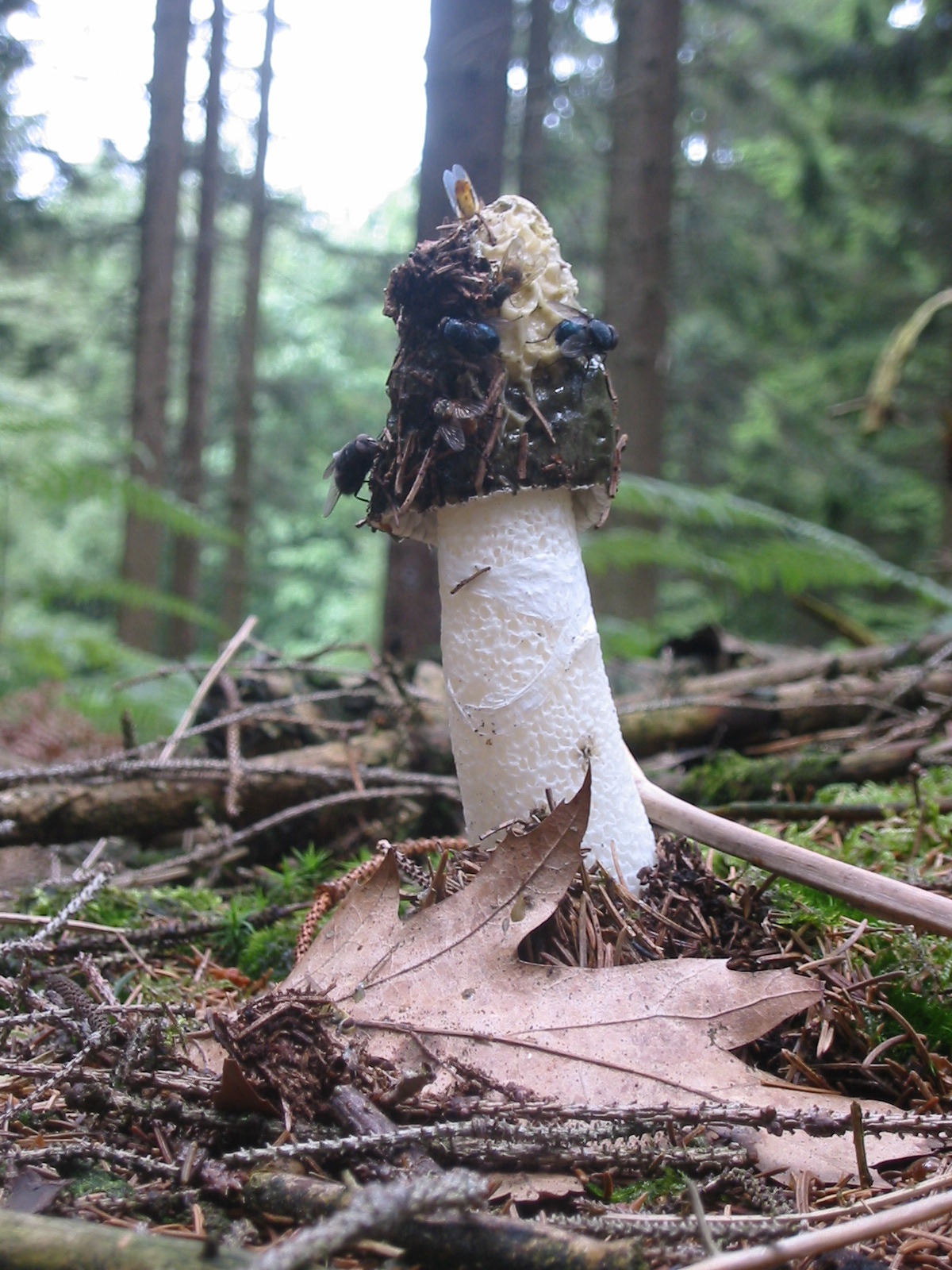




Identification and main parts
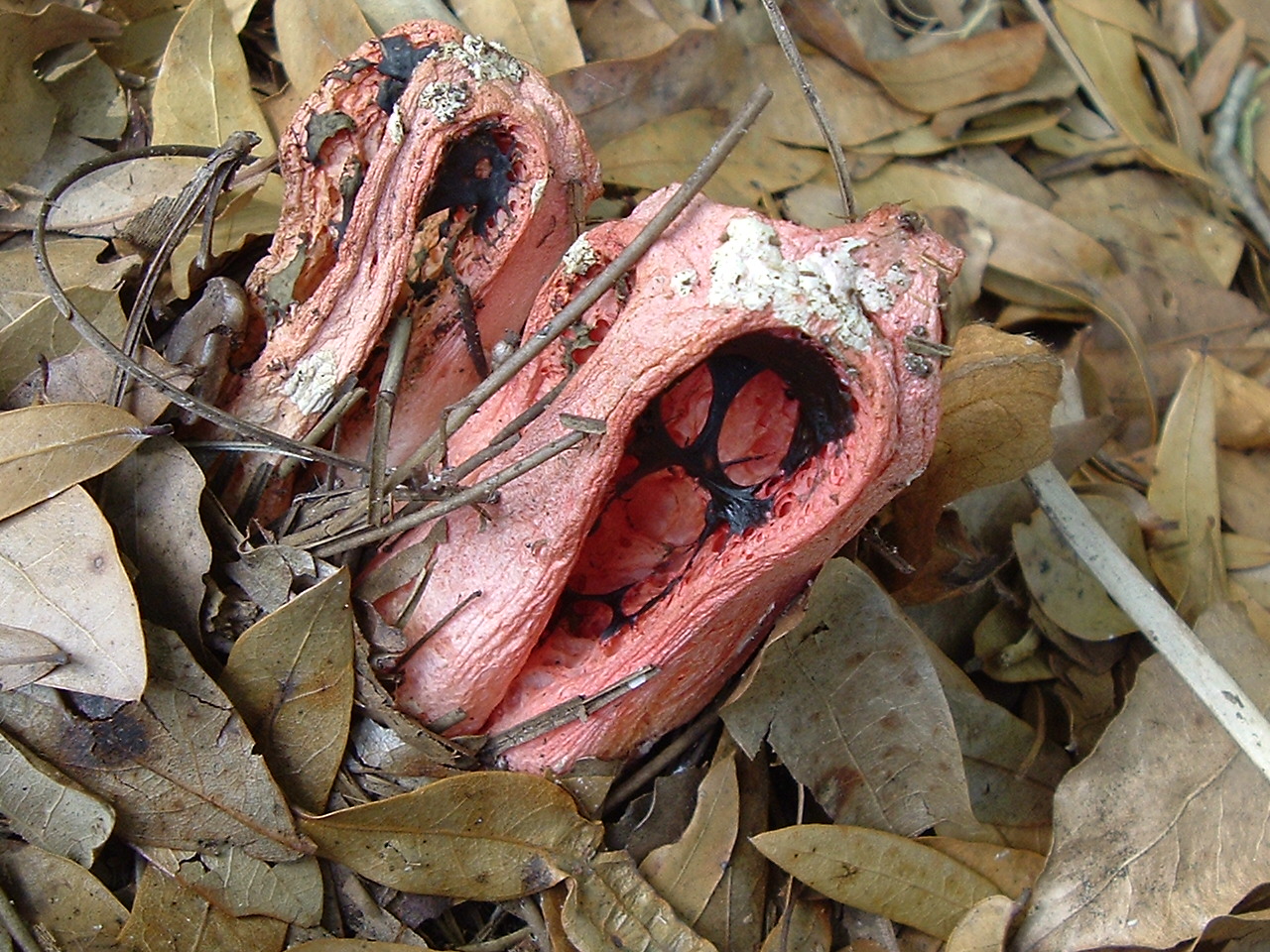
The most conspicuous feature of a stinkhorn is the gleba, a slimy, often dark-colored mass of spores sometimes described as a spore mass or gleba. The gleba sits on or around the top of a vertical stalk (receptacle) and is held together by a sticky mucilage. Before expanding, the fruit body develops within an egg-like structure: a round or oval peridium that encloses the immature tissues and a watery gel. When conditions are right the egg ruptures and the stalk inflates rapidly, exposing the gleba. Some species produce additional structures, such as an indusium (a net-like skirt) or a latticed basket, giving rise to the common names "veiled" or "basket" stinkhorns.
Life cycle and ecology
Stinkhorns are saprotrophic, obtaining nutrients by decomposing wood, leaf litter, mulch and other organic debris. Their foul odor mimics smells associated with decay — scents similar to carrion or dung — and thus attracts insects, particularly flies and other short-distance visitors. These insects land on the gleba to feed or investigate and become coated in sticky spores; they then transport spores to new locations, effecting dispersal. Many species can expand from egg to full fruit body in a short time, driven by rapid water uptake into specialized tissues. Insects most commonly involved in dispersal include various kinds of flies, though beetles and other arthropods also visit the gleba.
Diversity and taxonomy
The family contains a variety of forms — from simple phallic stalks to elaborate latticed baskets — and several genera are familiar to mycologists and naturalists. Examples include Phallus (typical stinkhorns), Clathrus (basket stinkhorns), Mutinus (often elongated, tapering stalks), Lysurus and Pseudocolus. Estimates of diversity have varied; a survey conducted in the early 21st century recognized roughly two dozen genera and on the order of a few dozen to a few hundred species, with new species still being described from poorly explored regions.
Uses, cultural notes and human interactions
Although their odor deters many people, some stinkhorns are used by humans. In parts of Asia certain species are harvested in their immature "egg" stage and prepared as a food ingredient or valued for traditional medicinal uses; a well-known example is the veiled stinkhorn historically prized in Chinese cuisine and culture. In horticulture and urban settings, stinkhorns are frequently encountered in wood-chip mulch and garden beds where they act as decomposers. Their sudden appearance and pungent smell can make them a nuisance, but they pose no significant danger to people and animals.
Notable facts and distinctions
- Stinkhorns rely on animals, not wind, to disperse spores — an uncommon strategy among large fungi.
- Some species display ornate morphology such as indusia (net-like skirts) or latticed fruiting bodies that are visually striking despite the odor.
- Because their life cycle includes a protected egg stage, immature specimens can be transported or consumed before the foul odor develops.
For further general information on the family, consult taxonomic resources and regional fungal guides that discuss the genera above and provide keys for identification.
Related articles
Author
AlegsaOnline.com Stinkhorn (Phallaceae): foul-smelling fungi with insect-dispersed spores Leandro Alegsa
URL: https://en.alegsaonline.com/art/93954