
Suiseki — Japanese view stones: origins, qualities, and appreciation
Suiseki are naturally formed or shaped Japanese 'view stones' valued for their suggestive shapes, surface, and patina. This article explains types, history, display practices, and how they differ from related traditions.
Suiseki (水石) are small naturally formed or minimally altered stones admired for their ability to suggest landscapes, objects, or scenes in miniature. The practice centers on close observation and aesthetic appreciation rather than on utility. The Japanese name often appears in English-language sources as the Japanese term for these view stones; they may be presented alone or set in a shallow tray or carved wooden base to emphasize their form.
Image gallery
4 Images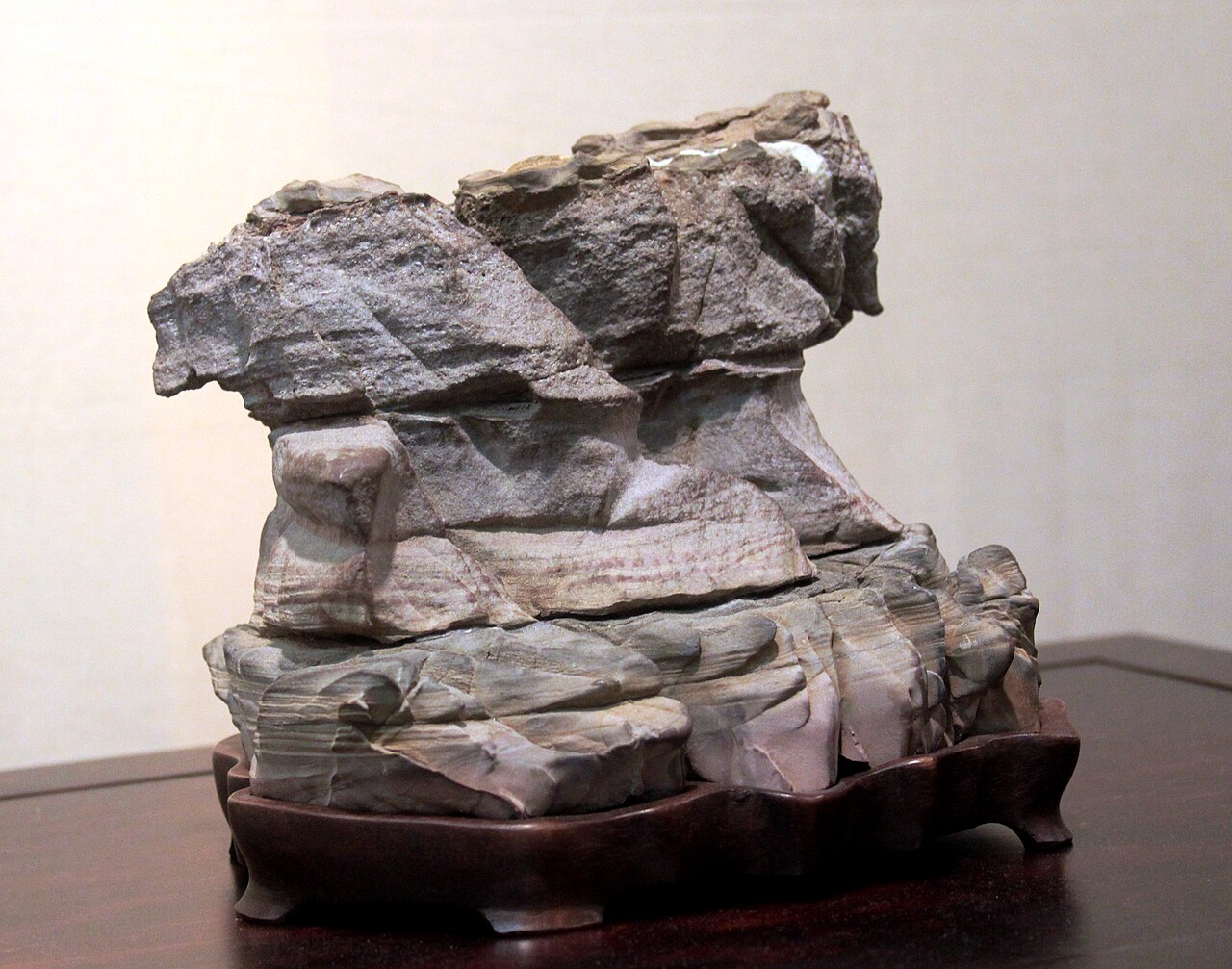


Characteristics and categories
Suiseki vary widely in size, color and texture. Some are palm-sized; others weigh many kilograms. Common categories include landscape stones (suggesting mountains or shorelines), object stones (evoking animals, boats or buildings), and fragment stones (small pieces that imply larger forms). Collectors judge stones by qualities such as natural shape, surface texture, color, balance, and the power to evoke an image or mood.
Display and presentation
Presentation is an essential part of suiseki. A stone may be shown on an individually carved wooden base (daiza) or in a shallow water tray (suiban) often with a minimal composition of moss or water to suggest a scene. Lighting, viewing angle and the chosen support all influence how the stone reads to a viewer. Careful handling and occasional cleaning preserve the patina and fine details that contribute to a stone's value.
History and cultural context
The practice of appreciating naturally shaped stones in Japan developed over centuries and was influenced by Chinese traditions of scholar's rocks; those related objects are a useful point of comparison in museums and literature (see Chinese scholar's rocks). In Japan, suiseki became associated with tea ceremony aesthetics, garden design and the contemplative arts, reflecting ideals such as simplicity, impermanence and suggestion rather than literal representation.
Evaluation, collecting and uses
Collectors and judges evaluate suiseki on several factors:
- Suggestiveness: the degree to which the stone evokes a scene or object.
- Naturalness: minimal human alteration and authentic weathering.
- Surface and color: texture, polish and tonal variation.
- Scale and balance: harmony between size, weight and display method.
Suiseki appear in private collections, public exhibitions and educational displays. They are related to but distinct from other traditions of viewing stones and ornamental rocks, which may differ in cultural framing, preferred shapes or display conventions; for instance, the emphasis in Chinese scholar's rocks differs in scale and symbolic reference from Japanese taste (naturally occurring or shaped rocks).
Notable facts and distinctions
Stones prized as suiseki can range from less than a pound to very heavy garden boulders; their value depends more on aesthetic impact than on size alone. Modern enthusiasts continue to search for stones in riverbeds, coastal areas and quarries, while museums and clubs publish guidance on identification, preservation and ethical collecting. For further context on terminology and collecting resources consult introductory guides and specialized collections (Japanese term and related traditions).
Questions and answers
Q: What is Suiseki?
A: Suiseki is the term for small naturally occurring or shaped rocks that are traditionally appreciated in Japan and are similar to Chinese scholar's rocks.
Q: What can Suiseki look like?
A: Suiseki can be any color and come in a wide variety of sizes. They can weigh from hundreds of pounds to less than one pound.
Q: What do Suiseki stones represent?
A: Suiseki stones are appreciated for their natural beauty and represent the harmony and balance of nature in traditional Japanese gardens.
Q: What is the significance of Suiseki in Japanese culture?
A: Suiseki is a popular art form that has been practiced in Japan for centuries. It is considered a way to connect with nature and appreciate its beauty.
Q: Can Suiseki stones only be found in Japan?
A: No, Suiseki stones can be found anywhere in the world where they are naturally occurring or can be shaped into beautiful stones.
Q: How are Suiseki stones used in traditional Japanese gardens?
A: Suiseki stones are carefully placed in traditional Japanese gardens to represent mountains, islands, or other natural elements. They are meant to enhance the beauty and tranquility of the garden.
Q: How do people appreciate Suiseki stones?
A: Suiseki stones are appreciated for their shapes, textures, and colors. They are often displayed on special stands or in alcoves and are viewed and admired by people who appreciate the art form.
Related articles
Author
AlegsaOnline.com Suiseki — Japanese view stones: origins, qualities, and appreciation Leandro Alegsa
URL: https://en.alegsaonline.com/art/94678
Sources
- books.google.com : Bonsai Master Class, p. 244
- books.google.com : The Temple Mount Code, p. 73
- books.google.com : The Japanese Art of Stone Appreciation: Suiseki and Its Use With Bonsai, p. 17
- books.google.com : Suiseki: The Japanese Art of Miniature Landscape Stones, p. 40