
Sterling banknote
A comprehensive overview of sterling banknotes: issuers, legal status, denominations, design and security features, history, and circulation across the UK and related territories.
Overview
Sterling banknotes are the paper and polymer banknotes denominated in pounds sterling, the primary unit of currency used in the United Kingdom and several associated territories. They exist in a range of commonly circulated denominations, and each pound is subdivided into one hundred pence. The term "sterling banknote" covers both notes issued by the central issuing authority and by a small number of regional banks that retain the right to issue their own notes.
Image gallery
10 Images





Issuers and legal status
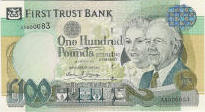
The principal issuer is the Bank of England, which issues banknotes that are widely accepted across England and Wales. In addition to Bank of England notes, a handful of commercial banks in Scotland and Northern Ireland produce their own notes. These regional notes circulate locally and are accepted by custom in their regions, but they differ from Bank of England notes in legal status and backing arrangements. Outside the UK mainland, sterling or local pound currencies pegged at parity circulate in territories such as Jersey, Guernsey, the Isle of Man, South Georgia and the South Sandwich Islands and Tristan da Cunha, and several British Overseas Territories use pound currencies linked to sterling.
Common denominations and examples
- Typical circulating notes include the £5, £10, £20 and £50 denominations issued by the Bank of England. Other issuers may produce similar or different ranges for regional use.
- Historically there were additional denominations and local designs; today polymer notes have become common for many denominations, improving durability and security.
Design and security features
Sterling banknotes combine national iconography, portraits and design elements with laminated or polymer substrates. Common security features include watermarks or embedded images, holographic patches, metallic threads, raised print, microlettering and see-through windows on polymer notes. Notes typically show the sovereign’s portrait, a central bank signature or promise to pay, and a serial number. These features aim to deter counterfeiting and make authentic notes easier to verify by the public and cash-handling machines.
History and development
The form and issuance of sterling banknotes evolved over centuries from handwritten bills and promissory notes to standardized printed currency. Decimalisation in the late 20th century simplified subdivisions into one hundred pence per pound. Over recent decades many banknotes have moved from paper to polymer substrates and have been updated repeatedly to incorporate stronger security and modern design choices. The visual appearance of notes reflects a mix of national symbols, historical figures and commemorative subjects depending on the issuing authority.
Usage, acceptance and notable distinctions
In everyday practice, most retailers and banking institutions accept Bank of England notes throughout much of the UK, though individual businesses may set their own acceptance policies. Regional issues from Scottish and Northern Irish banks are normally accepted within their issuing regions, but may sometimes be refused elsewhere, for example in parts of London or by uninformed vendors. It is important to distinguish between legal tender (a narrow legal concept) and widely accepted currency: only Bank of England notes are legal tender in parts of the UK, while other notes rely on convention and backing arrangements to ensure confidence.
Further reading and resources
For additional information on current designs, issuing authorities and practical guidance on how to check a note’s authenticity, see official publications from issuing banks and central authorities. General introductory material about banknotes, denominations and monetary policy is also available from public finance resources and central bank explanations (banknotes, United Kingdom, denominations, pounds sterling, Jersey, Guernsey, Isle of Man, South Georgia and the South Sandwich Islands, Tristan da Cunha, pence, British Overseas Territories, Bank of England, Scotland, Northern Ireland, London).
Questions and answers
Q: What are sterling banknotes?
A: Sterling banknotes are the banknotes in circulation in the United Kingdom and its related territories, issued in various denominations of pounds sterling (symbol: £ or GBP).
Q: In which places are sterling banknotes official currency?
A: Sterling banknotes are official currency in the United Kingdom, Jersey, Guernsey, the Isle of Man, South Georgia and the South Sandwich Islands, and Tristan da Cunha.
Q: What is the equivalent of one pound?
A: One pound is equivalent to 100 pence.
Q: How many British Overseas Territories have currencies called pounds?
A: Three British Overseas Territories have currencies called pounds which are at par with (worth equal to) the pound sterling.
Q: Who issues banknotes in the United Kingdom?
A: The Bank of England issues banknotes in the United Kingdom, and seven other banks also issue banknotes.
Q: Which banknotes are legal currency in the United Kingdom?
A: Only the Bank of England notes are legal currency, meaning they must be accepted in retail trade, restaurants, and so on.
Q: Are banknotes issued by other banks always accepted in their countries?
A: Yes, banknotes issued by the other banks mostly in Scotland and Northern Ireland are always accepted in their countries. However, in London, where many people are of foreign origin, these notes may be refused in some places.
Related articles
Author
AlegsaOnline.com Sterling banknote Leandro Alegsa
URL: https://en.alegsaonline.com/art/93798