
Tristan da Cunha — the world's most remote inhabited archipelago
Remote volcanic islands in the South Atlantic forming a British Overseas Territory. Tristan da Cunha is famed for its isolation, seabird colonies, small community and fragile island ecosystems.
Overview
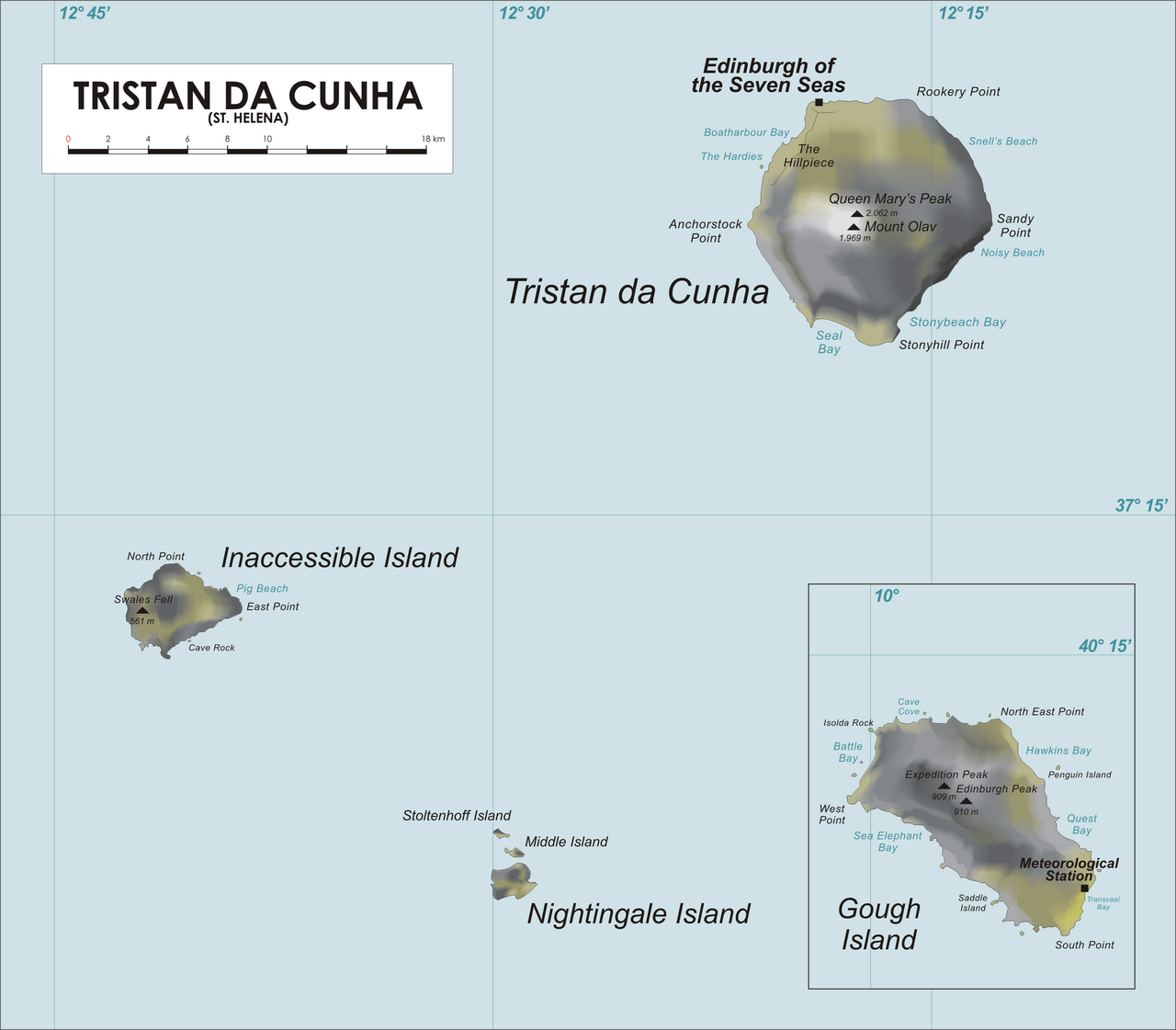
Tristan da Cunha is a tiny group of volcanic islands in the South Atlantic Ocean. The name is used both for the principal island and for the archipelago as a whole. The islands lie far from continental land: about 2,816 km from South Africa and roughly 3,360 km from South America. Because of this distance they are widely described as the most remote inhabited archipelago on Earth. The group includes the main island of Tristan da Cunha and several smaller or uninhabited islands and islets.
Image gallery
10 Images



Geography and components
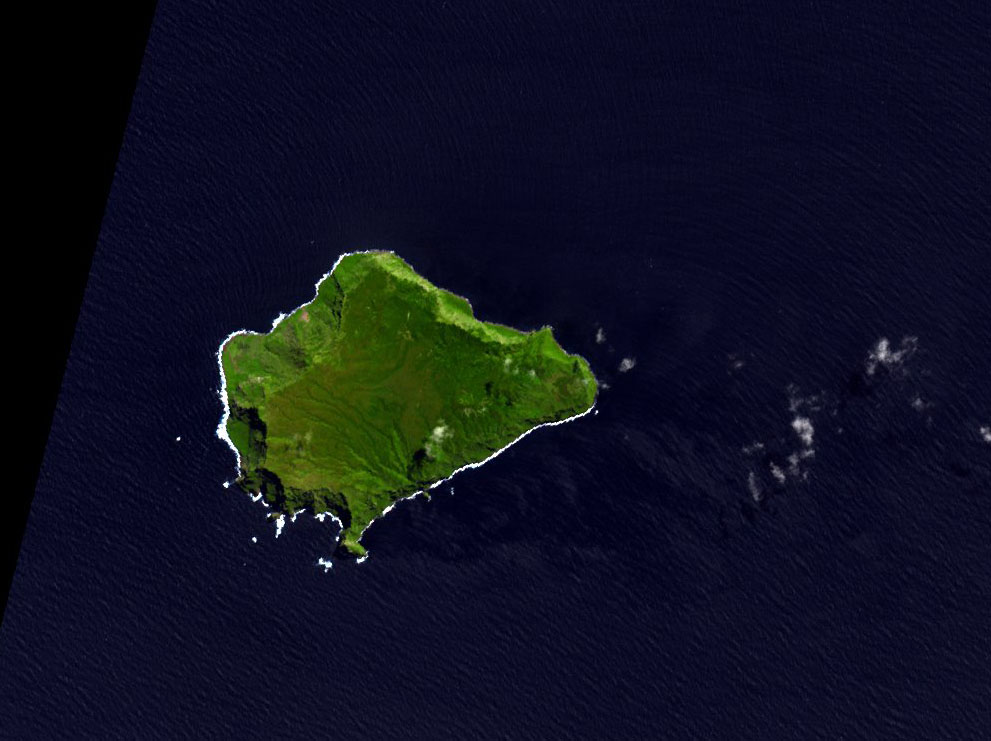
The main island measures only a few kilometres across and is dominated by an extinct or dormant volcanic massif. Nearby clusters in the territory include the Gough Island and Inaccessible and Nightingale Islands, which are important for wildlife. Collectively the chain is referred to as an archipelago of volcanic origin in the South Atlantic. Administratively it forms part of the British Overseas Territory of Saint Helena, Ascension and Tristan da Cunha, linked to the more distant island of Saint Helena and to Ascension Island.
History and settlement
European record of the islands begins with a sighting by the Portuguese navigator Tristão da Cunha in the early 16th century, from whom the islands take their name. For centuries the islands were visited sporadically by passing ships, whalers and sealers. A permanent civilian settlement developed in the 19th century, and a small, close-knit community has persisted despite the islands' isolation. In the modern era the community has experienced occasional crises, including volcanic activity that at times required temporary evacuation and rebuilding.
Population, society and governance
The residential community is very small and concentrated in a single settlement on the main island. Residents descend largely from a modest number of founding families and maintain a distinct local culture and dialect influenced by British and maritime traditions. Local administration operates under the framework of the wider British Overseas Territory: there is a locally elected council handling day-to-day matters and representation from an appointed administrator.
Economy, transport and daily life
Economic activity is limited by remoteness and scale. Fisheries—especially the licensed lobster fishery—small-scale agriculture, and the sale of stamps and souvenirs contribute to income. Supplies and passengers arrive by ship; there is no regular air service, and sea voyages to and from the islands are long and weather-dependent. The community relies on local skills and imported goods, and life is organized around communal services such as a single school, a health post and cooperative enterprises.
Environment and conservation
The Tristan group has high conservation value. Islands such as Gough Island and Nightingale are recognized for their seabird colonies and for endemic plants and invertebrates. Some sites are protected as nature reserves and attract scientific attention for breeding albatrosses, petrels and penguins. Conservation efforts address threats from introduced species, such as rodents and invasive plants, and aim to balance protection of fragile ecosystems with the needs of the island community.
Key facts and points of interest
- The islands are volcanic in origin and lie in the remote South Atlantic (location).
- They are part of the British Overseas Territory that includes Saint Helena and Ascension Island (administration).
- Tristan da Cunha is the most remote inhabited archipelago in the world.
- Important wildlife areas and reserves are centered on Gough, Nightingale and other islets.
- Access is by sea; the islands rely on visiting vessels for most supplies and external contact.
For readers interested in further details—maps, visitor guidance and conservation work—consult specialist sources and the official territorial administration. Practical travel to the islands requires careful planning because of the lengthy sea passages and variable weather, and conservation regulations may restrict access to some sites.
Questions and answers
Q: Where is Tristan da Cunha?
A: Tristan da Cunha is a group of remote volcanic islands located in the south Atlantic Ocean.
Q: What is the distance between Tristan da Cunha and the nearest land?
A: Tristan da Cunha is 2,816 km (1,750 mi) away from the nearest land, South Africa.
Q: How far is Tristan da Cunha from South America?
A: Tristan da Cunha is 3,360 km (2,088 mi) away from South America.
Q: What does the territory of Tristan da Cunha include?
A: The territory of Tristan da Cunha includes the main island itself, the uninhabited Nightingale Islands, and the wildlife reserves of Inaccessible Island and Gough Island.
Q: What is the permanent population of Tristan da Cunha?
A: The permanent population of Tristan da Cunha is 275, according to 2009 figures.
Q: What is the size of Tristan da Cunha?
A: The main island of Tristan da Cunha measures about 11.27 km (7.0 mi) across and has an area of 96 km2 (37.1 sq mi).
Q: What is the political affiliation of Tristan da Cunha?
A: Tristan da Cunha is part of the British overseas territory of Saint Helena, Ascension and Tristan da Cunha.
Related articles
Author
AlegsaOnline.com Tristan da Cunha — the world's most remote inhabited archipelago Leandro Alegsa
URL: https://en.alegsaonline.com/art/101583
Sources
- volcano.si.edu : "Tristan da Cunha - Summary"
- herbaria.plants.ox.ac.uk : "Tristan da Cunha"
- geography.about.com : "Tristan da Cunha: The world's most remote island"
- legislation.gov.uk : "The St Helena, Ascension and Tristan da Cunha Constitution Order 2009"
- bbc.co.uk : "St Helena, Ascension, Tristan da Cunha profiles"
- books.google.com : The commentaries of the great Afonso Dalboquerque, second viceroy of India
- tristandc.com : "Tristan History 1506 - 1817"
- worldstatesmen.org : "Saint Helena (U.K.)" · web.archive.org
- wdl.org : Embassy to the Eastern Courts of Cochin-China, Siam, and Muscat
- weatherbase.com : "Settlement of Edinburgh, saint Helena - Köppen Climate Classification"
- nature.com : "Genealogy and genes: tracing the founding fathers of Tristan da Cunha"
- doi.org : 10.1038/sj.ejhg.5201022