
Bass (sound) — low-frequency tones in music and audio
Bass refers to the low-pitched, low-frequency range in music and audio. This article explains its characteristics, common instruments, historical development, musical roles, and practical distinctions in mixing and acoustics.
Bass denotes the low-frequency portion of sound in music and audio, often perceived as depth, weight, or rumble. In musical contexts the bass provides foundational pitches that support harmony, outline chord roots and reinforce rhythm. For a general definition see music and for a brief disambiguation note see Bass (other uses).
Image gallery
2 Images
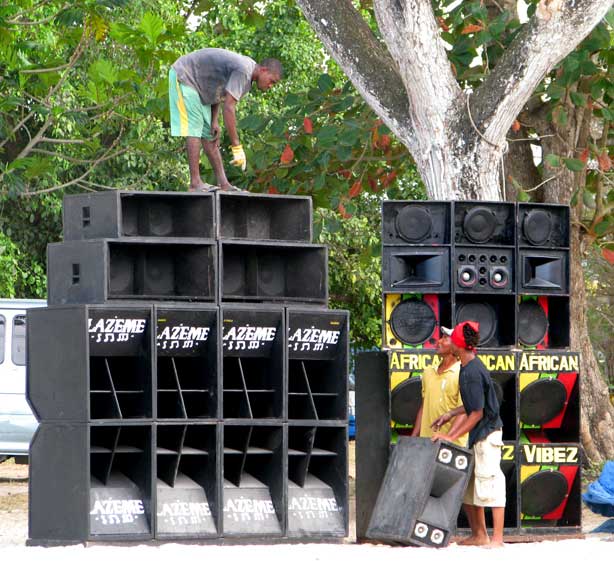
Characteristics and frequency
Technically, bass occupies the lower end of the audible spectrum. Low or "low-pitched" tones are often described as frequencies below about 250 Hz, with the sub-bass region extending still lower and felt as much as heard. For discussions of the frequency range and low end see low end frequency and for electronic timbres see electronic sound design.
Common sources and instruments
Bass sounds come from many acoustic and electronic sources. Typical instruments include:
- Bass guitar — a central instrument in rock, pop, funk and jazz.
- Double bass (acoustic bass) — common in orchestras, jazz and folk.
- Baritone and bass woodwinds, such as baritone sax, add lower timbres.
- Bass drums and low percussion provide rhythmic low end.
- Electronic sources such as synthesizers and subwoofers produce powerful low frequencies.
- Low singing voices are described as bass or low baritone.
Roles and uses
Bass serves multiple musical functions: it defines the harmonic foundation by playing roots and basslines, supports rhythm by locking with drums, and fills the spectral balance so higher instruments can occupy treble ranges such as piano or lead voices. In popular production engineers sculpt the bass to avoid masking other parts while retaining presence.
History and development
Historically, low-pitched instruments appeared early in ensembles and orchestras where the double bass and tuba established the low register. The 20th century brought the bass guitar and electronic synthesis, expanding the palette of bass timbres and enabling new genres that emphasize low-frequency energy.
Practical distinctions and notable facts
Perception of bass depends on loudness, room acoustics and speaker playback. Sub-bass frequencies are often felt physically and require appropriate speakers or room treatment. In notation and arrangement, bass parts are written to complement harmony rather than compete with melody. For technical and stylistic resources see related entries such as low end frequency and introductory guides to synthesis.
Understanding bass means appreciating both its acoustic properties and its musical roles: it is at once a physical phenomenon, an instrument family, and a core element of musical texture and rhythm.
Related articles
Author
AlegsaOnline.com Bass (sound) — low-frequency tones in music and audio Leandro Alegsa
URL: https://en.alegsaonline.com/art/9289