
Santa Croce, Florence: history, art, and the 'Pantheon' of Italian glories
The Basilica of Santa Croce is Florence’s principal Franciscan church: a Gothic landmark housing chapels, major frescoes, and funerary monuments to Italy’s most celebrated artists, thinkers and scientists.
Overview
The Basilica of Santa Croce in Florence is the city’s main Franciscan church and a prominent example of Italian Gothic sacred architecture. Built as a mendicant church, it was planned to provide a broad, open interior suited to preaching and large congregations. Designated a minor basilica of the Roman Catholic Church, Santa Croce stands on the Piazza di Santa Croce, a short walk from the cathedral, and has long combined religious functions with civic and commemorative roles.
Image gallery
10 Images



History and context
Construction began in the late 13th century on marshy ground that lay outside the early medieval walls. The Franciscan friars who founded the complex emphasised simplicity and preaching; these ideals shaped the long nave, limited exterior decoration and emphasis on visible wall space for painted cycles. Over the centuries the church and its convent accumulated chapels sponsored by prominent families, a sequence of artistic commissions, and a reputation as a place of burial and remembrance for Italy’s notable figures.
Architecture and notable spaces
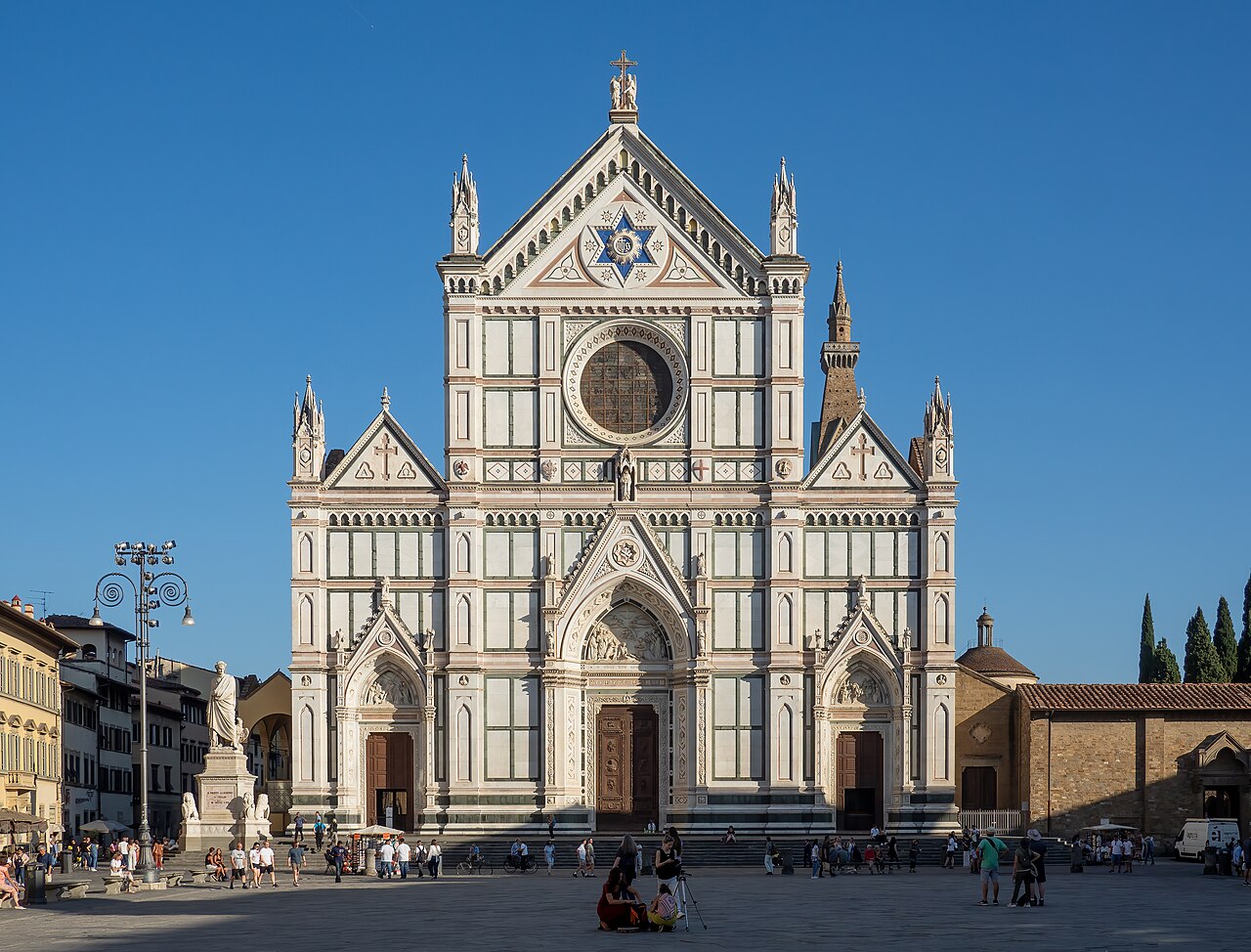
The basilica presents a long basilican plan with pointed arches, a high clerestory and a spacious nave. The polychrome marble façade is a 19th‑century neo‑Gothic addition by Niccolò Matas and contrasts with the older brick and stone body. Attached monastic spaces include cloisters and a refectory; within the convent complex stands the small but architecturally important Pazzi Chapel, traditionally associated with Brunelleschi and early Renaissance architectural ideals.
Art, chapels and monuments
Santa Croce preserves important fresco cycles, including early 14th‑century works in the Bardi and Peruzzi chapels often associated with Giotto and his workshop. The interior contains later Renaissance altarpieces, sculpted funerary monuments and painted chapels commissioned by Florentine families. The church also functions as a national pantheon: visitors encounter tombs, cenotaphs and memorials to leading Italians such as Michelangelo, Galileo, Machiavelli, the composer Rossini, and the inventor Guglielmo Marconi, among others.
Conservation, damage and restoration
The church and its artworks have required repeated conservation work. A notable modern crisis was the 1966 flood of the Arno, which caused serious damage across Florence and affected works in Santa Croce; subsequent decades have seen major restoration campaigns to stabilise frescoes, monuments and fabric from humidity, pollution and age.
Visiting and significance
Today Santa Croce remains active for worship while also serving as a major cultural and tourist destination. The convent museum and sacristy display liturgical objects and documentary material about the basilica’s artistic legacy. Visitors typically combine a visit to Santa Croce with other principal sites in Florence and the wider heritage of Italy, and guided tours or audio guides are often available on site.
- Highlights: fresco cycles in the Bardi and Peruzzi chapels and numerous family chapels.
- Architectural features: broad nave, clerestory windows and the neo‑Gothic façade by Niccolò Matas.
- Convent complex: cloisters, refectory and the Pazzi Chapel (early Renaissance architecture).
- Commemorative role: concentration of tombs and cenotaphs that earned the church the nickname "Pantheon of Italian glories."
The Basilica di Santa Croce continues to embody Florence’s overlapping religious, artistic and national histories, offering insight into medieval mendicant architecture, Renaissance patronage and the ways civic memory has been shaped through monuments and burial.
Related articles
Author
AlegsaOnline.com Santa Croce, Florence: history, art, and the 'Pantheon' of Italian glories Leandro Alegsa
URL: https://en.alegsaonline.com/art/9247