
Beaumaris Castle
Late 13th-century concentric castle on Anglesey, Wales, begun by Edward I. Noted for its planned symmetry, water defenses, unfinished state and inclusion in the Edwardian castles World Heritage group.

Beaumaris Castle is a late 13th-century fortress on the isle of Anglesey in Wales. Its name comes from Old French, often explained in English by the literal translation "beautiful marsh." The work was commissioned by King Edward I as part of his program of royal fortifications and was one of several major strongholds built along the North Wales coast. The structure is usually described as an exemplary concentric castle, intended to combine strong passive defenses with control over the surrounding landscape.
Image gallery
10 Images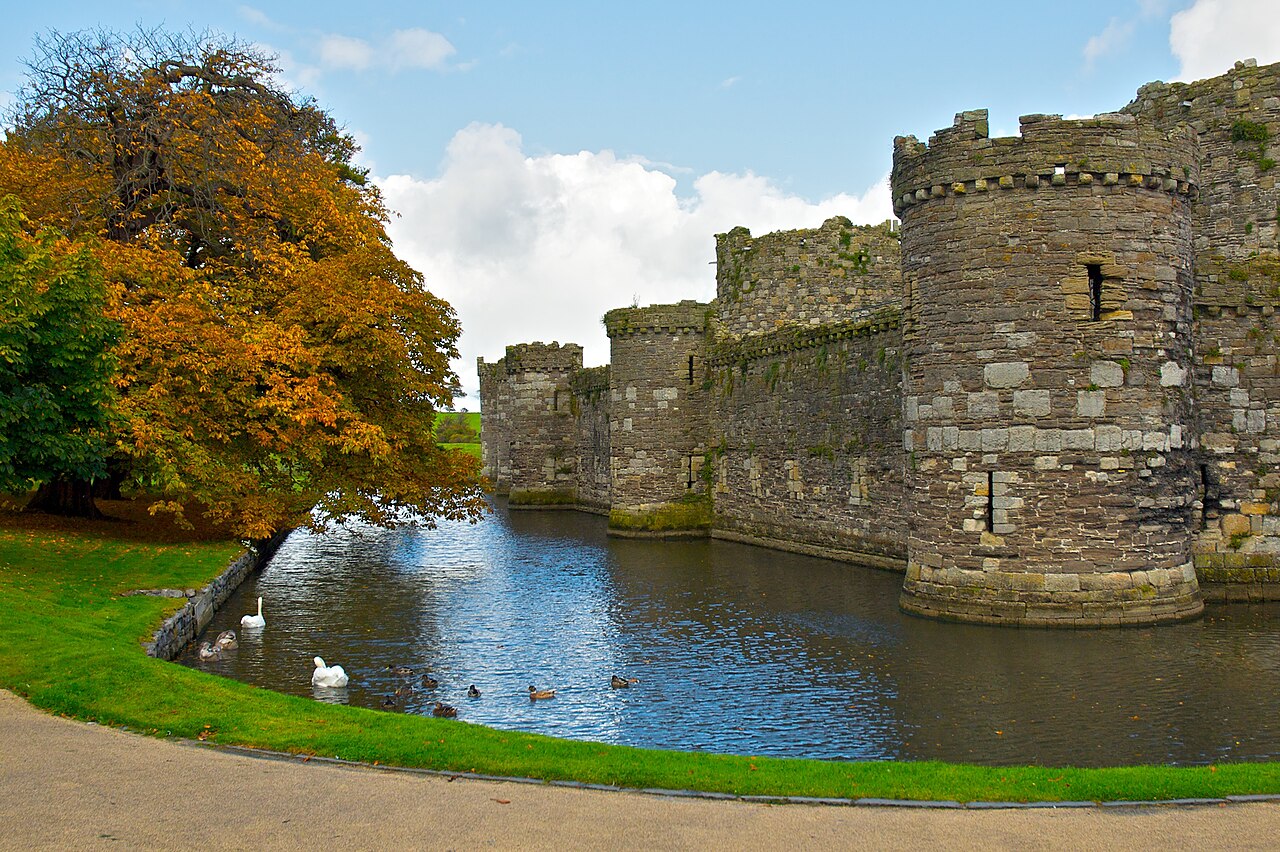





Architecture and principal features
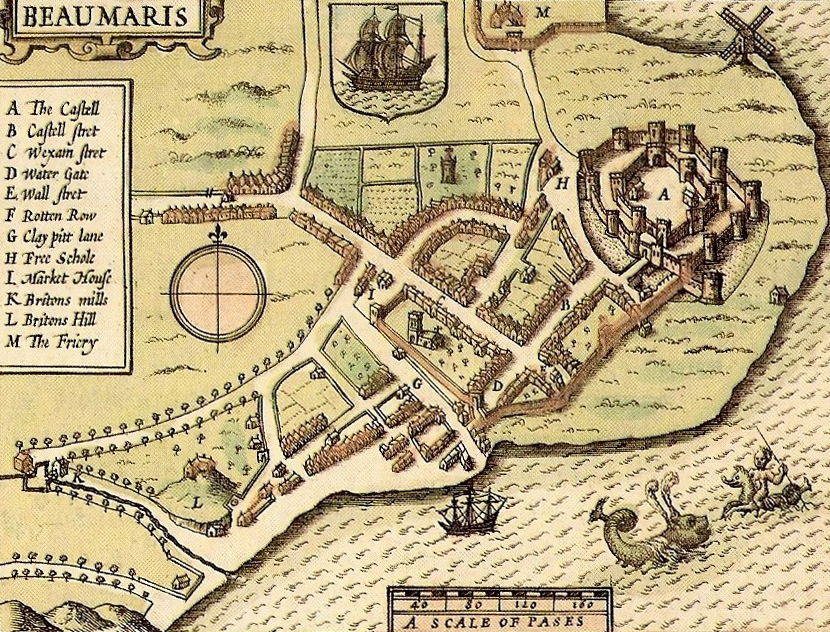
Planned as a symmetrical, ordered fortress, Beaumaris was designed with an inner ward enclosed within an outer circuit and a wide water-filled moat. Gatehouses, curtain walls and projecting towers were arranged to provide interlocking fields of fire and mutual protection. The site exploited tidal and marshy ground to enhance water defenses and to complicate any approach. Though commonly admired for its geometric clarity, the castle's final appearance differs from original plans because construction was never fully completed.
History and construction
Construction began in the late 1290s during Edward I's campaign to establish royal authority in North Wales. The building program drew on experienced master masons employed by the crown; work proceeded in phases but was disrupted by political and financial pressures, and the castle was never finished to the original specification. Over subsequent centuries its military role declined and the complex saw episodes of repair, partial dismantling and reuse.
Importance and later use
Beaumaris is valued both as a military design and as documentary evidence of late medieval royal building. It is included among the group of castles associated with Edward's conquest that are recognized for their historic and architectural significance. In later periods the castle became a local landmark rather than an active fortress, surviving as a ruin that illustrates ideas about fortification, status and landscape control in medieval Britain.

Visiting and legacy
Today the site is cared for as a heritage monument and is open to the public for visits, interpretation and study. Its readable plan and striking setting make it a frequent subject for architectural study and tourism. For contextual reading see references to the original castle project, the town of Beaumaris, and broader accounts of Edwardian fortress-building in medieval Britain.
- Key features: concentric layout, water defenses, monumental gatehouses.
- Notable fact: celebrated for its planned symmetry but left incomplete.
- Conservation: part of the recognized ensemble of Edwardian castles in North Wales.
Related articles
Author
AlegsaOnline.com Beaumaris Castle Leandro Alegsa
URL: https://en.alegsaonline.com/art/9891