
Michelangelo: Italian Renaissance sculptor, painter, architect and poet
Overview of Michelangelo (1475–1564), his major works (Pietà, David, Sistine Chapel), artistic style, biography, and lasting influence on Western art and architecture.
Overview
Michelangelo di Lodovico Buonarroti Simoni (6 March 1475 – 18 February 1564) was an Italian master whose work defined much of the European Renaissance. He is remembered as a Renaissance Man for his abilities as a painter, sculptor, architect, poet and engineer. Born in the territory of present‑day Florence, Michelangelo spent a career that ranged from carved marble and monumental fresco to plans for church domes and civic spaces. He is often mentioned together with Leonardo da Vinci as one of the towering figures of the era.
Image gallery
10 Images


Style and personality
Michelangelo's works are noted for powerful anatomy, expressive intensity and a quality that contemporaries called terribilità—a forceful emotional charge that could be awe‑inspiring. He was widely admired and often referred to as Il Divino for the perceived spiritual and technical perfection of his art. He wrote poems and many letters; these writings, together with a contemporary biography by Giorgio Vasari, provide much of the information scholars use to understand his methods and temper. The dramatic forms and compressed space in some of his later compositions helped shape the movement known as Mannerism.
Major works and projects
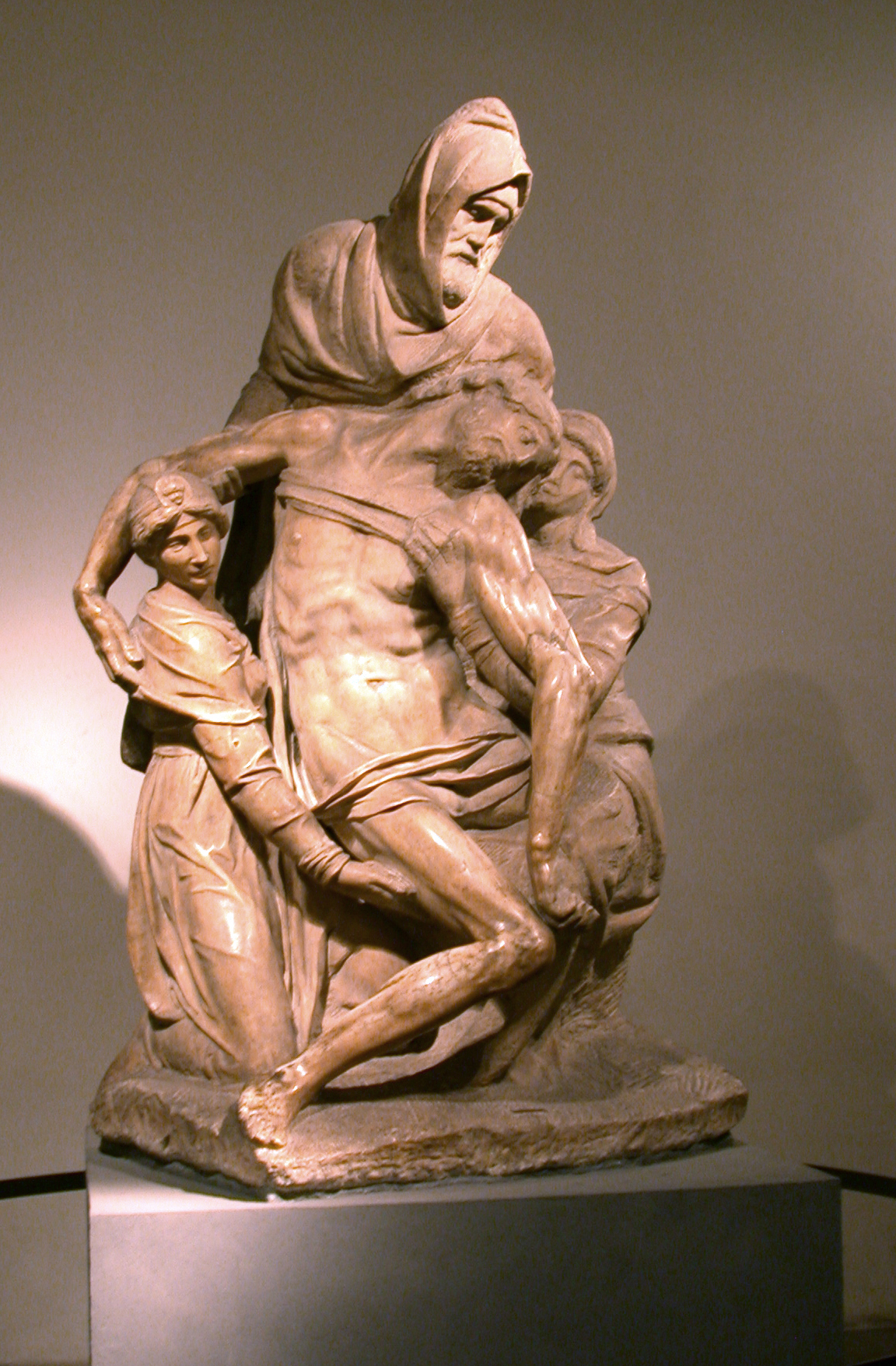
- Pietà (St. Peter's Basilica): a youthful marble group showing Mary holding the dead Christ, celebrated for its harmony and finish.
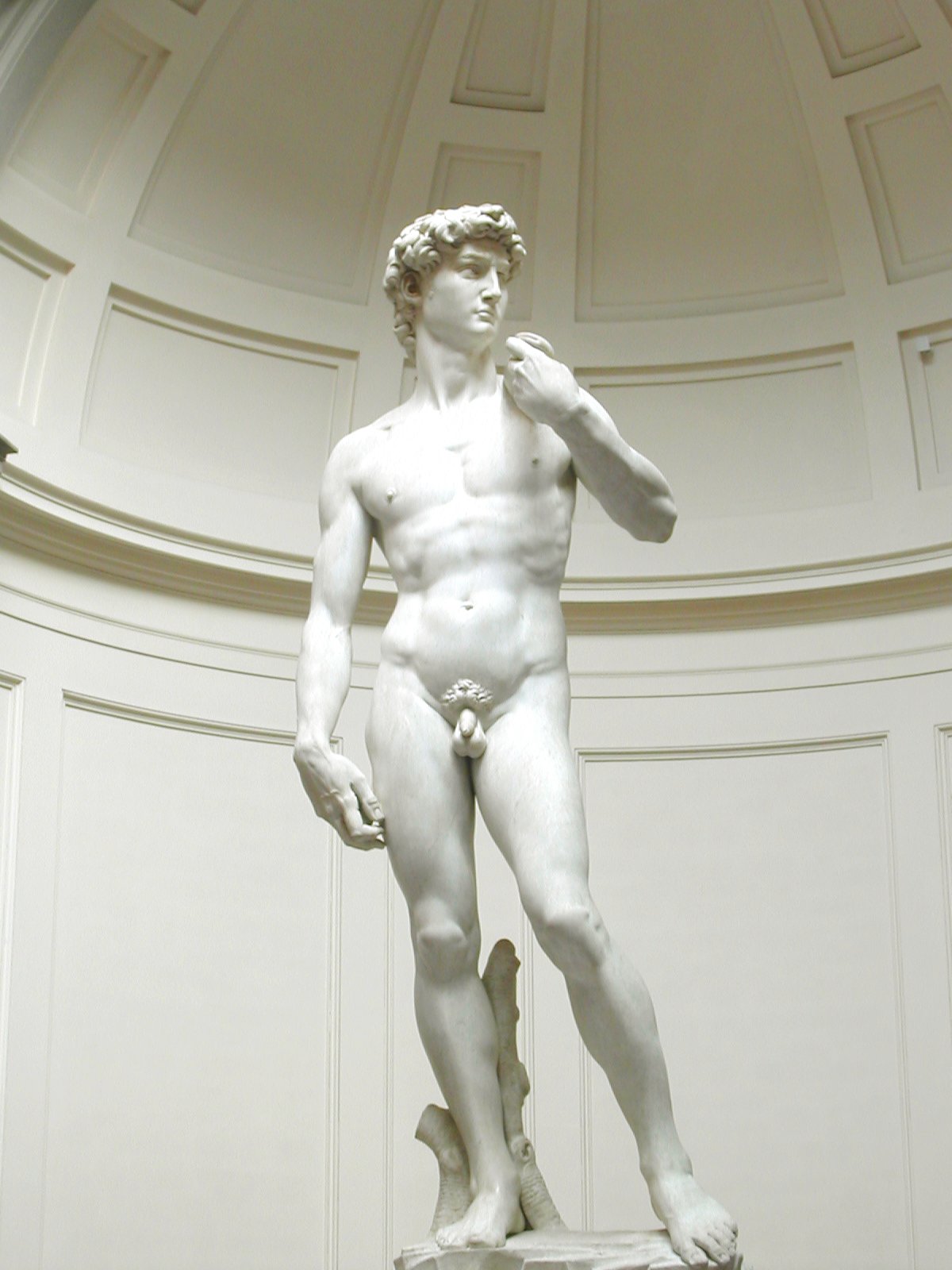
- David: a monumental marble statue originally placed in a public square in Florence, now housed in the Accademia Gallery; famous for its anatomy and symbolic civic presence.
- Sistine Chapel ceiling and the frescoes within: a sequence of painted scenes, including the Creation of Adam, that transformed large‑scale narrative painting.
- Last Judgment (altar wall of the Sistine Chapel): a later, more turbulent fresco that reinterprets the subject with muscular figures and complex composition.
- Architectural work: his redesign of the eastern end and the dome of St. Peter’s Basilica in Rome is a milestone in Renaissance architecture.
Life, documentation and career
Michelangelo left a substantial written record: sketches, poems, contractual papers and letters that illuminate his methods, finances and relationships with patrons. He worked for popes and civic authorities, accepting commissions that often spanned decades. Because he outshone almost all contemporaries in renown, early art historians treated his life as exemplary; the idea of the artist as a public intellectual and genius owes much to his reputation.
Influence and legacy
Michelangelo's combination of sculptural thinking in painting and architectural sense in sculpture changed later practices across Europe. His insistence on close observation of the human body and a dramatic use of scale influenced Baroque and later traditions, while his expressive approach fed debates about ideal beauty versus emotional intensity. Today his works remain pivotal both as masterpieces and as reference points in studies of technique, iconography and the social role of art during the Renaissance. For further reading on specific aspects of his life and reception see writings by Giorgio Vasari and modern scholarship that traces how his art continued to affect movements such as Mannerism and beyond.
Across museums, churches and scholarly literature, Michelangelo's career continues to be a central subject for understanding how one artist can shape the visual and cultural language of an age.
Questions and answers
Q: Who was Michelangelo?
A: Michelangelo was an Italian Renaissance painter, sculptor, architect, poet, and engineer. He is often referred to as a "Renaissance Man" due to his great talent in many areas.
Q: What are some of Michelangelo's most famous works?
A: Some of Michelangelo's most famous works include the Pieta in Saint Peter's Basilica and David which once stood in a plazza in Florence but is now in the Accademia Gallery. His most famous paintings are huge frescos, the Sistine Chapel Ceiling and the Last Judgement. His most famous work of architecture is the east end and dome of Saint Peter's Basilica.
Q: How much do we know about Michelangelo's life?
A: A lot is known about Michelangelo's life because he left many letters, poems and journals. Because he was so famous, he became the very first artist to have his biography (story of his life) published while he was still living.
Q: What did Giorgio Vasari say about him?
A: Giorgio Vasari said that he was the greatest artist of the Renaissance. He was sometimes called Il Divino ("the divine one"). Other artists said that he had terribilità (his works were so grand and full of strong emotion that they were scary).
Q: What style of art came from this idea of terribilità?
A: From this idea of terribilità came a style of art called Mannerism.
Author
AlegsaOnline.com Michelangelo: Italian Renaissance sculptor, painter, architect and poet Leandro Alegsa
URL: https://en.alegsaonline.com/art/126843