
South Island (Te Wai Pounamu) — geography, history and significance
The South Island of New Zealand (Te Wai Pounamu) is the larger main island by area. This article outlines its geography, climate, ecosystems, human history, economy and places of interest.
The South Island is the larger of the two main islands that make up New Zealand. It lies to the south of the North Island, separated by Cook Strait. Known in Māori as Te Wai Pounamu, the South Island covers about 151,000 square kilometres and has a predominantly temperate climate. Although it is larger by area, it contains roughly a quarter of the country's population.
Image gallery
10 Images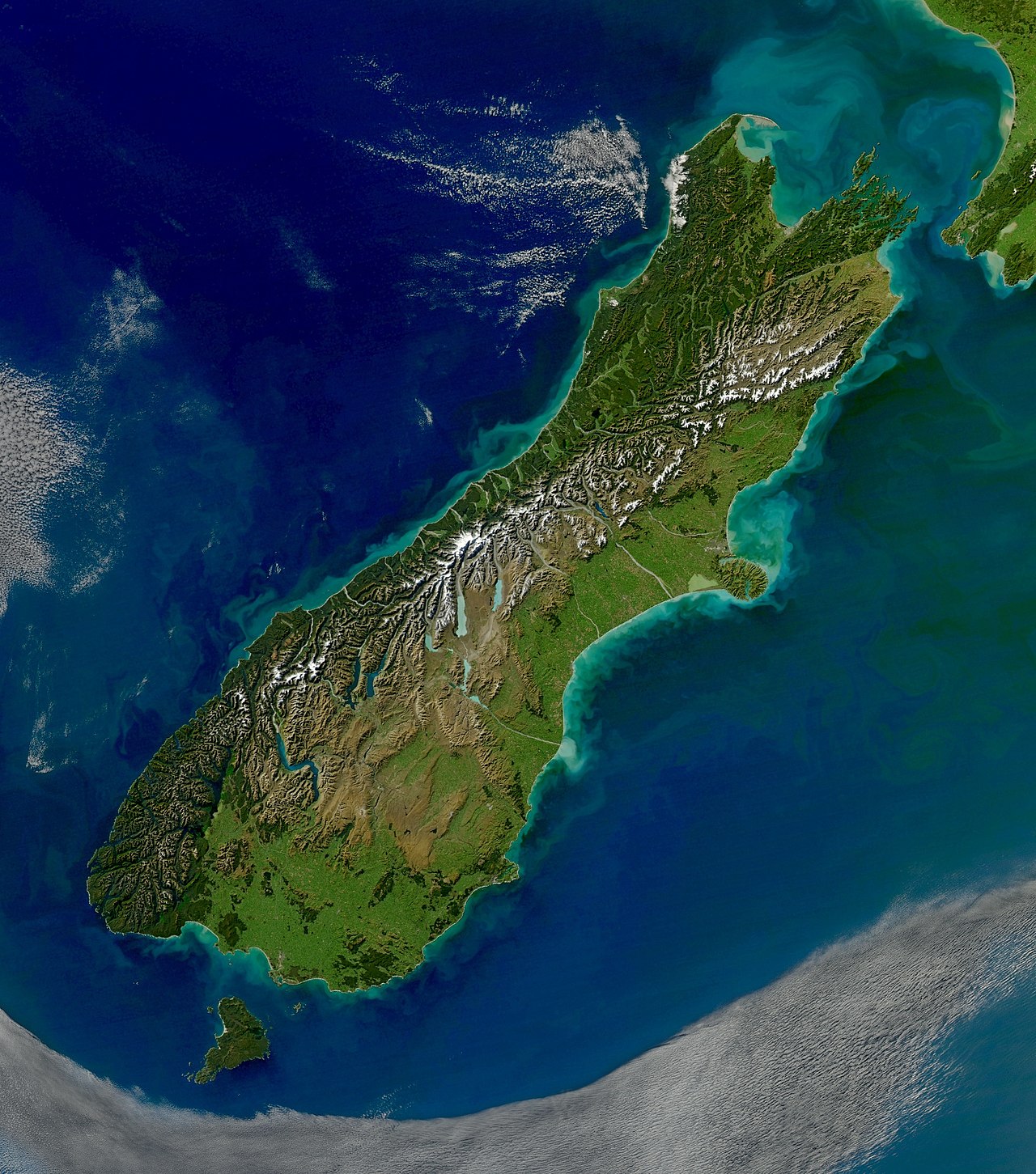


Landscape and physical features
The island is dominated by the Southern Alps, a mountain chain that runs along much of its length and gives rise to high peaks, glaciers and steep river valleys. Coastal plains and river basins spread eastward from the mountains, while deep fiords and rugged coastline characterise the south-west, especially in Fiordland. Major lakes, braided rivers and extensive glaciated terrain are typical in alpine regions.
Climate and ecosystems
Weather varies markedly by region: the west coast receives high rainfall and supports dense temperate rainforest, while eastern lowlands are drier and better suited to farming. Alpine zones have cold conditions and permanent snowfields at higher elevations. Native vegetation includes beech forests, tussock grasslands and alpine herbs. The island supports unique birdlife and several protected conservation areas established to preserve native species and habitats.
Human history and settlement
Māori were the first people to settle the island and gave many places their original names. European contact and settlement from the 19th century brought whaling, sealing and later gold rushes that shaped regional development. Over time agriculture, forestry and urban growth established towns and cities such as Christchurch, Dunedin and Invercargill, each with distinct historical and cultural legacies.
Economy and transport
The South Island economy combines primary industries—sheep and dairy farming, viticulture in regions such as Marlborough—alongside tourism, forestry and hydroelectric power generation. Transport links include major ports, an inter-island ferry connection across Cook Strait, highways and rail corridors that connect urban centres. Tourism and recreation, especially in alpine and coastal areas, contribute strongly to local economies.
Tourism, recreation and notable facts
Popular destinations include glacial valleys, the fiords of the south-west, wine country and adventure hubs like Queenstown. The island is also known for geological activity related to the Alpine Fault and for ongoing conservation efforts to protect endemic species. Distinctive features—large area, dramatic topography and relatively low population density—set the South Island apart within New Zealand.
- Major cities: Christchurch, Dunedin, Invercargill, Queenstown.
- Natural highlights: Southern Alps, Fiordland, Marlborough Sounds.
- Links and further reading: see national parks and regional guides via island overview and government resources at New Zealand sites.
Related articles
Author
AlegsaOnline.com South Island (Te Wai Pounamu) — geography, history and significance Leandro Alegsa
URL: https://en.alegsaonline.com/art/92165