
Software release
Comprehensive guide to the software release process: stages (pre-alpha, alpha, beta, release candidate), distribution options, versioning and maintenance practices for delivering working software to users.
Overview
A software release is the delivery of a specific, packaged version of a program to users, customers, or distribution channels. A released product may be sold, purchased, or downloaded, and it represents a checkpoint in the ongoing life of a codebase. The release process encompasses development work, testing, packaging, documentation, and distribution decisions that determine how and when people gain access to the software. For background on the general concept of software and its release, see software.
Image gallery
3 Images

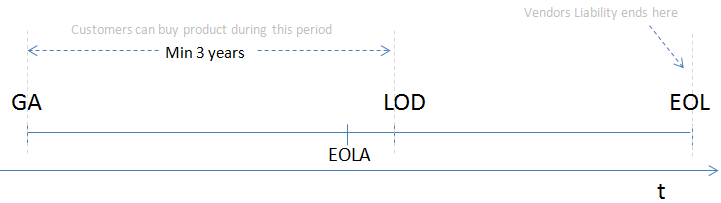
Common pre-release and release stages
Most development teams use a sequence of stages to reduce risk and improve quality before a general release. These stages are conventions rather than strict rules; names and practices vary across organizations.
- Pre-alpha — Early development where core architecture and features are implemented and initially verified by the development team. This stage focuses on building functionality rather than broad testing; some organizations call this the software development or proof-of-concept phase.
- Alpha — The first testable form released to a limited audience, sometimes internal testers or close partners. Feature sets are typically incomplete and many defects remain; the goal is to exercise main flows and detect major design or integration problems.
- Beta — Distributed to a wider group of testers or to the public, beta builds are meant for functional testing, feedback, and performance evaluation. Beta users report bugs, usability issues, and compatibility concerns that developers correct before the final release. Betas act as a practical prototype and can be feature-complete but unstable in edge cases (prototype).
- Release candidate (RC) — A near-final build where only critical fixes should keep it from becoming the official release. An RC is intended to demonstrate that the software meets release criteria and that remaining issues are manageable.
- General availability (GA) / Stable release — The version that the publisher declares suitable for production use. After GA, teams typically continue to provide updates, bug fixes, and security patches.
Parts of a release and post-release activity
A release bundle may include binaries, installers, source code, release notes, and documentation. Release engineering also considers packaging formats, target platforms, licensing, and distribution channels. After shipping, maintenance work addresses bug fixes and security updates; teams often issue patch releases or follow long-term support (LTS) policies to manage user expectations. Tools and practices such as continuous integration, automated testing, and release pipelines help accelerate trustworthy delivery.
History, practices, and notable distinctions
The idea of staged releases evolved as software grew more complex and user bases expanded. Early development often used informal handoffs, but modern engineering favors formalized stages, versioning schemes (for example, major.minor.patch), and release branches. Distinct release models exist: fixed-schedule releases, continuous delivery (frequent small releases), and rolling releases (constant incremental updates). Organizations choose approaches based on risk tolerance, user needs, and operational constraints.
Importance and practical considerations
Clear release practices reduce downtime, improve reliability, and make it easier to track regressions and fixes. Effective communication—through release notes and clear version numbers—helps users decide when to adopt a new version. Test coverage, user feedback during beta phases, and timely security updates are essential to maintain trust in released software. Common problems include insufficient testing in realistic environments, inadequate rollback plans, and misunderstanding between developers and release managers about readiness; these are addressed by formal acceptance criteria and staged rollouts.
Further reading: For related concepts such as testing and bug tracking, consult resources on quality assurance and defect management. Common terminology and extended guidance are available through engineering documentation and community best practices: see references on release engineering and lifecycle management via bug and issue tracking and development process materials referenced at software overviews and development guides. Example beta programs and prototype descriptions are often linked from project pages or community forums (prototype).
Release artifacts, distribution choices, and the stewardship of post-release updates are central to a healthy software lifecycle. Thoughtful staging—pre-alpha through RC to GA—combined with automated pipelines and clear versioning, helps teams deliver reliable products to users.
Related articles
Author
AlegsaOnline.com Software release Leandro Alegsa
URL: https://en.alegsaonline.com/art/91584