
Software development
The organized process of designing, building, testing and maintaining software. Covers lifecycle phases, methodologies, roles, tools, history, applications, and key distinctions from programming.
Software development is the systematic activity of creating computer programs, systems, and applications to meet particular needs. It encompasses planning, specification, construction, verification and ongoing upkeep. The term broadly covers both the engineering disciplines that frame how work is done and the practical tasks — such as writing code, assembling libraries and packaging releases — that produce a working product. For discussions of staged work and project governance see the software life cycle.
Image gallery
4 Images


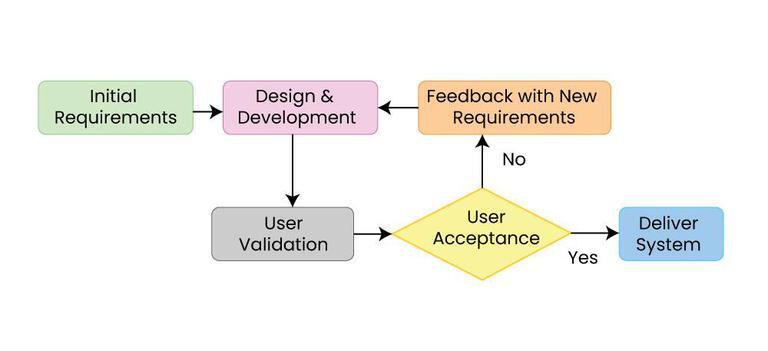
Phases and components
- Requirements: understanding user needs, business constraints and acceptance criteria.
- Design: architecture, interfaces and data models that guide implementation.
- Implementation: writing source code, integrating modules and using tools for compilation or interpretation; often referred to as coding.
- Verification: testing, defect tracking and quality assurance to find and resolve faults, including bug fixes referenced as bug fixing.
- Release and deployment: packaging, distributing and installing a product for users; see also software release.
- Maintenance: updates, security patches and feature evolution driven by user needs and operational feedback.
Practices, roles and tools
Approaches to development range from plan-driven models to iterative and adaptive methods. Traditional waterfall models emphasize sequential phases, while agile methods prioritize frequent increments and collaboration; the DevOps movement integrates operations and development to shorten delivery cycles. Common practices include source control, continuous integration and automated testing. Typical roles in delivery teams include developers, architects, testers, product owners and operations staff. Project artifacts and user-facing outcomes are created to satisfy stakeholders and end users, sometimes described simply as products for users.
Tooling plays a central role: integrated development environments, build systems, package managers, issue trackers and test frameworks enable repeatable work and coordination. Continuous integration/continuous deployment pipelines automate assembly, testing and release steps to reduce manual errors and speed feedback.
Historically, software development evolved from early hand-coded programs and batch processes to structured programming, object-oriented design and the open source movement. Challenges identified during the mid-20th century led to more formal software engineering practices; later, web and mobile platforms, cloud computing and containerization reshaped delivery and scaled systems. The Agile Manifesto and DevOps practices are recent milestones that emphasize people, automation and faster feedback loops.
Importance and distinctions: software development is distinct from informal programming in its emphasis on repeatability, quality, maintainability and stakeholder alignment. Well-designed processes reduce risk, improve predictability and help ensure security and performance. Applications range from embedded firmware and scientific software to large enterprise systems and consumer apps; many projects focus on reuse, testing and maintainability to control long-term cost and complexity.
Related articles
Author
AlegsaOnline.com Software development Leandro Alegsa
URL: https://en.alegsaonline.com/art/91578