
Socratic Method: Elenchus and Questioning as a Way of Inquiry
A method of disciplined questioning associated with Socrates that probes beliefs for consistency and clarity. Widely used in education, law, and therapy to develop critical thinking.
The Socratic method is a mode of cooperative dialogue in which a questioner leads interlocutors through a sequence of targeted questions to test the coherence, foundations and implications of their beliefs. Rather than presenting information directly, this approach relies on careful interrogation to reveal contradictions, sharpen definitions and encourage self-examination. The procedure most commonly associated with it is the elenchus, a form of cross-examination intended to assess the truth of a claim.
Image gallery
5 Images



Technique and common features
Typical features of the method include:
- A focus on precise definitions and assumptions rather than summary opinions.
- Successive, often brief questions that aim to expose inconsistency or hidden premises.
- Use of refutation to show that a position cannot consistently be held, prompting revision.
- A conversational tone that invites participation instead of lecturing.
In practice a facilitator will ask for examples, draw consequences from a claim, and then compare those consequences to other accepted beliefs. The goal is not always to produce a final answer but to clarify what can be reliably asserted.
Origins and historical context
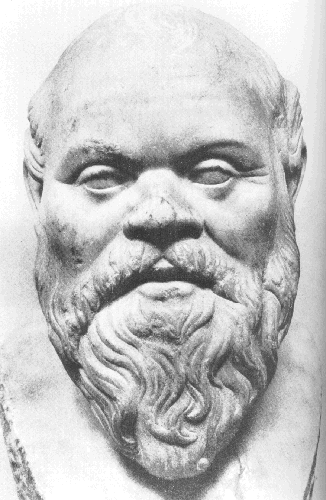
The technique is named for Socrates, the classical Athenian philosopher, and is recorded most fully in the dialogues of Plato and other ancient sources. It arose in the intellectual milieu of ancient Greek public life and schooling, where argument and debate were central to civic education. The elenchus (literally a testing or refutation) is often treated as Socratic practice: dialectical exchanges that expose errors and move discussants toward clearer, more defensible positions.
Aside from its classical roots, similar questioning traditions appear across cultures and have evolved into modern pedagogical and clinical techniques.
Uses, examples and limitations
The Socratic method is widely used in law schools to develop analytical skills, in classrooms to promote critical thinking, and in cognitive therapies as Socratic questioning to help patients examine maladaptive beliefs. Practical examples include exploring the meaning of justice, testing ethical intuitions, or uncovering contradictory commitments in an argument.
However, it has limits: persistent refutation can leave matters open-ended rather than settled; power dynamics in a discussion can make questioning feel confrontational; and not all problems are best addressed by interrogation alone. Nevertheless, the method remains a core model for disciplined inquiry and remains influential in education, debate, and reflective practice. For technical discussions of the practice and the term elenchus, see further readings and scholarly treatments.
Related articles
Author
AlegsaOnline.com Socratic Method: Elenchus and Questioning as a Way of Inquiry Leandro Alegsa
URL: https://en.alegsaonline.com/art/91494