
Sniper team: roles, organization, equipment and tactics
Comprehensive overview of sniper team composition, roles (sniper, spotter, flanker), equipment, tactics, history and how teams operate in modern military and law enforcement contexts.
Overview
A sniper team is a small, highly trained unit built around precision shooting and detailed observation. At its core the team pairs a shooter with a specialist observer, but configurations vary by mission. Teams are organized to locate, identify and, when authorized, engage targets at distances or under conditions that require careful preparation, concealment and coordination. The term covers both military and law-enforcement formations and a range of operational tasks from overwatch and counter-sniping to reconnaissance and force protection.
Image gallery
10 Images




Typical composition and roles
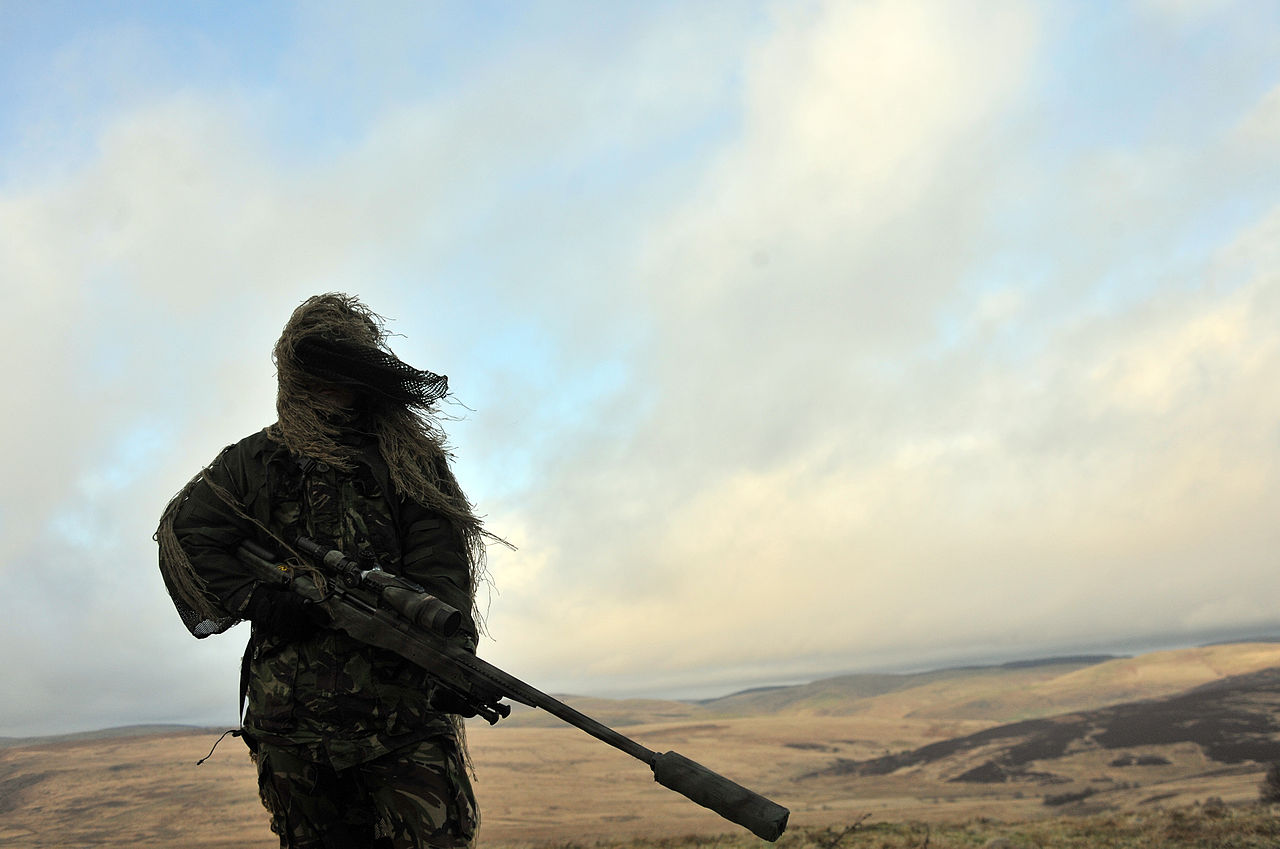
Most commonly, a sniper team consists of two primary operators: the sniper who delivers the aimed shot, and the spotter who conducts observation and ballistic calculations. A third member—often called a flanker or security element—may be attached to provide close protection, communications and route security. Members may cross-train and take on multiple responsibilities as situations change.
- Sniper: selects firing position, monitors weapon systems and executes the shot.
- Spotter: observes targets, records fall of shot, measures range and angle and estimates environmental effects.
- Flanker/Support: secures approaches, relays information and assists exfiltration or defensive actions.
Equipment and practical tasks
Teams rely on specialized tools to extend reach and accuracy. Besides a primary precision rifle (long-range rifle), common gear includes spotting scopes and binoculars, rangefinders, ballistic references or computers, and camouflage systems. Spotters typically use a spotting instrument—often a high-quality telescope or scope—to observe targets and impacts. They calculate parameters such as distance and angle, and make judgments about wind and other environmental factors. For close-in defense teams carry shorter-range firearms and other security gear, while visual concealment is achieved through camouflage and careful site selection. Teams also plan how to secure their positions against discovery or counterattack.
Tactics, training and coordination
Successful operations depend on rehearsed procedures: establishing observation posts, rehearsing communication protocols, recording ballistic data and planning exfiltration. Training emphasizes marksmanship, optics and meteorology, fieldcraft for concealment and movement, and integration with larger units or law-enforcement command. In modern practice teams also employ technology such as digital ballistic apps, remotely piloted aircraft for reconnaissance, and encrypted radios—while maintaining low signatures to avoid detection.
History and distinctions
While individual sharpshooters have long appeared in warfare, the dedicated two-person sniper team became a formalized element in 20th-century military forces as optics and precision rifles improved. In doctrine, a sniper team differs from a designated marksman or a lone sniper: teams emphasize mutual support, observation and calculated engagement rather than isolated, ad hoc shooting. They are valued for precision over volume, and for the intelligence-gathering role their observational assets provide.
Operational importance and considerations
Sniper teams contribute to force protection, area denial, high-value-target interdiction and intelligence. Their use is governed by tactical rules, mission objectives and legal or ethical constraints that vary by service and jurisdiction. Because they operate covertly and with decisive effect, commanders plan employment carefully to balance tactical advantage with broader operational and political considerations.
Related articles
Author
AlegsaOnline.com Sniper team: roles, organization, equipment and tactics Leandro Alegsa
URL: https://en.alegsaonline.com/art/91321
Sources
- commons.wikimedia.org : Sniper teams