
South African Border War (1966–1990) — overview, causes, and legacy
A concise encyclopedia entry on the South African Border War (1966–1990): origins in colonial mandates, guerrilla struggle by SWAPO, regional escalation with Angola and Cuba, and the path to Namibian independence.
Overview
The South African Border War, fought mainly between 1966 and 1990, was a protracted and complex conflict centred on South West Africa and adjacent border regions. It pitted the apartheid-era government of South Africa and its security forces against the nationalist guerrilla movement SWAPO (South-West Africa People's Organisation) and allied states and movements. The war combined elements of anti-colonial insurgency, Cold War proxy competition and interstate clashes that ultimately shaped the independence of what became Namibia.
Image gallery
10 Images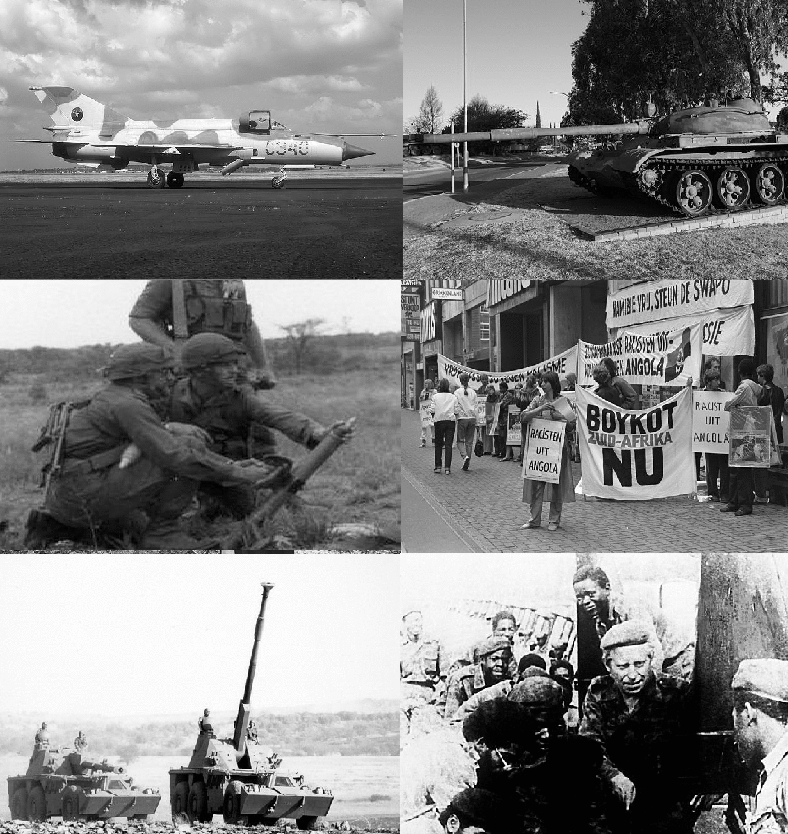


Historical roots and causes
The origins of the conflict reach back to the collapse of German colonial rule in Africa during World War I. South African forces occupied German South West Africa and, under a League of Nations mandate, administered the territory on behalf of the former wartime allies and the British Empire. After World War II, debates over the territory's international status intensified. Pretoria resisted placing the territory under a United Nations trusteeship and moved to integrate the white settler population into South African institutions, including representation in the Parliament of South Africa. These policies, set against apartheid and rising African nationalism, provoked local and international opposition.
Key actors and phases
- SWAPO: formed in the early 1960s to campaign for independence and to organize armed resistance.
- South African Defence Force and police: responsible for counter-insurgency operations, border security and cross-border strikes.
- Angolan Civil War and foreign involvement: following independence in the mid-1970s, Angola became a sanctuary and staging area for SWAPO, drawing in Cuban and other foreign forces.
- Cold War patrons: SWAPO and its allies received training and material support in a global context that included assistance from the Soviet Union and other communist states.
Military course and escalation
What began as cross-border raids, ambushes and guerrilla activity expanded in the 1970s and 1980s into larger conventional engagements and deep-penetration operations. South African units conducted raids into neighbouring countries to destroy base camps and supply lines, and Clashes sometimes involved the Angolan armed forces and international contingents. Cuba sent military personnel to support the Angolan government and at times directly confronted South African forces. Fighting was concentrated along the borders and in Angolan territory, but its effects were felt across southern Africa through refugee flows, militarization and political pressure.
Negotiation, accords and independence
By the late 1980s diplomatic momentum grew to end the regional wars. Negotiations culminated in a multi-party agreement that linked the withdrawal of foreign forces, the end of cross-border operations and arrangements for a transition to independence. The Tripartite Accord involving South Africa, Angola and Cuba established the conditions under which Cuban troops would withdraw and South Africa would end its control of the territory. The process paved the way for UN-supervised elections and the formal emergence of the independent state of Namibia in 1990.
Consequences and legacy
The Border War left long-term political, social and economic legacies. It accelerated regional realignment in southern Africa, influenced the decline of apartheid-era policy, and contributed to broader Cold War-era negotiations in Africa. Human costs included military and civilian casualties, displaced populations, and a heavy burden on communities in border areas. The conflict is studied as an example of a decolonization struggle that was shaped as much by local nationalist aspirations as by international geopolitics and competing ideologies.
Further context and notable facts
- The territory of conflict was referred to during the period as South West Africa and had its roots in colonial transfers following the First World War.
- International institutions, notably the League of Nations and later the United Nations, featured in legal and diplomatic debates about governance and sovereignty.
- The war illustrates how regional liberation movements intersected with superpower competition after World War II.
For an introduction to primary actors and timelines, consult overviews of SWAPO, the South African Defence Force and the political histories of Angola and Namibia. Academic and documentary sources offer detailed accounts of operations, negotiations and the transition to independence.
Questions and answers
Q: What was the South African Border War?
A: The South African Border War was a conflict that took place from 1966 to 1990 primarily in South West Africa (now Namibia) between South Africa on one side and the South-West Africa People's Organisation (SWAPO) and its allies on the other.
Q: What were the roots of this conflict?
A: The roots of this conflict can be traced back to World War I, when South Africa invaded and conquered the colony of German South West Africa on behalf of the British Empire and other Allies of World War I.
Q: How did SWAPO come into existence?
A: In 1962, SWAPO was formed to resist South African rule and petition for South West African independence. With support from the Soviet Union, SWAPO began training guerrillas and from 1966 onwards frequently clashed with the South African police and army.
Q: How did Cuba become involved in this war?
A: In 1975, when Angola gained independence and its new communist government began providing support to the guerrillas, Cuba sent troops to bolster the Angolan government which led to direct involvement in some battles with the Angolan army.
Q: What agreement ended this war?
A: In 1988, a Tripartite Accord was signed by South Africa, Angola, and Cuba committing them to peace. This accord stated that ifSouth Africa withdrew fromSouth West Africagranting itindependence thenCuba would withdrawfromAngola.
Q: When did Namibia gain independence?
A: Namibia gained independence in early 1990 as a result ofthe Tripartite Accord signed bySouthAfrica,AngolaandCuba.
Related articles
Author
AlegsaOnline.com South African Border War (1966–1990) — overview, causes, and legacy Leandro Alegsa
URL: https://en.alegsaonline.com/art/92099
Sources
- sites.google.com : Bushwar Statistics
- photius.com : Portugal Angola
- theatlantic.com : Cuba: Havana's Military Machine
- rhodesia.nl : "Military Chronicle of South-West Africa"