
Sopwith Camel: British World War I Fighter Biplane
Comprehensive overview of the Sopwith Camel: design, handling, operational history, combat record and legacy of the Royal Flying Corps’ best‑known WWI fighter.
The Sopwith Camel was a British single‑seat fighter biplane introduced to frontline units in mid‑1917. Built by the Sopwith Aviation Company, it combined a compact, strongly braced wooden airframe with twin synchronized machine guns and a powerful rotary engine. In skilled hands the Camel was highly manoeuvrable and deadly in close combat; in inexperienced hands it could be unforgiving and demanding to fly.
Image gallery
10 Images


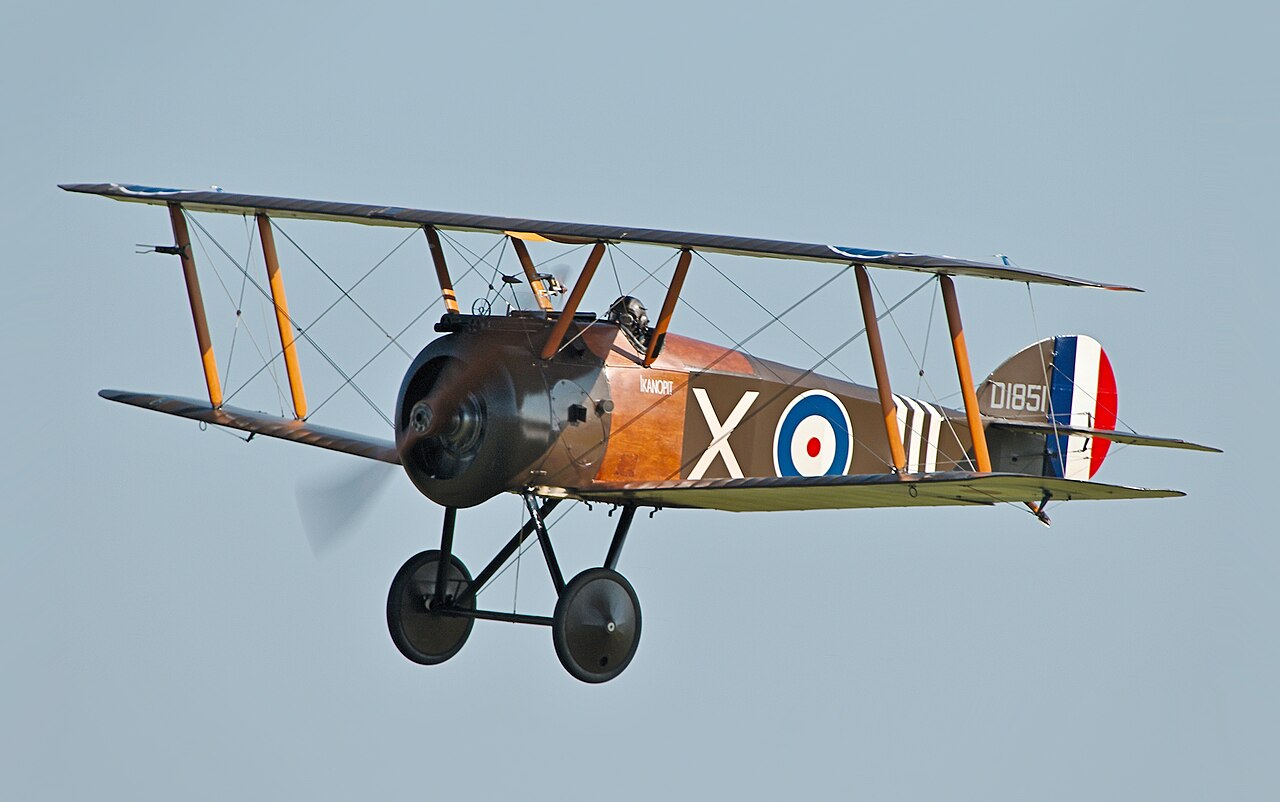


Development and design
Designed as a successor to earlier Sopwith types, the Camel concentrated significant mass—the engine, pilot, guns and forward fuel tank—close to the nose and centreline. This compact layout produced rapid roll and yaw response, an asset in dogfights, but also magnified the effects of the rotary engine’s torque and gyroscopic precession. Several rotary powerplants were fitted during production, and the type saw continual refinement to structure and controls as operational experience accumulated.
Structure and equipment
The Camel used a conventional two‑bay biplane arrangement with a wooden frame and fabric covering. Armament consisted of two forward‑firing, synchronized machine guns mounted over the upper forward fuselage; ammunition and sighting arrangements were optimised for firing through the propeller arc. The compact fuselage and close placement of heavy components gave the type its characteristic agility and demanding trim behaviour.
Handling characteristics
The aircraft’s light, sensitive controls and concentrated mass distribution made it exceptionally responsive in combat. Pilots who learned to manage engine torque, throttle changes and the effects of fuel load could exploit the Camel’s strengths: rapid, tight turns and quick responses to control inputs. Conversely, the same attributes led to many accidents. The rotary engine required attentive mixture and throttle handling; mismanagement during takeoff or climb could induce engine cut‑out or abrupt yaw. Full fuel tanks or rearward weight shifts altered the centre of gravity sufficiently to increase stall and spin risk. Spin recovery in many early fighters demanded deliberate technique and practice, and the Camel’s behaviour in a stalled turn was noted as potentially dangerous for the inexperienced.
Operational service
The Camel entered service with the Royal Flying Corps and Royal Naval Air Service in June 1917 and became a mainstay of Allied fighter units through 1918. It performed a variety of roles: air superiority, convoy and bomber escort, ground attack and close infantry support. In air combat the type proved effective at low and medium altitudes, where its manoeuvrability and concentrated firepower could be fully exploited. As newer designs with improved high‑altitude performance appeared in 1918, Camels were increasingly assigned to low‑level duties where they continued to be useful.
Combat record and pilots
The Camel is credited in many sources with more enemy aircraft destroyed than any other Allied type during the war, reflecting both its numbers and its frontline prominence. A number of successful fighter pilots and aces flew Camels; their accounts emphasise the need for disciplined throttle and stick work to avoid the type’s handling traps while taking advantage of its combat strengths. The Camel’s achievements contributed to the reputation it holds in memoirs and histories of the air war.
Legacy and preservation
The Sopwith Camel remains an iconic example of First World War fighter design, illustrating the trade‑offs between agility and stability that early aeronautical engineers faced. Its wartime service influenced pilot training, aircraft layout and postwar design priorities, particularly the search for improved stability without excessive loss of manoeuvrability. Several original airframes and modern reproductions survive in museums and in flying condition, preserved as reminders of early aerial combat and rapid technological change during 1914–1918.
Further reading and resources
For technical descriptions, pilot reports and operational histories consult specialist works and archival collections. Online and printed resources provide detailed studies of design, engines and combat use: Sopwith Camel overview, biplane development, rotary engine effects, engine torque and handling, pilot reports, takeoff characteristics, stall and spin behaviour, combat claims and statistics, ground-attack employment, 1918 operations and armistice-era service.
Note: This article summarises broadly known aspects of the Sopwith Camel. For detailed technical specifications or contested figures, consult dedicated technical monographs, official squadron records and primary‑source pilot narratives.
Questions and answers
Q: What was the Sopwith Camel?
A: The Sopwith Camel was a British fighter biplane used in World War I, famous for not flying very well.
Q: When did the Sopwith Camel enter service?
A: The Sopwith Camel entered service in June 1917.
Q: Why was the Sopwith Camel unpleasant to fly?
A: The Sopwith Camel was unpleasant to fly because controlling the engine torque made flying it difficult and dangerous.
Q: Why did many crashes occur with the Sopwith Camel?
A: Many crashes occurred with the Sopwith Camel due to mishandling on takeoff, where a full fuel tank affected the center of gravity.
Q: What was the Camel credited with during the war?
A: The Camel was credited with shooting down 1,294 enemy aircraft, more than any other Allied fighter.
Q: What happened to the Camel in 1918?
A: By 1918 better aircraft had been invented, so the Camel soon became a ground-attack and infantry support aircraft.
Q: Why did the Camel remain in service until the armistice?
A: Flights of Camels stopped the advancing German Army in March 1918, so the Camel remained in service until the armistice (ceasefire).
Related articles
Author
AlegsaOnline.com Sopwith Camel: British World War I Fighter Biplane Leandro Alegsa
URL: https://en.alegsaonline.com/art/91957