
Smithsonite
Smithsonite is a zinc carbonate mineral (ZnCO3) that occurs as a secondary ore of zinc. It is notable for its botryoidal habits, varied colors from impurities, and historical confusion with calamine.
Overview
Smithsonite is a carbonate mineral and a recognized mineral species whose ideal chemical composition is zinc carbonate (ZnCO3). It was named for the English chemist James Smithson and is commonly found as a secondary product in the oxidized zones of zinc-bearing deposits. Specimens are prized both as ore and as attractive collector material.
Image gallery
8 Images




Physical and chemical characteristics
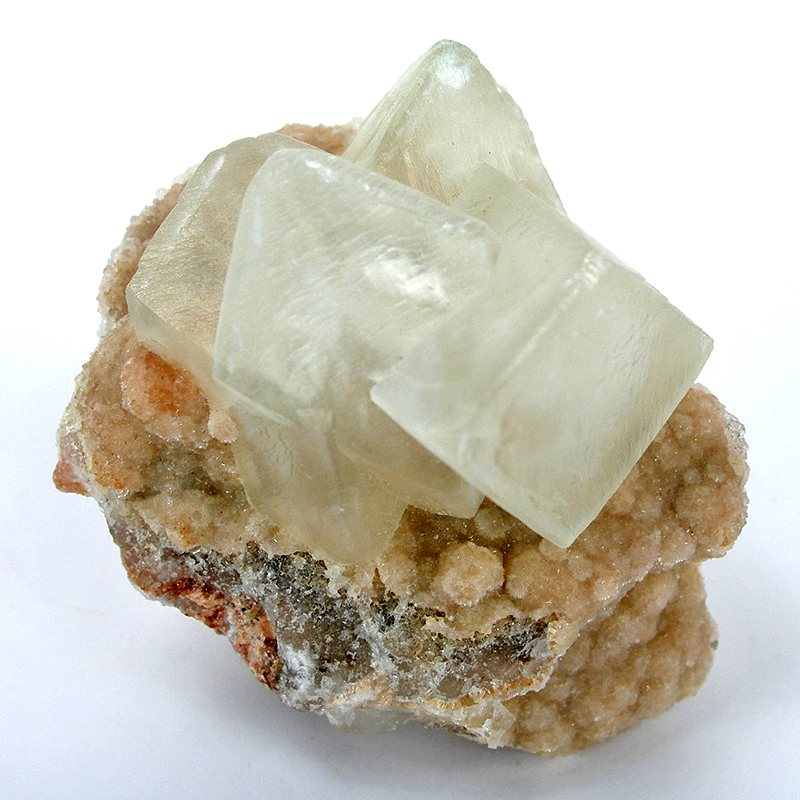
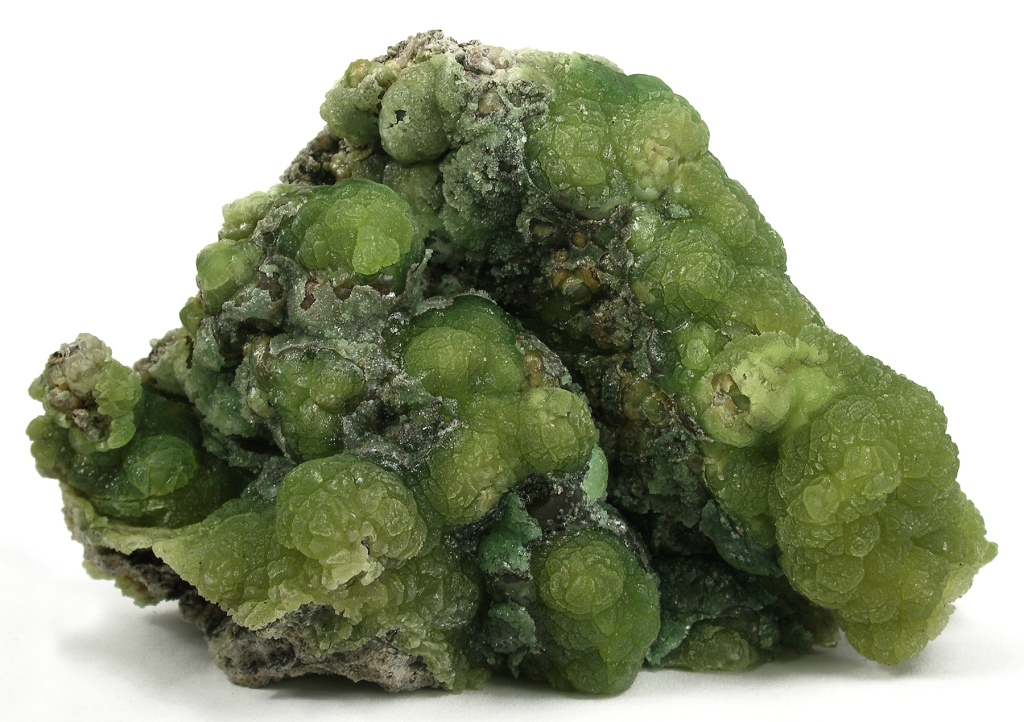
Smithsonite typically forms in the trigonal (rhombohedral) crystal system but is most often encountered as botryoidal, globular, stalactitic, or compact masses rather than as well-formed faces. Typical properties include a Mohs hardness around 4.5 and a specific gravity about 4.4–4.5. The mineral may be translucent to opaque with a vitreous to pearly luster.
- Color: white, gray, blue, green, pink, yellow or brown depending on trace elements.
- Reaction: like other carbonates, smithsonite effervesces weakly in dilute acids.
- Substitution: other cations such as manganese can substitute for zinc, producing color changes and a compositional series toward manganese carbonate forms; see manganese substitution.
Formation and occurrence
Smithsonite is a secondary mineral formed by the weathering and oxidation of primary zinc sulfides and other zinc minerals. It commonly coats or replaces earlier minerals and is associated with minerals such as hemimorphite, calcite, willemite and sphalerite. As a secondary ore, it has been an important source of zinc in many localities around the world.
Uses and significance
Historically and economically, smithsonite has been mined for zinc extraction when present in sufficient concentrations. Fine, colorful specimens are used for lapidary work and as cabinet minerals. Its relatively low hardness limits some jewelry uses, but well-polished pieces are used in cabochons and ornaments.
History and distinguishing features
For much of the 18th and 19th centuries, the name "calamine" was applied loosely to both smithsonite and the unrelated zinc silicate hemimorphite; modern mineralogy separates them based on composition and crystal structure. Identification of smithsonite relies on its carbonate chemistry, physical habit, and simple field or lab tests such as acid reaction and density measurements. Collectors value specimens from classic localities for their color and botryoidal forms.
Practical notes
When studying or using smithsonite, consider that color alone is not diagnostic because trace impurities strongly influence appearance. Laboratory methods (X-ray diffraction, optical study, or chemical analysis) provide definitive identification. For additional resources on mineral properties and occurrences, consult mineral databases and regional guides through the links provided.
Related topics and data sources: mineral references, chemical data, ore information, zinc resources, compositional variations.
Related articles
Author
AlegsaOnline.com Smithsonite Leandro Alegsa
URL: https://en.alegsaonline.com/art/91248
Sources
- mindat.org : "Smithsonite: Mineral information, data and localities"
- webmineral.com : "Smithsonite Mineral Data"