
Sino‑Soviet split: causes, course, and global consequences
The Sino‑Soviet split was the breakdown of relations between the People's Republic of China and the Soviet Union during the Cold War, reshaping communist movements and global alignments from the late 1950s.
The Sino‑Soviet split refers to the progressive rupture of political, ideological and strategic ties between the People's Republic of China and the Soviet Union during the Cold War. What began in the mid‑1950s as disagreements over doctrine and leadership grew into open antagonism by the 1960s. The rift influenced the direction of global communism, regional security in Asia, and great‑power diplomacy throughout the remainder of the 20th century.
Image gallery
10 Images




Background: cooperation and early tensions
During and after World War II, Soviet support helped the Chinese Communist movement consolidate power in mainland China. Prior to that, Soviet interactions with China were complex: Moscow supplied weapons at various points and at times favored different Chinese factions, including limited assistance to the Kuomintang in specific circumstances during the Second Sino‑Japanese War. After the Communist victory in the Chinese Civil War, Beijing and Moscow formalized ties, but asymmetries in size, experience and strategic outlook meant the relationship was never equal.
Core causes of the split
Several overlapping causes produced the split. Ideologically, leaders in Beijing rejected what they called Soviet "revisionism" after Soviet leader Nikita Khrushchev signaled a move away from Stalinist methods and toward peaceful coexistence with capitalist states. Mao Zedong and other Chinese leaders criticized this approach, preferring continued revolutionary activism and a stricter interpretation of communism. Strategically, disputes arose over how to confront the United States and over influence in newly independent countries. Practical triggers included the withdrawal of Soviet technical aid and advisors around 1960 and public polemics exchanged between the two parties.
Major episodes and timeline
- Mid‑1950s: Differences grow after the United States and Soviet Union enter a period of cautious détente and Moscow questions some Stalinist practices.
- 1956: Key policy shifts in Moscow provoke criticism from Beijing and other communist parties.
- 1960: Soviet economic and technical assistance to China is sharply reduced, straining bilateral projects.
- 1964: China conducts its first nuclear test, an event linked in part to concerns about reliable external support.
- 1969: Border clashes along the Ussuri/Amur River mark a violent low point in relations.
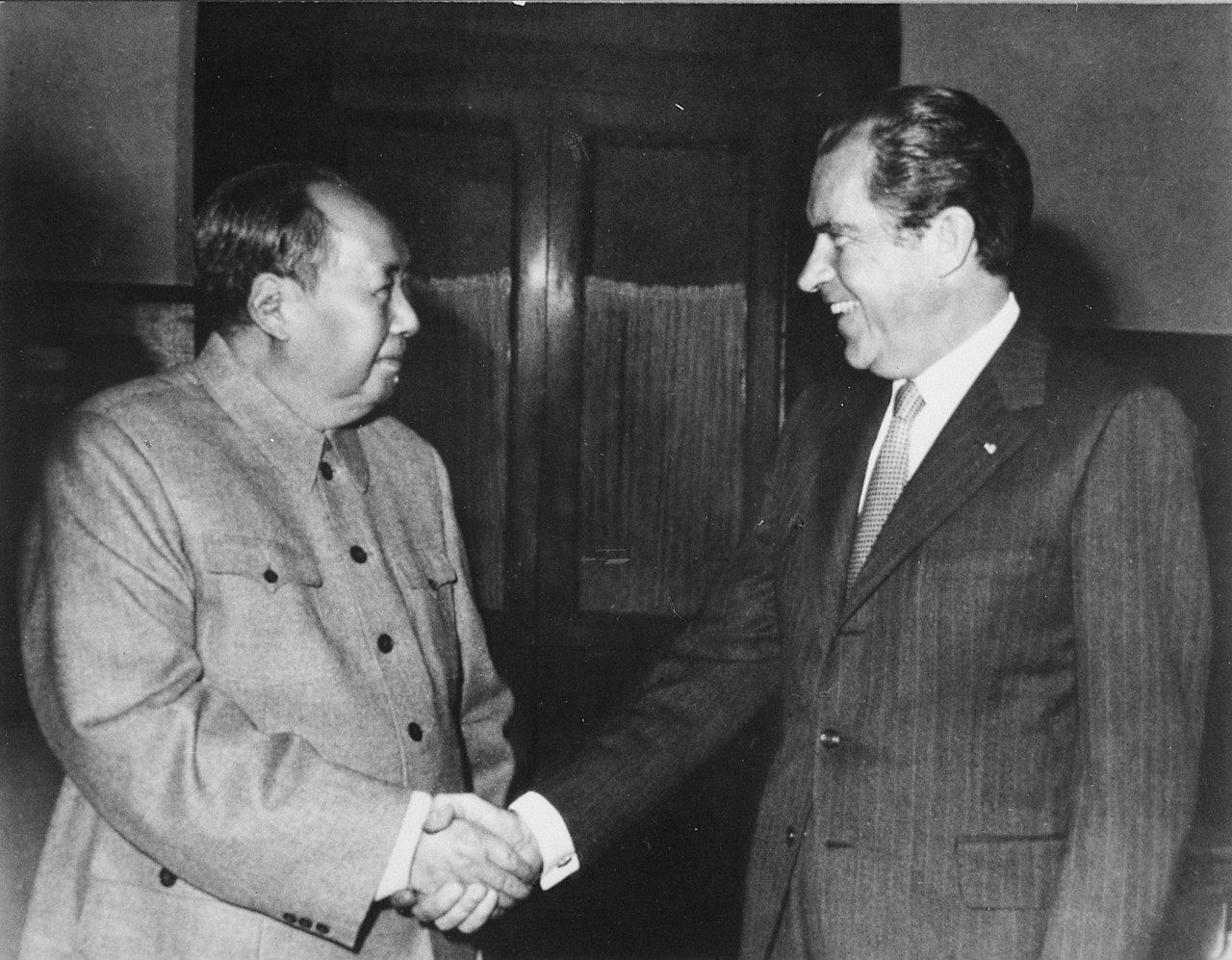
- Early 1970s: The split reshapes international alignments and helps open a path toward Sino‑American rapprochement.
Consequences and significance
The split had far‑reaching effects. It fragmented the international communist movement, forcing parties and movements worldwide to choose rhetorical and sometimes material allegiances. For East Asia, divided Sino‑Soviet relations complicated security calculations: border tensions increased the risk of localized conflict, while both capitals sought influence in the developing world. In diplomacy, the rift helped create the conditions for triangular diplomacy in the 1970s that eventually led to improved ties between China and the United States.
Beyond geopolitics, the dispute affected economic cooperation, military planning and the transfer of technology between the two countries. Cultural and propaganda campaigns intensified as each side tried to justify its perspective to domestic and foreign audiences. The split also influenced neighboring states and communist parties, which sometimes aligned with Moscow, sometimes with Beijing, and sometimes attempted to carve a distinct path.
Legacy and notable distinctions
The Sino‑Soviet split illustrates how ideological movements can fracture over strategy and leadership as much as doctrine. It is often discussed alongside other Cold War divisions but remains distinct because it involved two major communist powers disputing both the meaning of socialism and practical responses to a changing world order. The rupture was not a single event but a process of escalation, negotiation and intermittent confrontation that left a durable imprint on international relations.
For further context on related topics, see materials on the role of Mao Zedong, the broader history of the Cold War, the evolution of communist movements, and conflicts such as the Second Sino‑Japanese War and the Chinese Civil War that shaped modern East Asia. Scholarly works and primary documents remain essential for detailed chronology and interpretation.
Key reference points for readers: the early postwar cooperation phase, the ideological split after 1956, the withdrawal of Soviet assistance around 1960, China's independent nuclear program, and the 1969 border clashes — each marks a chapter in a multi‑year breakdown that reshaped Cold War alignments.
For online resources and archives, consult specialized collections and diplomatic histories that discuss the policies of the Soviet Union, the responses of the People's Republic of China, and the reactions of other states to this pivotal Cold War development.
Related articles
Author
AlegsaOnline.com Sino‑Soviet split: causes, course, and global consequences Leandro Alegsa
URL: https://en.alegsaonline.com/art/90677