
Songhai Empire (15th–16th century West Africa)
A dominant Sahelian state of the 15th–16th centuries, centered on Gao, Timbuktu and Djenné; noted for trans‑Saharan trade, Islamic scholarship, strong military rule and eventual decline after Moroccan invasion.
Overview
The Songhai Empire was a powerful state that controlled large parts of the western Sahel in the 15th and 16th centuries. Centered on the city of Gao along the Niger River, the polity incorporated important commercial and intellectual centers such as Timbuktu and Djenné. Its ruling elite came largely from Songhai-speaking groups, and the empire blended indigenous institutions with Islamic political and legal ideas as it expanded.
Image gallery
7 Images


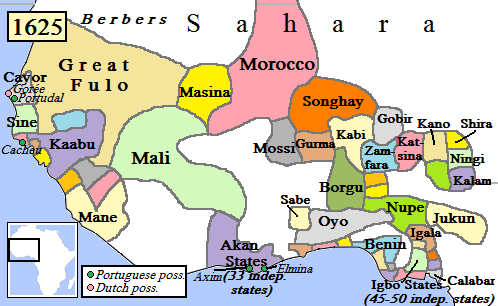
Territory and characteristics
At its height the empire extended across riverine zones, savannah and semi‑arid Sahel. Control of stretches of the Niger River was crucial for transport, taxation and supplying garrisons. The state's cohesion depended on a combination of centralized authority in the capital, provincial governors or subordinate chiefs, and military forces able to secure trade routes and tributary regions.
Government and leadership
Two principal dynastic phases are commonly identified: an early Sonni line and the later Askiya dynasty. The Sonni rulers, most notably the conqueror often referred to as Sonni Ali, greatly expanded territory and consolidated control over trading towns. Around the end of the 15th century the Askiya family assumed power; Askia Muhammad (Askia the Great) is remembered for a reorganization of administration, promotion of Islamic learning and diplomatic contacts across the Muslim world.
Economy and trade
Trade was the backbone of Songhai wealth. The empire sat astride trans‑Saharan routes linking goldfields and forest regions to North African and Mediterranean markets. Important commodities included gold, salt, kola nuts, cloth and enslaved people taken in warfare or tribute. Cities such as Timbuktu and Djenné functioned as market hubs where merchants, craftsmen and scholars converged.
- River transport on the Niger facilitated grain production and inland trade.
- Taxes and customs duties on caravans and river traffic provided revenue for the state.
- Control of jula (merchant) networks connected the empire to long‑distance markets.
Culture, religion and learning
Islam was an influential element of elite culture but existed alongside older beliefs and practices among the populace. Urban centers developed notable scholarly communities and madrasas; the libraries and schools of Timbuktu and other towns attracted students and manuscripts from across the Islamic world. Literacy in Arabic, legal scholarship, and Sufi devotional traditions were parts of Songhai intellectual life.
Decline and legacy
After the deaths of key rulers and under pressure from internal factionalism, the empire weakened in the late 16th century. In 1591 a Moroccan expedition armed with firearms defeated Songhai forces at the Battle of Tondibi and occupied major cities, an event that accelerated political fragmentation. Although successor states and local polities persisted, the era of a centralized Songhai imperial system ended. The empire's legacy survives in regional histories, in the continued importance of its trading towns, and in the cultural memory of West African Islamic scholarship. For maps and more detailed studies see sources connected to the western Sahel and scholarship on Timbuktu and Gao.
Related articles
Author
AlegsaOnline.com Songhai Empire (15th–16th century West Africa) Leandro Alegsa
URL: https://en.alegsaonline.com/art/91828