
Slave states and free states in U.S. history
Overview of U.S. slave states and free states: definitions, legal and social differences, key events and legislation, the role in the sectional conflict and abolition with the Thirteenth Amendment.
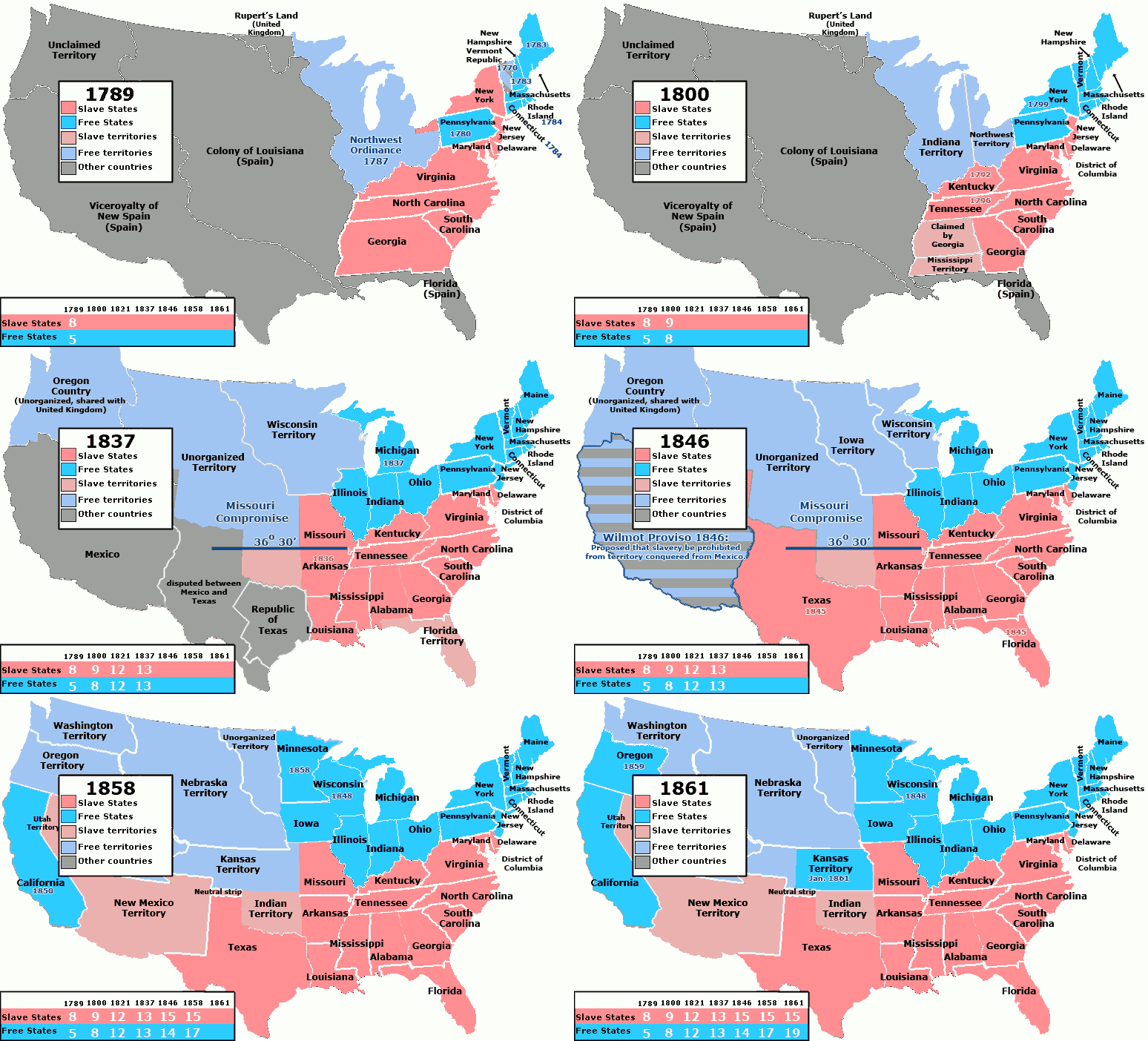
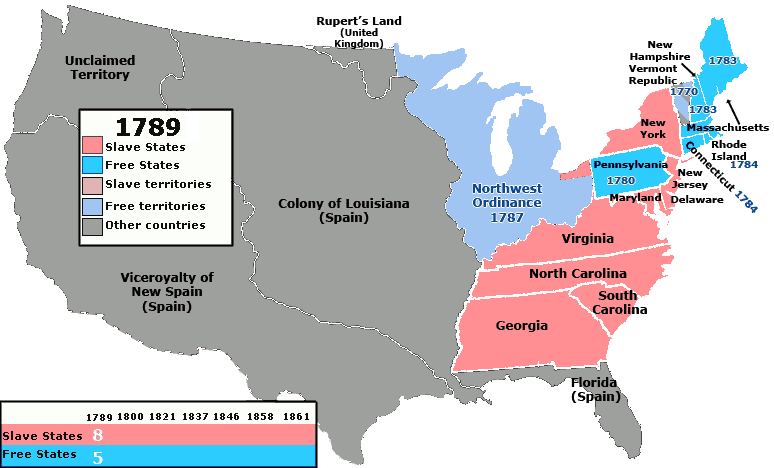
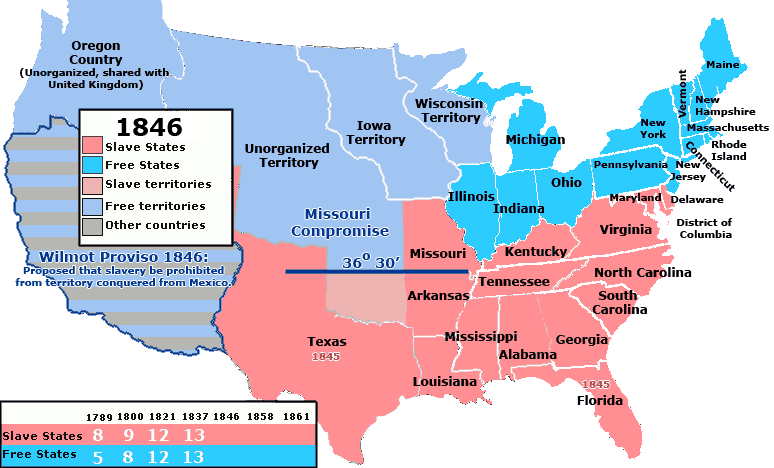
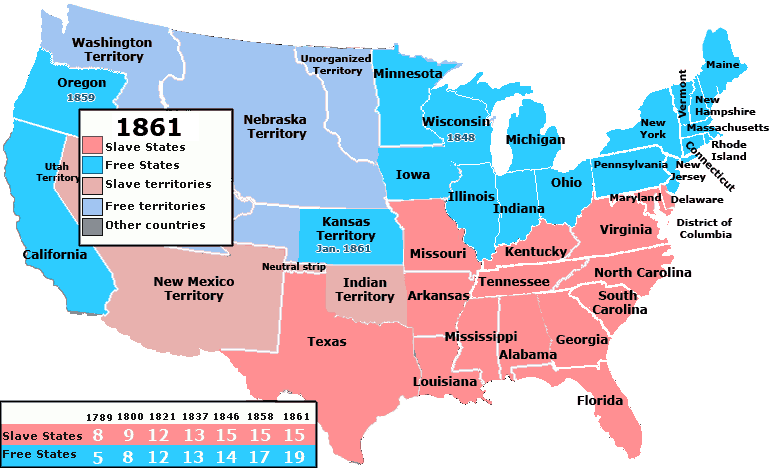
The terms slave state and free state describe whether slavery was legally permitted within a U.S. state at a particular time. In the broader history of the United States, this distinction shaped political power, migration, and economic development. A U.S. state designated as a slave state allowed chattel slavery under its laws; a free state had outlawed or restricted slavery. The differing systems contributed directly to sectional tensions that culminated in the American Civil War.
Legally, the presence or absence of slavery affected constitutions, property law, labor systems, and representation. Debates over whether newly formed states or organized territories would admit slavery were frequent: lawmakers negotiated compromises, negotiated congressional votes, and at times resorted to violence. Slavery itself—understood broadly as the institutional ownership of people—was a central social and economic institution in slave states, while many free states employed gradual abolition laws, compensated emancipation, or immediate abolition statutes.
Image gallery
9 Images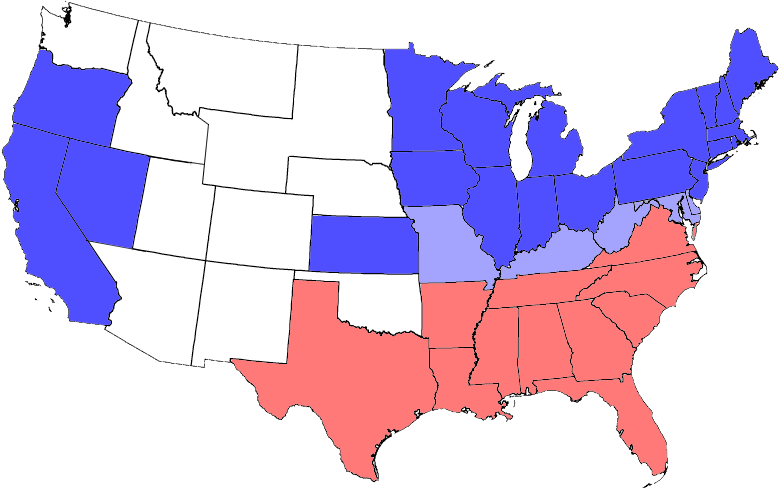



Key events and legislation
- Early compromises and regional settlements shaped the balance between slave and free states.
- Legislative acts and court decisions—such as the Missouri Compromise, the Compromise of 1850, the Kansas-Nebraska Act, and the Dred Scott decision—altered the legal and political landscape.
- The election of 1860 and the secession of Southern states triggered armed conflict between the sections.
- After the war, the ratification of the Thirteenth Amendment abolished slavery throughout the United States except as punishment for crime, rendering the formal categories of slave and free states obsolete.
Some nuances deserve emphasis. Border states were slaveholding states that did not secede during the Civil War; they occupied a complex political position. In addition, the federal status of territories was often a flashpoint: whether a territory would enter the Union as free or slave influenced national power balances. Enforcement and practice could differ from written law, and various northern states moved toward abolition through gradual measures rather than immediate emancipation.
The transition after abolition was incomplete in social terms. Although slavery as a legal institution ended nationally with the Thirteenth Amendment, many formerly enslaved people faced new forms of legal discrimination and social exclusion. Reconstruction and the later imposition of segregationist laws shaped the long-term consequences of emancipation.
For study and reference, historians examine legislative records, court decisions, census data, and personal accounts to understand how the slave/free distinction affected daily life, politics, and economics. See general works on the history of the United States, analyses of slavery as an institution, and specialized studies on the causes and conduct of the American Civil War. Useful entry points include surveys of state constitutions, debates in Congress over state admissions, and the legal texts surrounding the Thirteenth Amendment.
The labels "slave" and "free" remain important for understanding how legal status shaped regional identities, politics, and the path to abolition. They describe a historic condition rather than a current legal division: after the Civil War and constitutional change, slavery as a state-sanctioned institution ended across every state and organized territory.
Further reading and primary sources can clarify how individual states enacted laws on slavery, how debates over statehood were fought, and how the legal abolition process unfolded.
Questions and answers
Q: What is a slave state?
A: A slave state was a U.S. state in which the practice of slavery was legal at a particular point in time.
Q: What is a free state?
A: A free state was one in which slavery was prohibited.
Q: How did slavery divide the country?
A: Slavery was an issue that divided the country and it was one of the primary causes of the American Civil War.
Q: When did slavery become abolished in all states and territories?
A: The Thirteenth Amendment to the United States Constitution, ratified in 1865, abolished slavery in every state and territory of the United States except in cases of punishment for criminal activity.
Q: When did slave and free states become obsolete terms?
A: After 1865 when all states were free from slavery, these terms became more or less obsolete.
Related articles
Author
AlegsaOnline.com Slave states and free states in U.S. history Leandro Alegsa
URL: https://en.alegsaonline.com/art/91054
Sources
- www1.udel.edu : "A brief history of the Mason-Dixon Line"
- visitthecapitol.gov : "Theme:The Slavery Debate"
- history.house.gov : "The House "Gag Rule""