
Silver chloride (AgCl)
Silver chloride is an inorganic salt of silver and chloride ions, notable for its low solubility, photosensitivity, use in analytical chemistry and as a component of reference electrodes.
Overview
Silver chloride is an inorganic salt with the formula AgCl. It is a white crystalline solid formed from silver in the +1 oxidation state and chloride ions. As a classic chemical compound, AgCl is commonly encountered in laboratory precipitation reactions and in materials that respond to light.
Image gallery
5 Images
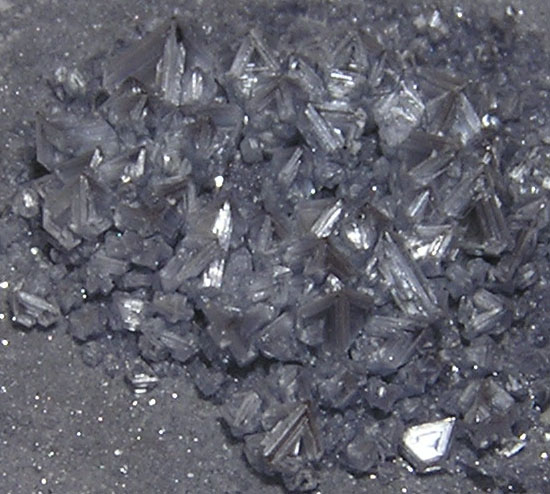


Physical and chemical characteristics
Pure silver chloride is a brittle, white solid with a crystalline structure similar to rock salt. It is sparingly soluble in water; this low solubility is the basis for the familiar white precipitate formed when solutions containing silver ions meet chloride ions. Under exposure to light the material darkens because tiny metallic silver particles form on the surface, a property called photosensitivity. AgCl dissolves readily in aqueous ammonia by forming a soluble diamminesilver complex.
Preparation and reactions
In practice AgCl is produced by mixing a soluble silver salt, such as silver nitrate, with a soluble chloride salt. The immediate formation of a white precipitate is a standard qualitative test for chloride in solution. The compound is chemically stable under ordinary conditions but will react with complexing agents and strong reducing conditions; heating and photoreduction produce metallic silver on or in the solid.
Uses and applications
Silver chloride has several practical uses derived from its chemical behavior and electrical properties. Principal applications include:
- Photography and historical light-sensitive processes that exploit its photoreduction to silver.
- Analytical chemistry, where AgCl precipitation is used to identify or quantify chloride.
- Electrochemistry: silver/silver chloride electrodes serve as stable reference electrodes in many laboratory and biomedical measurements.
History and notable distinctions
Silver halides in general were central to early photographic technology; AgCl was among the first compounds used in simple salt prints and contact processes. Compared with other silver halides such as silver bromide or iodide, AgCl is less sensitive to visible light and shows different solubility and spectral behavior, which affects its suitability for particular photographic or scientific roles.
Safety and environmental notes
Silver chloride is not highly soluble, which limits acute exposure through water, but silver compounds can accumulate and cause argyria after prolonged exposure to elevated amounts of silver. Disposal and handling in laboratories follow standard practices for silver-containing waste. For more detailed safety and technical data consult specialized sources or material safety documents.
Related articles
Author
AlegsaOnline.com Silver chloride (AgCl) Leandro Alegsa
URL: https://en.alegsaonline.com/art/90453