
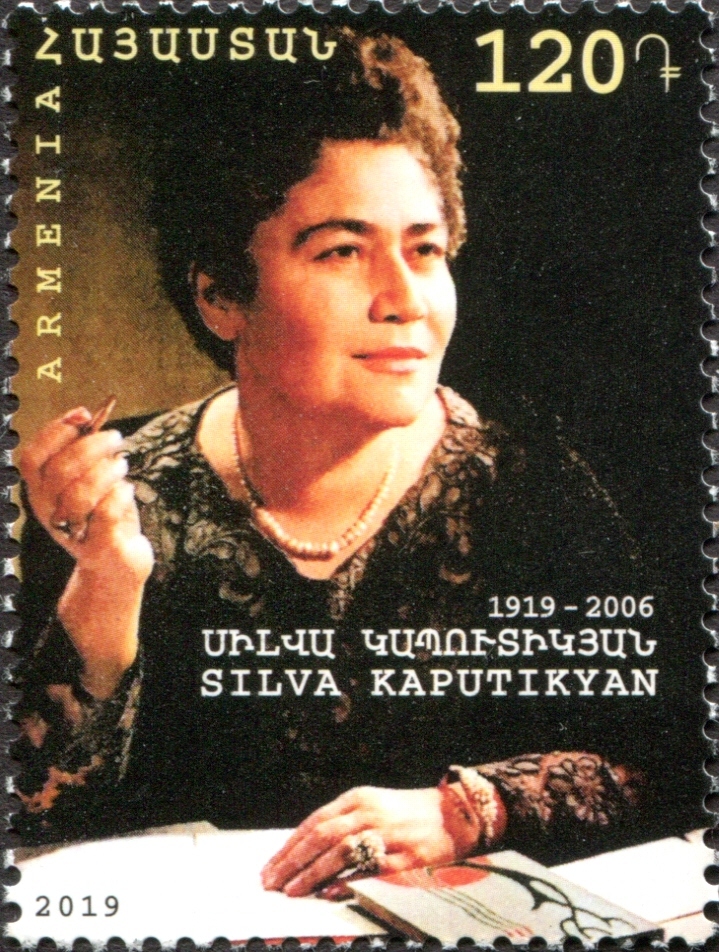
Silva Kaputikyan — Armenian poet, writer and public figure
Silva Kaputikyan (1919–2006) was a major Armenian poet, writer and cultural activist whose lyrical work and public engagement shaped 20th-century Armenian literature and national life.
Silva Barunaki Kaputikyan (born Sirvard, 20 January 1919 in Yerevan; died 25 August 2006 in Yerevan) was one of the most prominent Armenian literary figures of the 20th century. Best known as a poet, she also wrote essays, public addresses and occasional prose, and played an active role in cultural and civic life during both the Soviet and post‑Soviet periods. Her work was widely read in Armenia and among Armenian communities abroad.
Image gallery
4 Images


Literary themes and style
Kaputikyan’s poetry is notable for its lyrical clarity, deep humanism and frequent engagement with national memory. She combined personal lyricism—love, loss, and domestic life—with reflections on history, language and identity. Her verse often draws on Armenian folk imagery and classical forms while remaining accessible, which helped make her poems staples of school curricula and public recitation.
Career and public engagement
Across a long career she published numerous collections of poems and essays and participated in literary and academic circles. Kaputikyan used her reputation to advocate for cultural preservation, the Armenian language and greater recognition of historical injustices affecting Armenians. During the late Soviet era she became a visible public voice for cultural renewal and civic causes; in the 1990s and afterward she continued to speak on social and national matters.
Legacy and influence
Kaputikyan influenced generations of Armenian writers and readers. Her poems have been translated into several languages, and her public stature made her a frequent interlocutor with political and cultural leaders. She is remembered for bridging poetic craft and social conscience, and for making Armenian historical themes resonate in modern lyric poetry.
Notable facts
- She appeared as herself in the 1992 documentary Parajanov: The Last Spring, about filmmaker Sergei Parajanov.
- Her work drew public attention beyond Armenia; for example, Soviet leader Mikhail Gorbachev reportedly praised her poetry during a Kremlin reception.
- Kaputikyan’s poems remain widely read in schools, commemorations and public events across Armenian communities.
Further reading and links
- Biographical overview
- Selected poetry and translations
- Essays and public writings
- Critical studies
- Interviews and recorded readings
- Academic profile
- Cultural activism and public roles
- Historical context: Soviet Armenia
- Contemporary reception
- Documentary appearances
- Works related to Sergei Parajanov
- Archive materials
- Translations into other languages
- Memorials and commemorations
Related articles
Author
AlegsaOnline.com Silva Kaputikyan — Armenian poet, writer and public figure Leandro Alegsa
URL: https://en.alegsaonline.com/art/90442