
Sigismund II Augustus
Last monarch of the Jagiellon line; King of Poland and Grand Duke of Lithuania (1520–1572). Oversaw the Union of Lublin, navigated 16th‑century wars and religious change, and left a mixed political and cultural legacy.
Sigismund II Augustus (1520–1572) was the final ruler of the Jagiellon dynasty, serving as both King of Poland and the Grand Duke of Lithuania. His long reign in the mid‑16th century coincided with major political realignments in Central and Eastern Europe, the spread of Reformation ideas, and increasing influence of the Polish nobility.
Image gallery
10 Images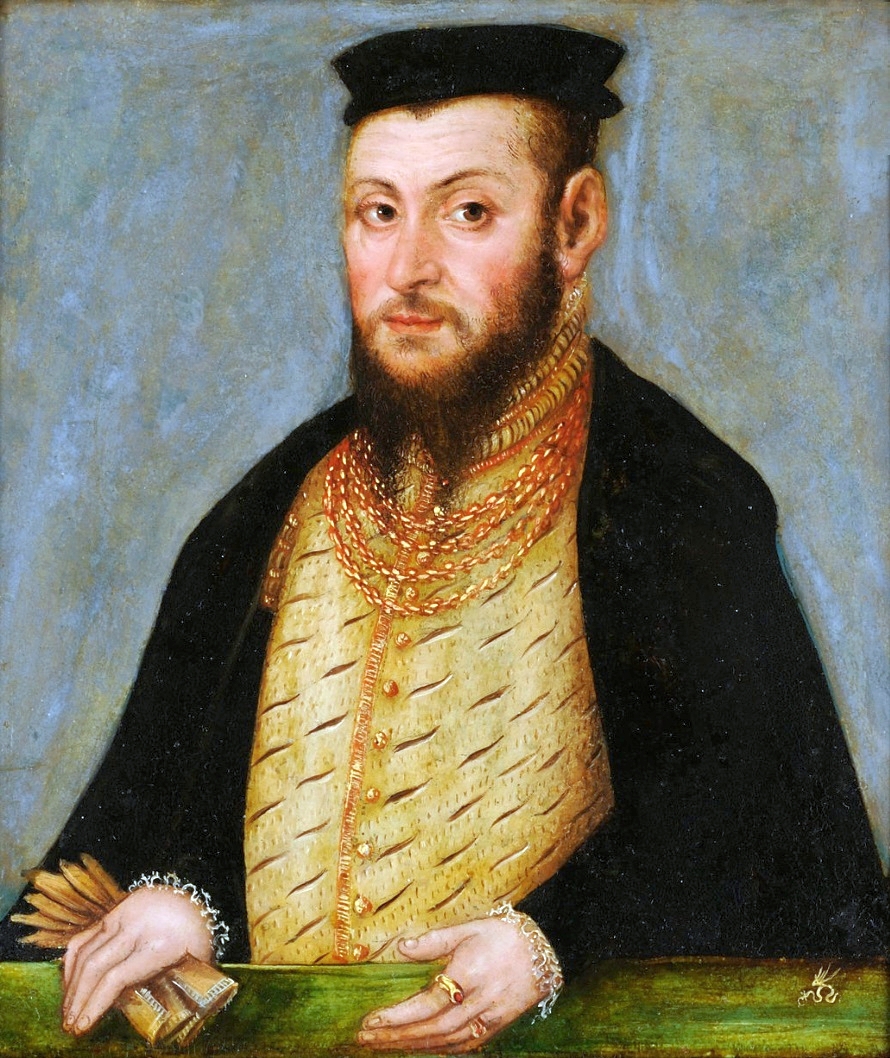


Early life and ascent
Born to Sigismund I the Old and Bona Sforza, Sigismund II received a Renaissance education and grew up in a court shaped by Italian and Central European culture. He was prepared from youth to rule and eventually succeeded as ruler of the Polish–Lithuanian realm. He is widely remembered as the last scion of the Jagiellon dynasty, a royal house that had ruled parts of Central Europe for generations.
Reign, politics and law
During his reign Sigismund II negotiated a complex balance between crown authority and the increasingly assertive nobility (szlachta). His era saw institutional developments that moved the kingdom toward a more aristocratic and parliamentary system. The most important constitutional and territorial change of his reign was the negotiated unification of Polish and Lithuanian central institutions that culminated in the Union of Lublin—a transformative step toward the later Polish–Lithuanian Commonwealth.
Foreign affairs and military matters
Foreign policy under Sigismund II was dominated by Baltic and eastern concerns. His realms became involved in conflicts over Livonia and Baltic trade routes, facing Muscovy and other neighbors. These struggles reflected the shifting balance of power around the Baltic Sea and shaped Polish‑Lithuanian diplomacy for decades.
Cultural role and personal life
Sigismund II was known as a patron of the arts, a collector of books and objects, and a promoter of Renaissance court culture. His personal life and three marriages attracted contemporary attention; he left no legitimate heir, which directly produced a dynastic break and the transition to an elective monarchy after his death. He is often portrayed as both a cultured Renaissance prince and a ruler whose compromises with magnates altered the kingdom's political trajectory.
Notable facts
- Dynastic end: His death ended the hereditary Jagiellon line and opened the era of elective kingship in Poland.
- Union of Lublin: The 1569 agreement strengthened ties between Poland and Lithuania and shaped the region for centuries.
- Religious climate: The period saw growing religious pluralism and debate, and his policies ranged from pragmatic tolerance to attempts at mediation.
- Legacy: Remembered for cultural patronage and for presiding over political changes that empowered the nobility and reoriented state institutions.
For further context on his reign and its institutions, see related entries on monarchy, the Polish–Lithuanian union and the political life of 16th‑century Central Europe: king, Union of Lublin, Jagiellon dynasty, Grand Duchy of Lithuania.

Family and marriages
Sigismund was the son of King Sigismund I and his second wife, Bona Sforza. He had been Grand Duke of Lithuania since 1529, but did not assume independent responsibility of state affairs until 1544. In 1530, reluctantly accepted by the Polish nobility, he was crowned King of Poland by Vivente Rege during his father's lifetime, but did not assume the kingship until after his death in 1548.
Sigismund II remained childless in his three marriages to Elizabeth (1526-1545), Barbara Radziwiłł (1520-1551) and Catherine (1533-1572). With his death, the royal dynasty of the Jagiellons became extinct in the male line, so the succession was settled in the Union of Lublin in 1569. The mortal remains of Sigismund II. August were buried in the Wawel Cathedral in Krakow.
Lublin Union
On 1 July 1569, the parliament convened by Sigismund II, the Sejm, decided on the Lublin Union:
- the transformation of the states of the Kingdom of Poland, the Grand Duchy of Lithuania, and Royal Prussia, which until then had been connected in personal union, into a single state through a real union, the so-called Rzeczpospolita;
- uniform legislation, official language (Polish and Latin) and currency;
- a parliament and a monarch;
- Introduction of the elective monarchy;
Questions and answers
Q: Who was Sigismund II Augustus?
A: Sigismund II Augustus was a Polish king and the last member of the Jagiellon dynasty, who was also the Grand Duke of Lithuania from 1548 to 1572.
Q: What was Sigismund II Augustus' role in Polish history?
A: Sigismund II Augustus was a significant figure in Polish history as he was the last king of the Jagiellon dynasty, which had ruled Poland for almost two centuries.
Q: When did Sigismund II Augustus live and reign?
A: Sigismund II Augustus was born in 1520 and reigned as king of Poland and Grand Duke of Lithuania from 1548 until his death in 1572.
Q: What was Sigismund II Augustus' status within Lithuania?
A: Sigismund II Augustus was not only a Polish king but also the Grand Duke of Lithuania from 1548 to 1572.
Q: What was the significance of the Jagiellon dynasty in Polish history?
A: The Jagiellon dynasty was significant and had ruled Poland for almost two centuries before Sigismund II Augustus. They had helped create a strong centralized state and had also brought about a period of cultural and economic growth.
Q: How did Sigismund II Augustus' reign contribute to the history of Poland?
A: Sigismund II Augustus' reign marked the end of the Jagiellon dynasty's rule in Poland and the beginning of the elective monarchy period, which significantly altered Poland's political and social structures.
Q: How did Sigismund II Augustus' reign impact Polish-Lithuanian relations?
A: Sigismund II Augustus' dual role as king of Poland and Grand Duke of Lithuania helped ease tensions between the two countries and helped foster closer political and cultural ties.
Related articles
Author
AlegsaOnline.com Sigismund II Augustus Leandro Alegsa
URL: https://en.alegsaonline.com/art/90308
Sources
- medievalcoinage.com : "Lithuania"
- britannica.com : Władysław II Jagiełło, king of Poland, Encyclopaedia Britannica.
- encyklopedia.pwn.pl : Zygmunt II August, Encyklopaedia PWN (in Polish).
- encyklopedia.pwn.pl : Elekcja, Encyklopedia PWN.
- britannica.com : Sigismund-II-Augustus, Encyclopaedia Britannica.
- nekropole.info : Sigismund-II-Augustus, Nekropole.
- karnet.krakow.pl : "Wawel Royal Castle"