
Sigmund Jähn: First German in Space (1937–2019)
Sigmund Jähn was an East German pilot and cosmonaut who became the first German to travel into space in 1978 under the Soviet Interkosmos programme. He remained a public figure until his death in 2019.
Overview
Sigmund Werner Paul Jähn (13 February 1937 – 21 September 2019) was a German pilot and cosmonaut who, in 1978, became the first person from Germany to fly in space as part of the Soviet Interkosmos programme. Born in the village of Morgenröthe-Rautenkranz in Saxony, he later lived and worked in what was then the German Democratic Republic and remained a well-known figure after German reunification. His spaceflight marked a high-profile example of scientific cooperation between the Soviet Union and its allied states during the Cold War. For background on the programme, see Interkosmos.
Image gallery
8 Images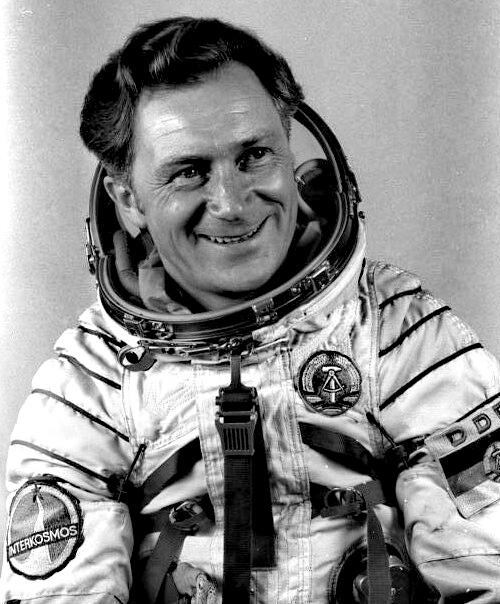


Early life and career
Jähn grew up in rural Saxony and trained as a military pilot, entering aviation service with the air forces of the GDR. He advanced through pilot and testing roles and was selected in the 1970s to join an international cosmonaut training group organized by Soviet authorities. His selection reflected both his flight experience and the political priority of involving allied nations in the Soviet space effort. His birthplace and regional roots are closely associated with his public image in Saxony: Morgenröthe-Rautenkranz, Germany.
Spaceflight and activities
In 1978 Jähn flew on a Soviet mission under the Interkosmos initiative to a Soviet orbital facility. During the mission he participated in scientific and technical experiments, earth observation work and activities aimed at demonstrating the participation of allied states in crewed spaceflight. The flight helped to broaden the pool of nationalities with human spaceflight experience and contributed data to collaborative research projects of the time.
Later life and legacy
After his mission, Jähn continued to work in aviation and space-related education and outreach in East Germany. In later decades he took part in public events and remained an emblematic figure of early international space cooperation. He lived in Strausberg in the later part of his life and was active in veteran and community circles there: Strausberg. He was married and had two children, and he died on 21 September 2019 at the age of 82.
Significance and notable facts
- First German to travel into space, flying under the Soviet Interkosmos programme.
- Representation of Cold War-era scientific diplomacy and cooperation among Soviet allies.
- Remembered in his home region and in histories of human spaceflight as a pioneering national figure.
Jähn's flight is often cited in discussions of how space programmes extended beyond the two superpowers of the era to include partners from within their political spheres, helping to internationalize human space exploration during the late 20th century.
Related articles
Author
AlegsaOnline.com Sigmund Jähn: First German in Space (1937–2019) Leandro Alegsa
URL: https://en.alegsaonline.com/art/90315
Sources
- esa.int : "Biografie von Sigmund Jähn"
- dlr.de : Weltraumpionier Sigmund Jähn verstorben
- n-tv.de : Raumfahrer Sigmund Jähn ist tot