
Side (geometry)
A side is a straight line segment that bounds a polygon or, in three dimensions, an edge or face of a solid; this article defines the term, contrasts related concepts, and gives examples and uses.
Definition and basic idea
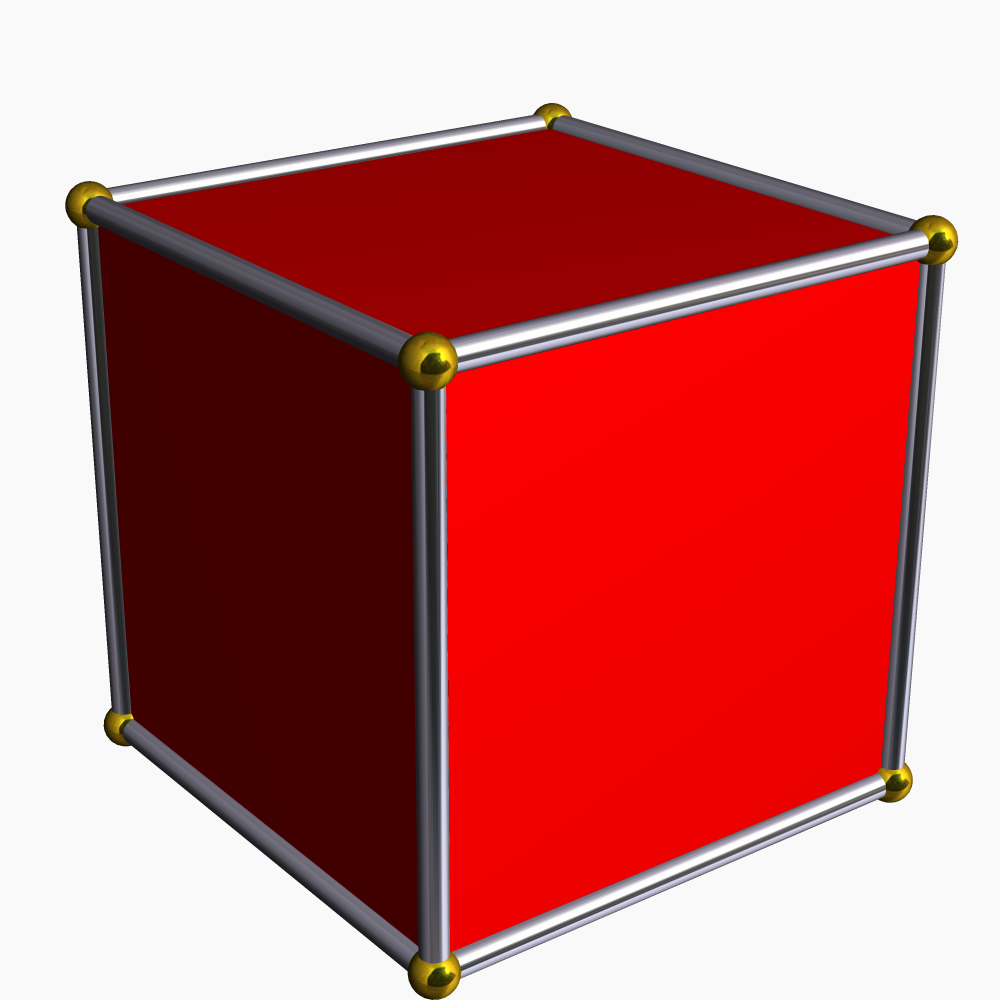
In elementary geometry a side is a straight line segment that forms part of the boundary of a flat, closed figure. In this sense every polygon is made up of a finite sequence of sides that meet end to end at vertices. In three-dimensional solids the word side is sometimes used informally to mean a face or a bounding element of the solid rather than a single segment. A formal discussion distinguishes sides of polygons from faces and edges of polyhedra.
Image gallery
2 Images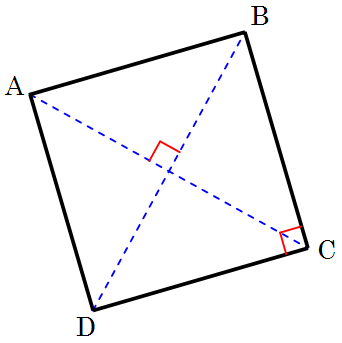
Characteristics and notation
Sides are line segments with two endpoints that are also vertices of the polygon. The number of sides of a polygon is commonly written as n, and the sum of the lengths of all sides is the polygon's perimeter. Sides can be equal in length (congruent), adjacent (sharing a vertex), or opposite (not sharing a vertex in even-sided polygons). Whether a polygon is convex or concave affects the interior angles at the vertices, but the notion of a side remains a straight segment between successive vertices.
Common examples
- Triangle: 3 sides.
- Quadrilateral (including a square): 4 sides.
- Regular pentagon: 5 equal sides.
- Regular polygons: every side is the same length and angles at vertices are equal.
History, terminology and related concepts
The idea of sides appears in classical geometry texts as the basic elements of plane figures. Modern treatments separate the two-dimensional meaning (sides of a polygon) from three-dimensional terms: a polyhedron's bounding flat surfaces are called faces and the line segments where two faces meet are called edges. In casual language a face of a solid is sometimes called a side, but technical texts prefer the distinct terms face, edge and vertex.
Uses, importance and distinctions
Sides are central to many elementary and advanced topics: naming polygons (a 12-sided polygon is a dodecagon), computing perimeters and areas, defining tessellations, and studying symmetry. Combinatorial properties such as Euler's formula relate numbers of faces, edges and vertices of polyhedra: this connects the two-dimensional concept of side to three-dimensional structure. For precise diagrams or proofs consult standard geometry references; for a quick guide to plane figures see geometry overview or a discussion of plane figures and closed figures. The term "straight" in this context refers to segments made by straight lines, and the three-dimensional sense is treated under three-dimensional solids and polyhedra.
Further reading and examples online
Diagrams illustrating typical sides and labels are useful: an annotated square or polygonal diagram can be found via illustrative resources such as sample diagram or simple construction notes that show sides drawn with straight black lines. For formal definitions and notation of the number of sides see elementary references on polygons and surveys of polyhedral faces and edges at general introductions.
Related articles
Author
AlegsaOnline.com Side (geometry) Leandro Alegsa
URL: https://en.alegsaonline.com/art/90218