
Short-tailed shearwater (muttonbird)
A migratory southern hemisphere seabird (Ardenna tenuirostris) known as the short-tailed shearwater or muttonbird; breeds in Tasmania and south‑eastern Australia and undertakes long annual migrations.
The short-tailed shearwater, Ardenna tenuirostris (formerly Puffinus tenuirostris), is a long‑distance migratory seabird of the petrel family Procellariidae. Common English names include short-tailed shearwater, yolla, moonbird and, in Australia, muttonbird. It breeds in large colonies on islands around Tasmania and other sites in south‑eastern Australia, returning each year to the same nesting areas.
Image gallery
4 Images
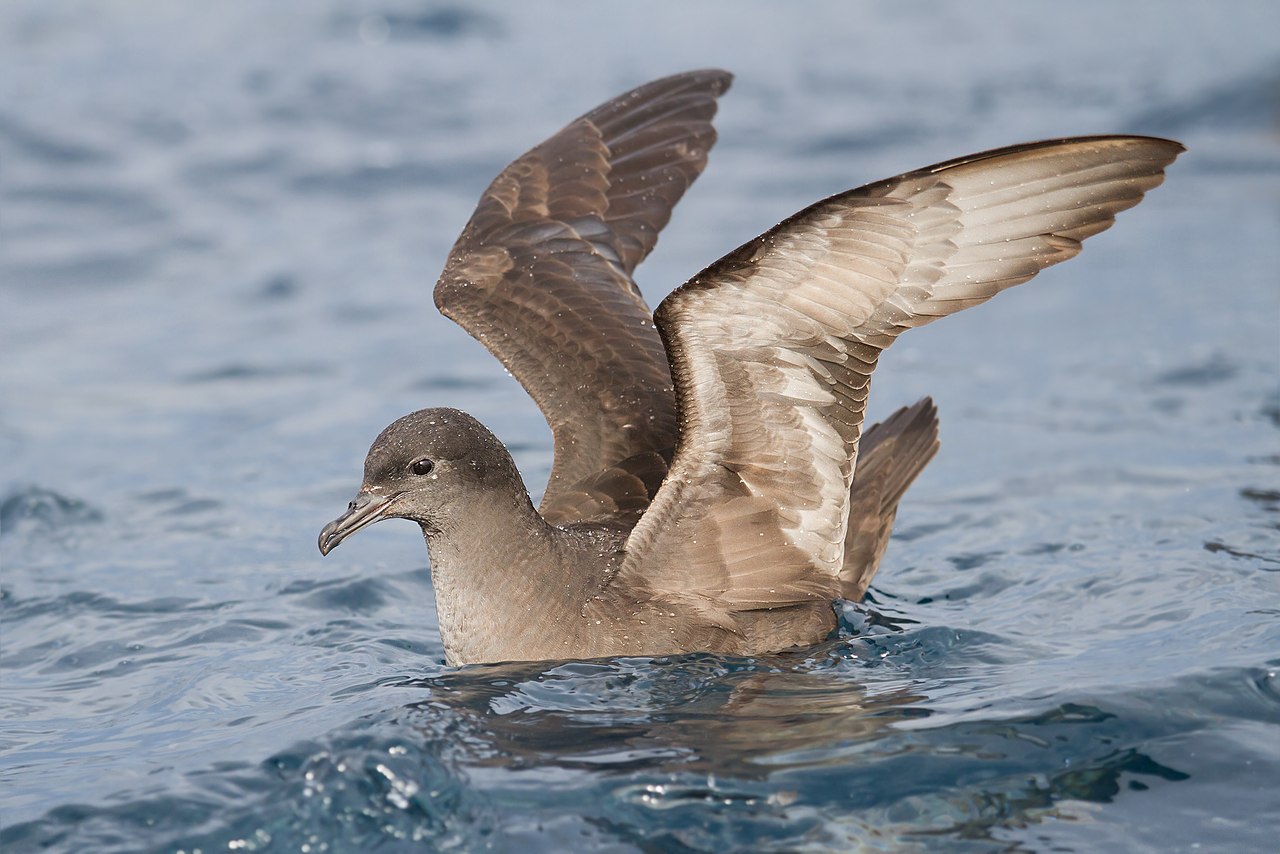


Description and behaviour
Medium‑sized and dark brown above with paler underparts and a relatively short tail, this species is adapted for dynamic soaring and surface feeding. Short‑tailed shearwaters feed on small fish, squid and crustaceans, often foraging by surface seizing or shallow dives. At their breeding colonies they are largely nocturnal, arriving and departing under cover of darkness to avoid predation. Many pairs form long‑term bonds and use burrows or nest scrapes to shelter a single egg each season.
Migration and range
One of the most notable features of the short‑tailed shearwater is its extensive migratory circuit. After the austral breeding season, individuals disperse northward across the Pacific to productive feeding areas in the northern hemisphere and then return south to breed. This annual round trip makes the species one of the most far‑ranging of the world's seabirds and links ecosystems across both hemispheres.
Breeding, human use and cultural importance
Breeding colonies are concentrated on offshore islands where burrows are excavated in soft soil. Timing is tied to the austral spring and summer: adults incubate a single egg and feed a rapidly growing chick until fledging. The species has long been harvested by Indigenous peoples and European settlers; the term "muttonbird" reflects its historical use as a source of meat and oil. Traditional harvesting remains culturally important in some communities and is managed in ways that aim to sustain populations.
Conservation and notable facts
Although the short‑tailed shearwater has a very large global population and is not universally rare, it faces threats common to many seabirds: bycatch in fisheries, changes in ocean productivity, climate variability and introduced predators at some breeding sites. Conservation measures include protected breeding areas, harvest regulations and efforts to reduce bycatch. Taxonomically the species was moved from the genus Puffinus to Ardenna as scientific understanding of shearwater relationships improved.
- Distinctive long‑range migration linking southern breeding grounds with northern feeding areas.
- Also called yolla or moonbird in local usage and commonly known as the muttonbird in Australia.
- Colonial, burrow‑nesting behaviour with typically one egg per season.
For more detailed information on migration routes, breeding biology and management practices consult targeted resources and regional seabird guides. The species illustrates how migratory seabirds connect remote marine ecosystems and human cultures across hemispheres.
Related articles
Author
AlegsaOnline.com Short-tailed shearwater (muttonbird) Leandro Alegsa
URL: https://en.alegsaonline.com/art/89999
Sources
- birdlife.org : BirdLife International