
Shock wave — formation, propagation, effects, and applications
A shock wave is a rapid, high-amplitude disturbance that travels through a material, produced by sudden energy release; this article explains its physics, examples, effects on materials and people, and uses.
A shock wave is a rapidly moving disturbance in a medium that carries a sudden change in pressure, density and particle velocity. It forms when a large amount of energy is released in a very small volume or over a short time, forcing the local material to compress and accelerate faster than information can travel away as ordinary sound. The result is a narrow front across which physical properties jump almost discontinuously. For a concise primer on sudden energy release and its relation to shock formation see energy release overview.
Image gallery
9 Images





Basic characteristics and how shock waves form
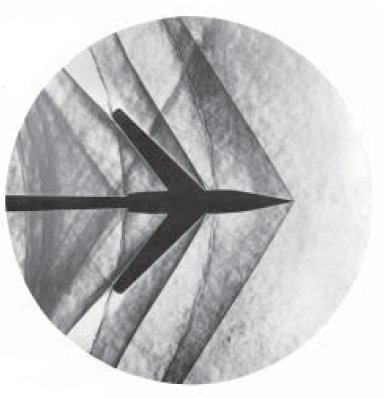
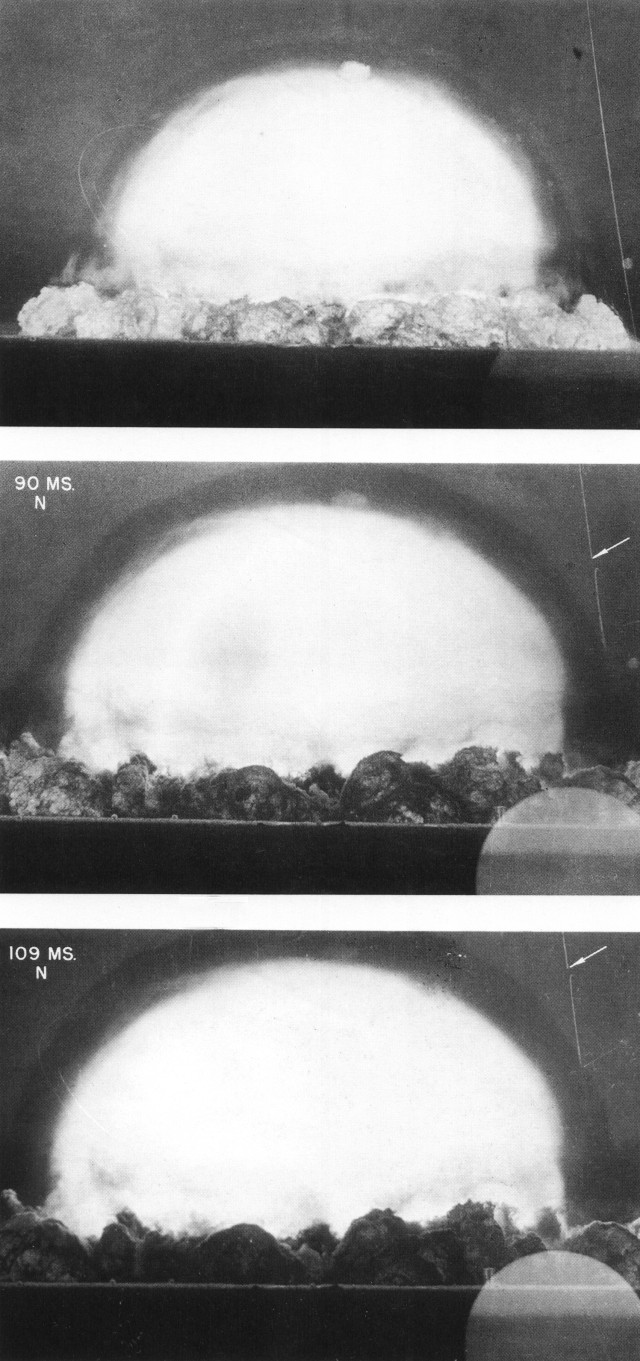
Physically, a shock wave is not a steady oscillation like a pure sound wave but a nonlinear, often steep-fronted wave in which pressure and temperature rise sharply. The front separates pre-shock (undisturbed) and post-shock (compressed and heated) states. Shock formation commonly occurs when a source accelerates parts of a medium to speeds that exceed the local speed of sound; for example, a sudden explosive expansion, a supersonic object moving through air, or an abrupt mechanical impact. More on shock initiation and thresholds is available at initiation mechanisms.
Propagation, media, and interactions
Shock waves can travel through gases, liquids and solids, but their behaviour depends strongly on the medium. In dense or incompressible materials a shock can carry energy farther and produce higher stresses; in very compressible media, the wave may spread and attenuate more quickly. When a shock encounters boundaries, layers with different properties, or obstacles, it may reflect, refract, diffract or break into more complex patterns. Seismic events can be described in similar terms when abrupt source motion generates fast stress fronts through rock and soil; see earthquake wave processes for a geological perspective.
Types, typical sources and examples
- Blast or detonation shocks: produced by explosions and often responsible for the most destructive effects at distance from the source. Military and industrial accidents frequently involve such blast waves; for context visit explosive sources.
- Bow shocks: formed ahead of supersonic vehicles or objects, including meteor entry and high-speed aircraft; sonic booms are audible signatures of these shocks, described in supersonic aerodynamic effects.
- Shock fronts in fluids and solids: generated by impacts, high-speed projectiles, or sudden mechanical failures; these are relevant to material testing and safety analysis, see accident and impact studies.
Effects on materials and biological tissue
The intense pressure jump across a shock front can deform or fracture materials, strip surface layers, or trigger secondary fragmentation. In biological tissue, rapid pressure variations can cause internal injuries that differ from burns and shrapnel wounds. Primary blast effects may damage hollow organs and delicate structures even when external skin is intact. Authorities studying injury patterns and protective measures provide summaries at medical effects of blast and bone and organ trauma research.
Measurement, modelling and safety considerations
Engineers and scientists characterize shock waves using instruments such as pressure sensors, high-speed photography and specialized diagnostics. Analytical and numerical models—ranging from simplified jump relations to full computational fluid dynamics—are used to predict peak pressures, impulse, and interaction with structures. Because shocks are highly nonlinear, small differences in geometry or timing can produce large changes in outcome; practical guidance on measurement and mitigation is summarized in the technical literature at measurement and metrics.
Applications and important distinctions
Although shock waves can be destructive, they are also harnessed beneficially. Controlled shock fronts are used in industrial processes, materials testing, and medical treatments such as lithotripsy, where focused pressure pulses break kidney stones. In aerodynamics, deliberate shaping of shock patterns improves performance of supersonic vehicles. It is important to distinguish shocks from ordinary sound waves: both involve pressure changes, but sound is typically linear and oscillatory while a shock is nonlinear, often irreversible and associated with dissipative heating. For a comparative overview see sound versus shock.
For additional technical background, experimental methods and applied case studies, consult general resources and databases that collect research on shock physics and its applications: energy release overview, initiation mechanisms, supersonic aerodynamic effects, explosive sources, accident and impact studies, medical effects of blast, bone and organ trauma research, earthquake wave processes, measurement and metrics, and sound versus shock.
Related articles
Author
AlegsaOnline.com Shock wave — formation, propagation, effects, and applications Leandro Alegsa
URL: https://en.alegsaonline.com/art/89934