
Seshat — Egyptian goddess of writing, measurement and knowledge
Seshat is the ancient Egyptian deity who personified writing, recordkeeping, measurement and related sciences. She assisted rulers in foundation rituals and is often linked with Thoth and papyrus symbolism.
The ancient Egyptian figure Seshat personified the arts of writing and recordkeeping. Revered as a divine administrator of knowledge, she appears throughout inscriptions and temple scenes as a figure who records events, oversees measurements and preserves texts. Often called a goddess of books and registers, Seshat's presence marks the state functions that required accurate accounting and ritual precision.
Image gallery
9 Images


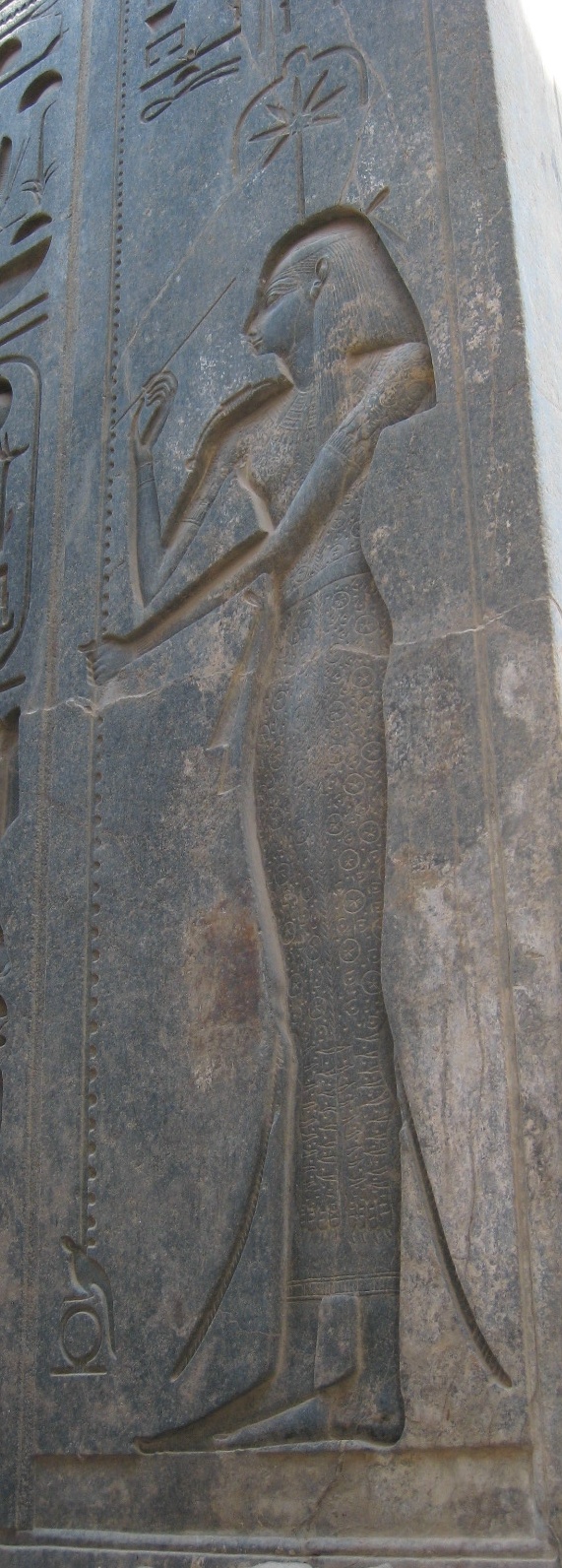

Attributes and iconography
In visual sources she is typically shown as a woman wearing a dress and a distinctive emblem above her head: a stylized papyrus or rosette that signals literacy and documentation. Artists sometimes show her with a writing palette or recoil of cord and rod used for laying out buildings. This connection explains her association with writing and with sky and timekeeping practices such as astronomy and the related astrology. The use of papyrus as a writing material is symbolically linked to her emblem.
Roles and functions
- Recordkeeping: Seshat recorded royal achievements and the lengths of reigns, and she was invoked for archival and library activities.
- Measurement and planning: She assisted in foundation ceremonies, measuring land and laying out temples and tombs—hence her link to architecture.
- Learning and calculation: Her domain extended to practical computation and mathematics, necessary for surveying, taxation and construction.
- Cosmic ordering: Together with deities of knowledge she helped regulate calendars and celestial observations.
Relationship with other deities and historical context
Seshat frequently appears alongside the god Thoth, the deity of wisdom and scribal arts. In some texts and scenes she is described as his daughter or consort; in others their roles overlap as complementary authorities over writing and learned practice. Her cult does not have the same widespread temple structure as major state gods, but she was central to court and priestly activities from the Old Kingdom onward.
Legacy and notable facts
Her depictions in art provide much of our understanding of ancient Egyptian intellectual life: the tools, ceremonies and institutions that produced texts and maintained records. As a symbolic figure, Seshat highlights the importance the ancient Egyptians placed on accurate measurement, archival continuity and the written word as instruments of governance and religion.
Related articles
Author
AlegsaOnline.com Seshat — Egyptian goddess of writing, measurement and knowledge Leandro Alegsa
URL: https://en.alegsaonline.com/art/89144