
Sequoia National Park
Sequoia National Park protects dramatic Sierra Nevada landscapes and the giant sequoia groves, including the General Sherman tree, and reaches from foothill forests to the summit of Mount Whitney.
Sequoia National Park is a U.S. national park established on September 25, 1890, to preserve some of the world's most massive trees and the high Sierra landscapes that surround them. Located in the western Sierra Nevada of the United States, within the state of California, the park covers roughly 404,063 acres and includes dramatic elevation changes from montane foothills to the crest of the range. The park adjoins Kings Canyon National Park and the two are administered together by the National Park Service.
Image gallery
10 Images



Geography and ecosystems
Sequoia National Park spans a large vertical range, giving rise to distinct plant communities: oak and chaparral at lower elevations, mixed-conifer and pine forests higher up, and alpine zones near the crest. The park contains the highest point in the contiguous United States, Mount Whitney, at 14,505 feet (4,421 m). Much of the park is rugged, with granite peaks, deep canyons, waterfalls and meadows that support diverse wildlife and native plants adapted to the Sierra Nevada climate.
Giant sequoias and notable groves
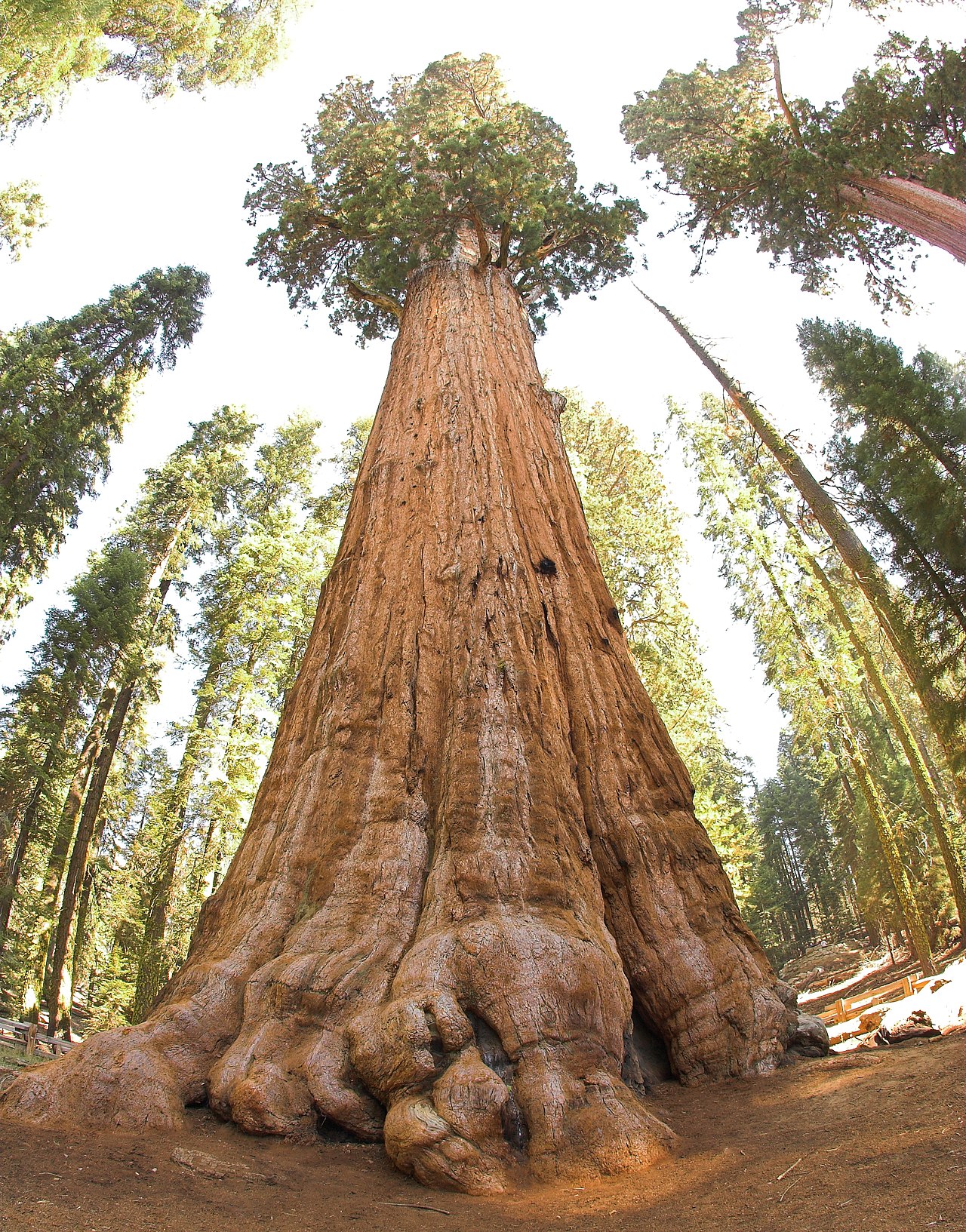
The park is internationally renowned for its giant trees, Sequoiadendron giganteum, commonly called the giant sequoia. These trees are notable for their immense trunk volume and long lifespans. The Giant Forest within Sequoia National Park contains several of the largest trees on Earth, including the General Sherman tree, often cited as the largest single-stem tree by volume. Visitors come to walk among these ancient giants and learn how they fit into the ecology of the Sierra.
Attractions and visitor activities
- General Sherman and other named sequoia groves such as the Giant Forest and Crescent Meadow.
- High-country trails, including routes that access Mount Whitney and alpine lakes.
- Scenic drives, campgrounds, ranger-led programs, and winter snow activities in accessible areas.
History, management and conservation
Created in the late 19th century, Sequoia National Park was among the earliest federal efforts to protect unique natural features. Over time park management has balanced visitor access with long-term protection of ecological values. The park and neighboring Kings Canyon are jointly managed to coordinate wilderness protection, habitat restoration and visitor services. Fire ecology plays a central role in management: many Sierra ecosystems, including giant sequoia groves, are adapted to low- to moderate-intensity fire, so controlled burns and fuels management are used to reduce catastrophic wildfire risk and support regeneration.
Threats and importance
Sequoia National Park faces several conservation challenges, including the increasing severity of wildfires, altered hydrology, drought and the broader impacts of climate change on high-elevation habitats. In response, scientists and managers monitor tree health, restore natural fire regimes where safe, and study how changing conditions affect sequoias and associated species. The park remains a vital refuge for biodiversity, a center for scientific research and a popular destination for recreation and education.
For official information, maps and current conditions consult the park administration and educational resources provided by the managing agency: National Park Service. Additional interpretive material and visitation guidance can be found through linked resources about the park, its ecosystems and landmarks such as Mount Whitney, the parks' administration pages and botanical references for the giant sequoia. General overviews and visitor planning tools are available through regional and federal park portals: Sequoia National Park, United States public lands descriptions and state-level California recreational resources.
Related articles
Author
AlegsaOnline.com Sequoia National Park Leandro Alegsa
URL: https://en.alegsaonline.com/art/88958
Sources
- nature.nps.gov : "Listing of acreage as of December 31, 2011"
- nature.nps.gov : "Five Year Annual Recreation Visits Report"