
Semi-automatic shotgun
A shotgun that uses recoil or gas to cycle and chamber the next round automatically after each trigger pull. Common in military, law enforcement, hunting and sport shooting for rapid follow-up shots.
A semi-automatic shotgun is a type of firearm designed to fire one cartridge each time the trigger is pulled and to automatically cycle a fresh cartridge into the chamber. Unlike manually cycled models, after the user loads the first round the weapon uses some of the firing forces to eject the spent casing, rearm the action and feed the next shell. That automatic cycling distinguishes it from other shotguns such as pump-action shotguns, break-action designs and most lever-action guns.
Image gallery
4 Images


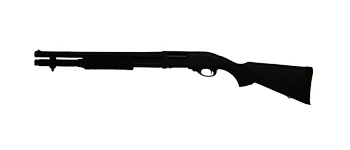
Characteristics and operating systems
Semi-automatic shotguns employ several mechanical systems to harness the energy from firing. The two most common are gas-operated systems, which divert propellant gases to drive a piston or other mechanism, and recoil- or inertia-operated systems, which use the rearward movement of the bolt and receiver. Manufacturers may pair these systems with tubular magazines under the barrel or detachable box magazines. The overall result is a faster rate of aimed follow-up shots with less manual manipulation, though the complexity of the mechanism can mean greater maintenance needs and occasional sensitivity to ammunition type and fouling.
History and development
Self-loading shotguns date back to the late 19th and early 20th centuries, when designers sought to apply automatic loading principles to shotgun cartridges. Early influential designs set the groundwork for later refinements in gas systems, metallurgy and ergonomics. Throughout the 20th century commercial and military demand drove improvements that balanced reliability, weight and recoil control. Some modern combat-style shotguns incorporate selectable operation modes; examples include designs that can switch between pump and semi-automatic actions for flexibility in handling different loads or situations.
Uses, advantages and limitations
- Uses: semi-automatic shotguns appear in fields as varied as hunting, clay-target sports, home defense, law enforcement and the military. Their capacity for quick successive shots makes them useful where rapid engagement is required.
- Advantages: faster follow-up shots, reduced need for manual cycling, and—for some gas-operated models—smoother felt recoil through gas buffering.
- Limitations: greater mechanical complexity, potential sensitivity to cartridge power or type, and a design that can be heavier or more expensive than simpler manual actions. Some models may also be restricted by local laws or regulations.
Variants and notable examples
Manufacturers produce a wide range of semi-automatic designs to meet sporting, tactical and law-enforcement needs. Some combat-oriented shotguns offer hybrid operation: for instance, the SPAS-12 was able to operate as a selective pump or semi-automatic system, enabling compatibility with different projectile types and tactical uses. That pump option helps when firing less-lethal projectiles or fouling-prone rounds such as certain breaching loads or gas canisters. Other modern examples balance full-auto capability, modular accessories and reduced recoil in variants developed for military or specialized units.
Practical considerations and distinctions
When choosing a semi-automatic shotgun, users consider intended use, ammunition compatibility, maintenance requirements and the feeding system. Compared with manual actions, semi-automatics trade simpler mechanics for quicker operation and often better control of follow-up shots. They remain a widely used category of shotgun because of that balance, but selection should reflect legal context, mission requirements and the types of loads to be used. Readers seeking technical specifications or purchase guidance should consult reliable manufacturers' sources and local regulations.
For further reading and technical references, follow manufacturer documentation and authoritative firearms guides. Additional topics include internal parts and their functions, common troubleshooting steps, and differences among gas, inertia and blowback-related systems.
More on firearms basics | Ammunition and shells | Trigger mechanisms | Manual action comparisons | Energy use in cycling | SPAS-12 example | Less-lethal options | Riot control munitions | Military applications
Related articles
Author
AlegsaOnline.com Semi-automatic shotgun Leandro Alegsa
URL: https://en.alegsaonline.com/art/88737