
Serial number (unique identifier)
A serial number is a unique identifier assigned to individual items in a sequence. This article explains its purpose, formats, history, common uses, and how it differs from other identifiers.
Overview
A serial number is an identifier allocated to a single item so it can be distinguished from other items of the same type. It is typically created so each new item receives a different value according to a predictable rule or sequence. For a concise definition or further reading see reference material. Serial numbers are central to tracking, warranty service, quality control and record keeping.
Image gallery
6 Images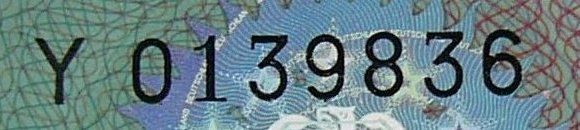


Typical characteristics
Although formats vary widely between industries, serial numbers usually share several practical characteristics:
- Uniqueness within a defined namespace or production run.
- Predictable progression or assignment—many systems increase by a fixed integer step; see related concepts at sequence numbering.
- Fixed format or structure (numeric, alphanumeric, or with separators), sometimes including a check digit for error detection.
- Embedded metadata in some schemes, such as date of manufacture, plant code, lot or batch identifier.
History and development
The practice of assigning identifying numbers to objects predates modern manufacturing, but the systematic use of serial numbers expanded with industrial mass production and the rise of commerce and postal services. Over time, formats evolved from simple consecutive integers to more complex codes that can include letters, checksums and encoded information to reduce errors and prevent counterfeiting.
Common uses and examples
Serial numbers are used across many domains. Typical examples include:
- Consumer electronics and appliances (for warranty validation and repairs).
- Vehicle identification (VINs) to track registration, recalls and ownership.
- Banknotes and stamps for authentication and circulation records.
- Inventory, asset management and ticketing systems.
- Identifiers that combine letters and numbers such as product codes or keys—often colloquially called serials—are described in general resources at examples and formats.
Distinctions and notable points
Serial numbers differ from other kinds of identifiers in important ways. A serial number is intended to be unique to an individual unit; a model or part number identifies a type or design and is shared by many units. A batch or lot number groups units manufactured together, while a serial number pinpoints a single unit. Some modern systems deliberately avoid strictly sequential numbers to prevent easy prediction or counterfeiting and instead use randomized identifiers or cryptographic tokens.
Issues to consider when designing or reading serial numbers include privacy and security (predictable sequences can reveal production volumes), error resilience (use of check digits), and longevity (ensuring the numbering scheme will remain interpretable over many years). Properly designed serial numbering is a simple but powerful tool for accountability, logistics and product lifecycle management.
Questions and answers
Q: What is a serial number?
A: A serial number is a unique number used for identification.
Q: How are serial numbers made?
A: Serial numbers are made in such a way that they change by a fixed discrete integer value, each time a new serial number is needed.
Q: How are identifiers with numbers and letters referred to by most people?
A: Most people refer to any identifier that has numbers and letters in it as a serial number and that can be used to pick a certain item of a large number of items.
Q: Are all numerical identifiers considered serial numbers?
A: Not every numerical identifier is a serial number; identifying numbers which are not serial numbers are sometimes called nominal numbers.
Q: Are sequence numbers typically non-negative?
A: Yes, sequence numbers are almost always non-negative.
Q: Where do sequence numbers typically start?
A: Sequence numbers typically start at zero or one.
Q: How can a serial number be used?
A: A serial number can be used to pick a certain item of a large number of items.
Related articles
Author
AlegsaOnline.com Serial number (unique identifier) Leandro Alegsa
URL: https://en.alegsaonline.com/art/89052
Sources
- tools.ietf.org : RFC 1982
- isi.edu : "Sequence Number Arithmetic"