
Oryx: antelopes adapted to deserts and dry grasslands
Oryx are large, long‑horned antelopes native to arid regions of Africa and the Arabian Peninsula. This article explains their appearance, adaptations, behavior, species, and conservation status.
The oryx is a group of large antelopes in the genus Oryx, often called sabre antelopes because of their long, straight or gently curved horns. Oryx species are striking animals with pale coats, dark face markings and robust bodies adapted to life in hot, dry landscapes. They are native to parts of Africa and to parts of Asia, including the Arabian Peninsula.
Image gallery
8 Images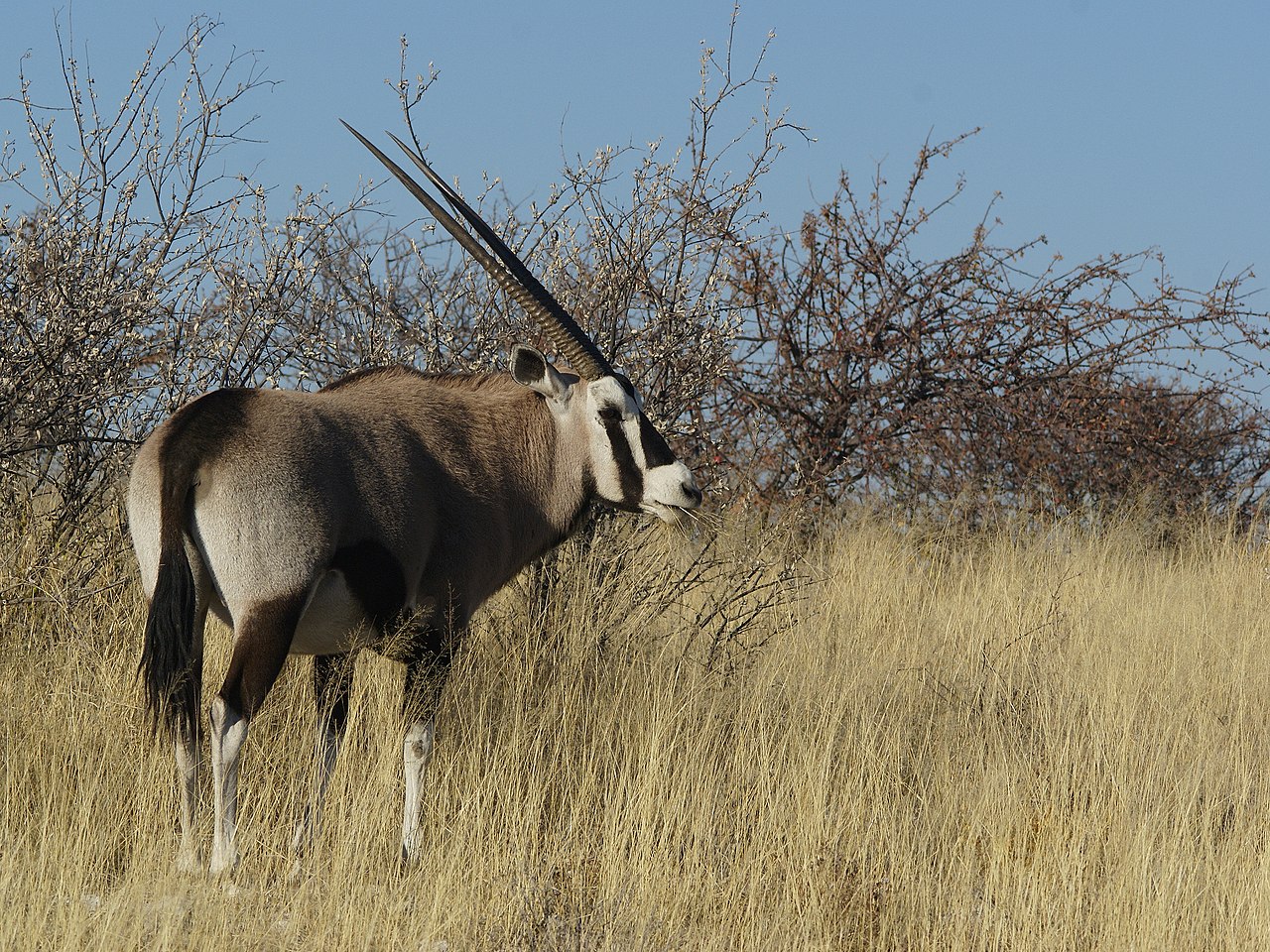


Physical characteristics
Oryx typically stand tall with muscular necks and long limbs built for running. Both males and females carry horns that can be several feet long; the horns serve for defense and social signalling. Their pelage is usually light colored to reflect heat, with contrasting facial and leg markings that vary by species. Internal adaptations include efficient kidneys and specialized nasal passages that reduce water loss.
Habitat and adaptations
These antelopes occupy open steppes and sparse grasslands (steppes), semi-deserts and true deserts (deserts). They can survive with little free water, obtaining moisture from succulent plants and dew and tolerating higher body temperatures to avoid sweating. Oryx often browse at night or during cooler hours and use shade and wind to regulate heat.
Behavior, diet and social life
Oryx feed on grasses, herbs, leaves and bulbs; some species dig for roots and tubers. They form herds that range from small family groups to larger aggregations, with dominant males defending territories in some populations. Their long horns deter predators and are used in displays and combat between rivals.
Conservation and human interactions
Conservation status varies by species. Some oryx populations remain widespread, while others were extirpated from the wild and later reintroduced through captive-breeding and conservation programs. Human activities such as hunting, habitat loss and competition with livestock have threatened certain populations, but reintroduction efforts have demonstrated that recovery is possible when threats are managed.
Notable species and distinctions
- Gemsbok (a southern African species) notable for bold facial patterns.
- Arabian oryx historically confined to the Arabian Peninsula and a high-profile conservation success.
- Scimitar-horned oryx and beisa oryx represent other forms with different horn shapes and ranges.
For further reading on distribution and management, see regional resources: Africa, Asia, habitat summaries at steppe guides and arid-zone conservation pages at desert references.
Related articles
Author
AlegsaOnline.com Oryx: antelopes adapted to deserts and dry grasslands Leandro Alegsa
URL: https://en.alegsaonline.com/art/73291