
Scalp: anatomy, function, and clinical significance
The scalp is the soft tissue-covered region of the head between the forehead/face and the neck. This article summarizes its layers, blood and nerve supply, common conditions, and clinical importance.
The scalp is the soft tissue region that covers the top and sides of the skull, lying between the forehead and face and the posterior neck. It protects the skull, supports hair growth, and contains a dense network of blood vessels and nerves. For the basic anatomical location see anatomical area reference and for related regions see adjacent structures.
Image gallery
4 Images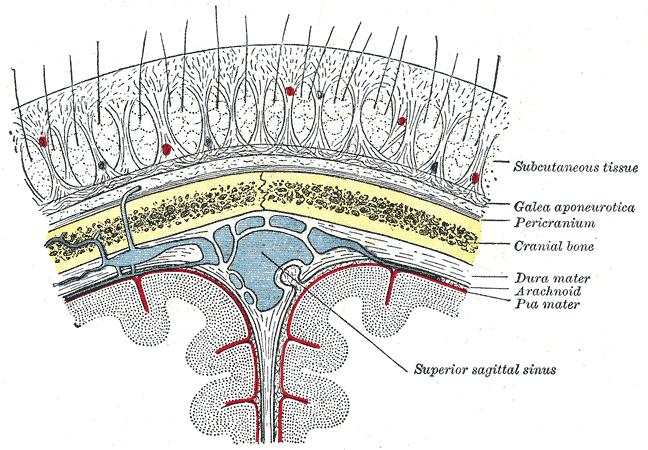


Anatomy and layers
Clinically the scalp is described in several layers, from superficial to deep: skin, connective tissue (dense), aponeurosis (galea aponeurotica), loose areolar tissue, and pericranium. These layers are often remembered by the mnemonic that groups them into five distinct components. Hair follicles, sebaceous glands and sweat glands are located within the superficial skin layer, while the dense connective tissue contains major vessels.
Blood supply and innervation
The scalp receives rich arterial supply and venous drainage which contribute to rapid bleeding after injury but also support healing. Sensory innervation derives from branches of the trigeminal nerve anteriorly and cervical nerves posteriorly, which explains patterns of pain and referred sensations.
Clinical significance
Common problems affecting the scalp include trauma (lacerations and hematomas), infections (folliculitis, abscess), inflammatory disorders (psoriasis, seborrheic dermatitis) and hair disorders (alopecia). Because of its vascularity, scalp wounds tend to bleed heavily; repair often requires layered closure and attention to the galea. Scalp flaps and grafts are frequently used in reconstructive surgery of the head.
Beyond medical aspects, the scalp has cultural and cosmetic importance related to hair. Understanding its structure is essential for dermatologists, surgeons and primary care clinicians in diagnosing conditions and planning treatments.
Related articles
Author
AlegsaOnline.com Scalp: anatomy, function, and clinical significance Leandro Alegsa
URL: https://en.alegsaonline.com/art/87756
Sources
- medicalmnemonics.com : 258