
Schistosoma mansoni: intestinal blood fluke and cause of schistosomiasis
Schistosoma mansoni is a trematode (blood fluke) that causes intestinal schistosomiasis in humans. It has a freshwater snail intermediate host, distinctive lateral-spined eggs, and is treated with praziquantel.
Overview
Schistosoma mansoni is a parasitic flatworm (a trematode) that lives in the mesenteric veins of humans and causes intestinal schistosomiasis. Adult worms pair in the bloodstream and produce eggs that migrate into the intestinal wall and are passed in feces. The species is a major contributor to human schistosomiasis across parts of Africa, South America and some Middle Eastern and Caribbean regions.
Image gallery
3 Images
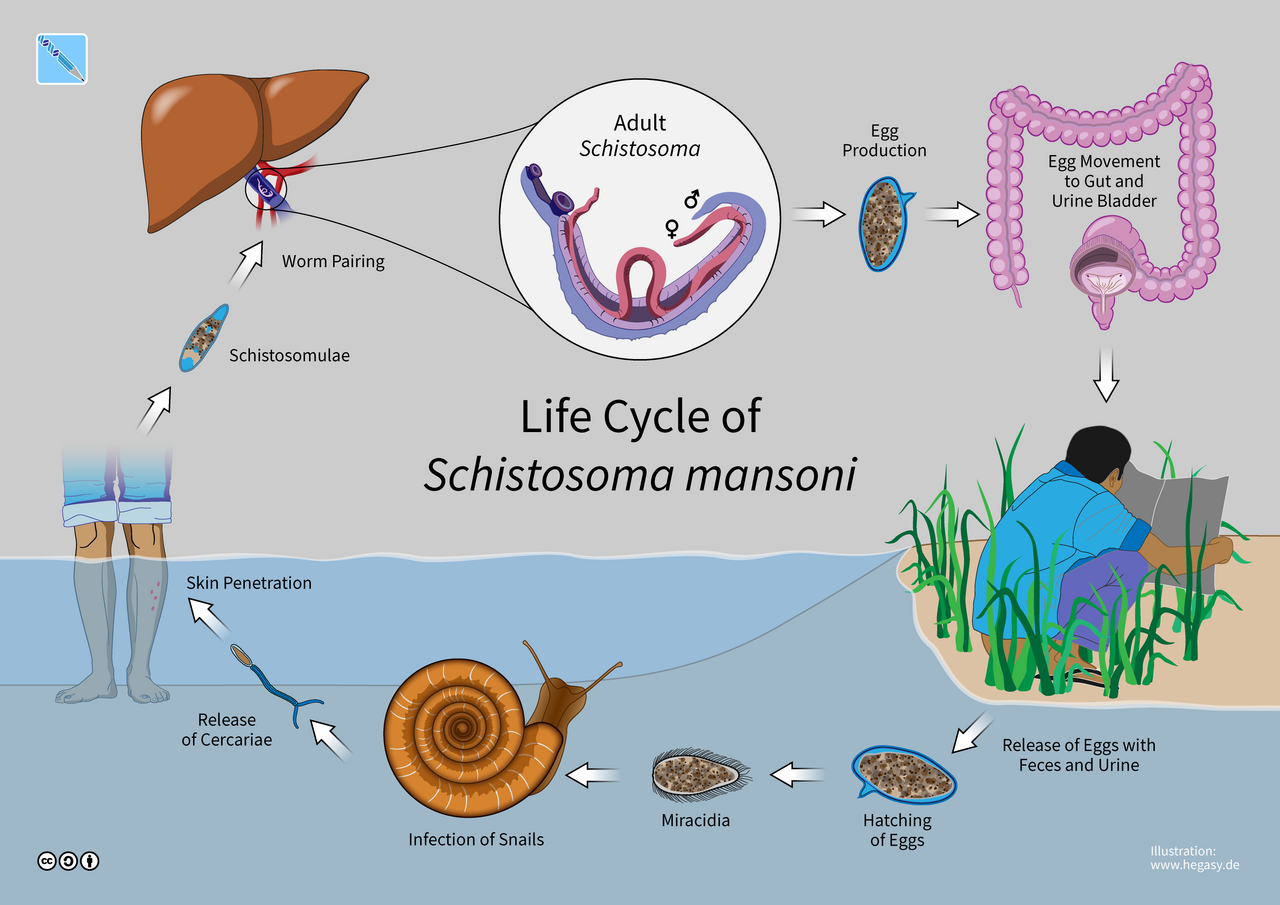

Characteristics and life cycle
Adults are dioecious (separate sexes) and the male encloses the female in a groove called a gynecophoric canal. Eggs of S. mansoni are notable for a visible lateral spine; this distinguishes them from other human schistosomes. Infective cercariae are released from freshwater snails of the genus Biomphalaria and penetrate human skin. Within the human host the larvae migrate, mature to adults, and eventually settle in mesenteric venules.
Clinical significance
Many infections are asymptomatic at first but can progress to abdominal pain, diarrhea, and blood in the stool. Chronic disease results from immune reactions to trapped eggs and can cause hepatosplenomegaly, portal hypertension and growth impairment in children. Diagnosis commonly relies on detection of eggs in stool, antigen tests, or serology.
Prevention, control and treatment
Treatment of established disease is generally with praziquantel. Public health control focuses on improved sanitation, access to safe water, health education, snail control and periodic mass drug administration in endemic communities. Individual prevention emphasizes avoiding contact with contaminated freshwater where the snail host lives.
Further reading and distinctions
- Egg morphology: lateral-spined eggs are characteristic of S. mansoni (egg description).
- Host range: primarily infects humans but involves freshwater snails as intermediate hosts.
- Taxonomy: a trematode (fluke) within the class Trematoda (trematode overview).
- Disease context: principal cause of intestinal schistosomiasis (schistosomiasis information).
Because control relies on environmental, medical and social measures, coordinated public health efforts are essential to reduce transmission and long-term morbidity from Schistosoma mansoni.
Related articles
Author
AlegsaOnline.com Schistosoma mansoni: intestinal blood fluke and cause of schistosomiasis Leandro Alegsa
URL: https://en.alegsaonline.com/art/87877