
Sebaceous gland
Small skin glands that secrete sebum to lubricate hair and skin. Found across most of the body, they influence skin health, acne, and certain tumors and are regulated by hormones and hygiene.
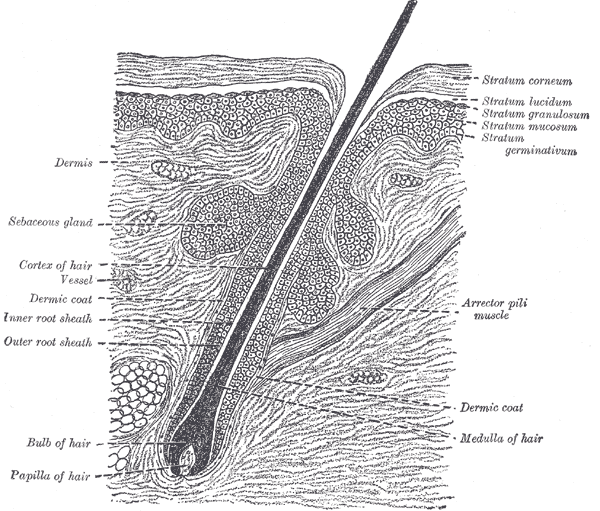
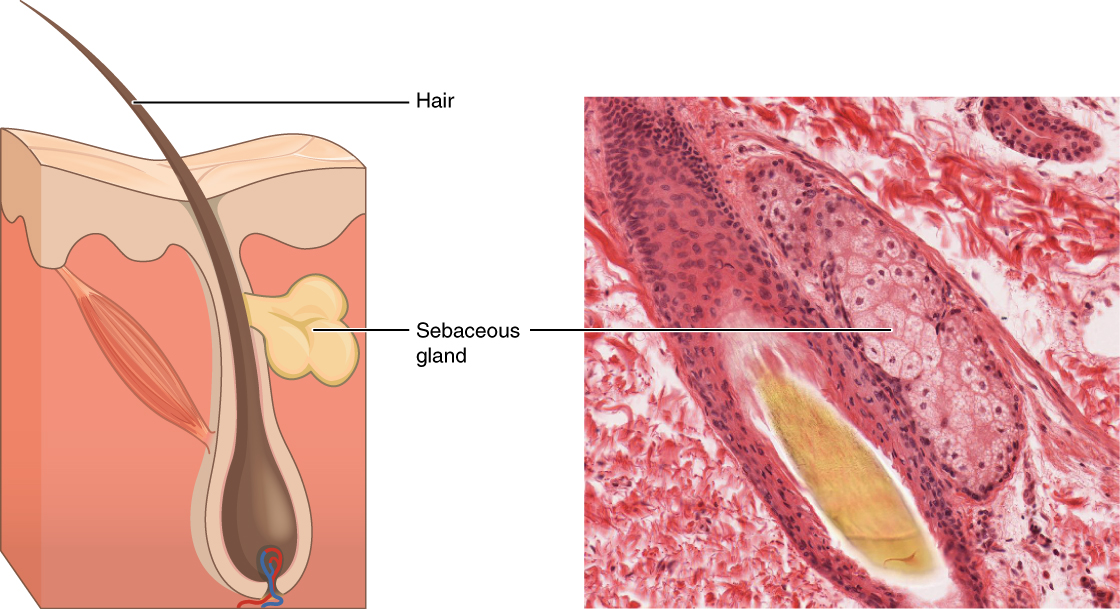
The sebaceous glands are tiny, oil-producing structures in the skin that secrete a lipid-rich substance known as sebum. They occur in greatest density on the face and scalp but are present over most of the body except the palms of the hands and soles of the feet. Most sebaceous glands are associated with hair follicles to form the pilosebaceous unit; others, such as the meibomian glands of the eyelids, discharge directly into specialized ducts. For an overview of microscopic anatomy, see microscopic glands.
Image gallery
10 Images





Structure and secretion
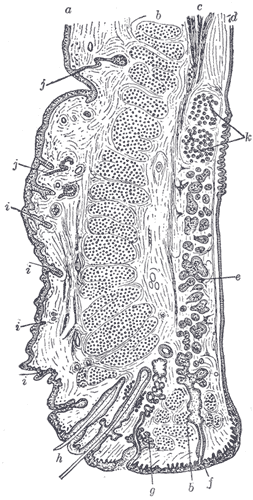
Sebaceous glands are classified as holocrine glands: their secretory cells accumulate lipid and then disintegrate to release sebum. The secretion is a complex mixture of triglycerides, wax esters, squalene and cholesterol derivatives, together with cellular debris. Most glands open into the upper portion of the hair follicle; some—called sebaceous follicles—open directly onto the skin surface. The eyelid meibomian glands produce a thicker, specialized lipid that helps stabilize the tear film. For anatomical references, consult gland anatomy and pilosebaceous unit.
Development and regulation
Sebaceous glands develop from epidermal (skin) tissue during fetal growth as appendages of hair follicles. Their activity is tightly regulated by hormones: androgens (male sex hormones) stimulate sebum production, which explains the marked increase in sebum output during puberty. Production typically peaks in adolescence and may decline with age. External factors such as cleansing agents and water temperature also influence the amount of surface sebum; vigorous washing with detergents can reduce oily residues, while warm water above roughly 29 °C (84 °F) keeps sebum more fluid during washing. See more on development and regulation at gland development, hormonal effects, and temperature and cleansing.
Functions and importance
Sebum contributes several practical functions for the skin and hair: it lubricates and softens keratinized tissue, provides a degree of waterproofing, and influences the surface microbiome by creating a lipid environment favored by some commensal microbes. These roles affect skin texture, hair sheen, and the barrier that limits water loss. Excessive or deficient sebum production can have cosmetic and medical consequences, and many dermatologic treatments target sebum production directly. For functional details, see sebum composition, skin barrier, and microbial interactions.
Clinical conditions and distinctions
Because the sebaceous gland is central to several common skin conditions, it is of interest to both primary care and dermatology. Typical issues include:
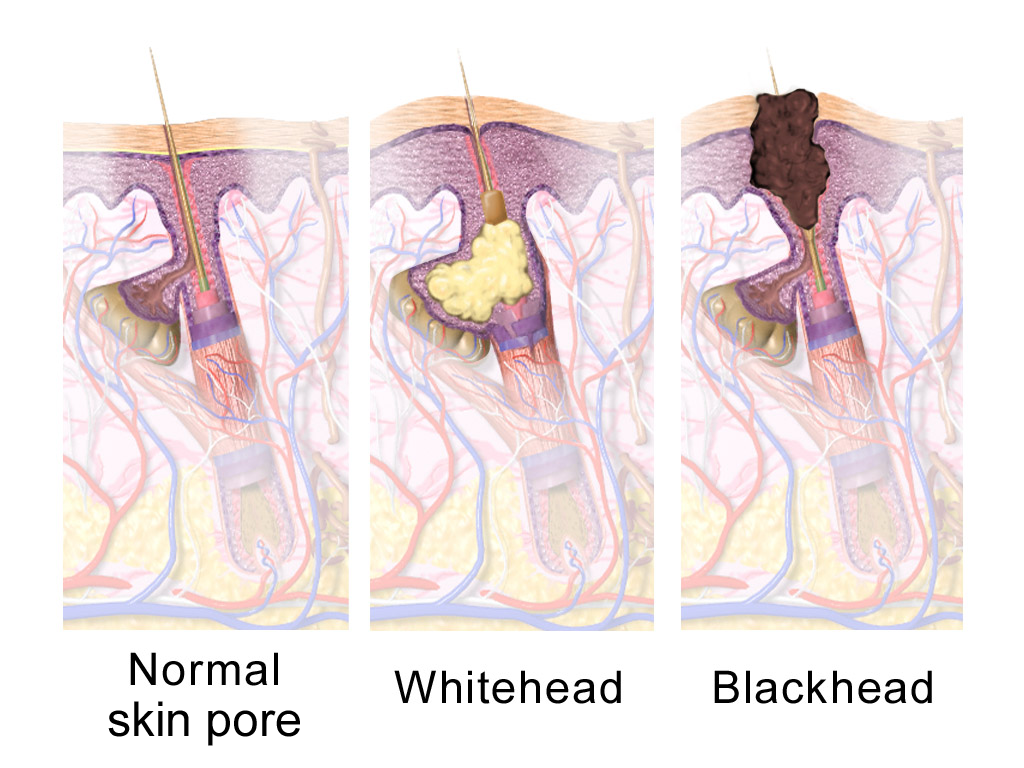
- Acne vulgaris: a multifactorial condition involving increased sebum, follicular keratin plugging and bacteria such as Cutibacterium acnes, leading to inflammation.
- Sebaceous cysts (often epidermal inclusion cysts) and sebaceous hyperplasia: benign enlargements or blocked follicles producing palpable lumps.
- Sebaceous adenomas and carcinomas: rare benign or malignant tumors of sebaceous origin; eyelid (meibomian) carcinomas are an important example and require specialist assessment.
- Genetic associations: certain syndromes link sebaceous neoplasms with internal cancers; clinicians may investigate such associations when tumors are unusual.
Management strategies range from topical cleansers, retinoids and antimicrobial agents for acne to surgical excision for cysts and tumors. Systemic therapies such as isotretinoin markedly reduce sebum production and are reserved for severe disease. Practical advice about hygiene and products that affect sebum is available at skin care, while clinical treatment options are summarized at dermatologic therapy and surgical management.
Notable distinctions include the difference between sebaceous glands and sweat glands (eccrine and apocrine): sebaceous glands produce oily secretions and are mostly linked to hair follicles, whereas sweat glands primarily produce watery sweat for thermoregulation. Understanding sebaceous gland biology helps explain common dermatologic patterns and guides appropriate treatment for oily skin, acne, and glandular tumors.
Questions and answers
Q: What are sebaceous glands?
A: Sebaceous glands are tiny glands in the skin that produce sebum to lubricate the skin and hair.
Q: Where are sebaceous glands found?
A: Sebaceous glands are found in all skin areas except for the palms and soles of the feet, with the greatest amounts found on the face and scalp.
Q: What is sebum?
A: Sebum is an oily/waxy substance produced by sebaceous glands to lubricate the skin and hair.
Q: What is the function of sebum?
A: The function of sebum is to lubricate the skin and hair.
Q: What are some related medical conditions involving sebaceous glands?
A: Some related medical conditions involving sebaceous glands include acne, sebaceous cysts, hyperplasia, sebaceous adenoma, and sebaceous gland carcinoma.
Q: How can washing skin or hair with plain detergent affect the amount of sebum in oily skin?
A: Washing skin or hair with plain detergent can cut the amount of sebum in oily skin.
Q: What is the ideal water temperature for keeping sebum melted during a wash?
A: The ideal water temperature for keeping sebum melted during a wash is over 84°F (29°C).
Related articles
Author
AlegsaOnline.com Sebaceous gland Leandro Alegsa
URL: https://en.alegsaonline.com/art/88382
Sources
- books.google.com : Books-Google-RTOC
- education.vetmed.vt.edu : Vetmed-lab15
- books.google.com : Books-Google-5QC
- doi.org : 10.1111/1523-1747.ep12468850
- pubmed.ncbi.nlm.nih.gov : 2950180
- www4.utsouthwestern.edu : "Mammalian wax biosynthesis. II. Expression cloning of wax synthase cDNAs encoding a member of the acyltransferase enzyme family"
- doi.org : 10.1074/jbc.M406226200
- ncbi.nlm.nih.gov : 2743083
- pubmed.ncbi.nlm.nih.gov : 15220349
- doi.org : 10.1016/S0190-9622(80)80074-0
- pubmed.ncbi.nlm.nih.gov : 6451637
- summitplc.com : RNS-PDF
- doi.org : 10.1111/j.1365-2133.1984.tb04045.x
- pubmed.ncbi.nlm.nih.gov : 6235834
- acnewars.com : exposed skin care reviews