
Shah Mosque (Imam Mosque) — Isfahan's Safavid masterpiece
Overview of the Shah (Imam) Mosque in Isfahan: history, architectural features, decoration, conservation and its place within the Naghsh-i Jahan UNESCO ensemble.
The Shah Mosque (Persian name Masjed-e Shāh), commonly called today the Imam Mosque (Imam Mosque), is the principal historic mosque of Isfahan in central Iran. It stands on the southern side of Naghsh-i Jahan Square in the city centre and forms part of a major Safavid-era urban ensemble that is protected as a UNESCO World Heritage Site (UNESCO, World Heritage). The building continues to function as a mosque and also attracts visitors for its architecture and decoration; more general information about congregational mosques and their social role is available through mosque studies and reference works.
Image gallery
10 Images




Historical context
Commissioned in the early 17th century during the reign of Shah Abbas I, the mosque was an integral component of the newly planned capital’s ceremonial axis. Its construction began in 1611 and involved multiple teams of architects, artists and craftsmen over several decades. The mosque’s placement at the south side of the square underlined the intended relationship between royal authority, urban planning and religious practice. In the 20th century, following the Islamic Revolution, the building became widely known by the name Imam Mosque, reflecting post-revolutionary naming conventions.
Architectural plan and structure
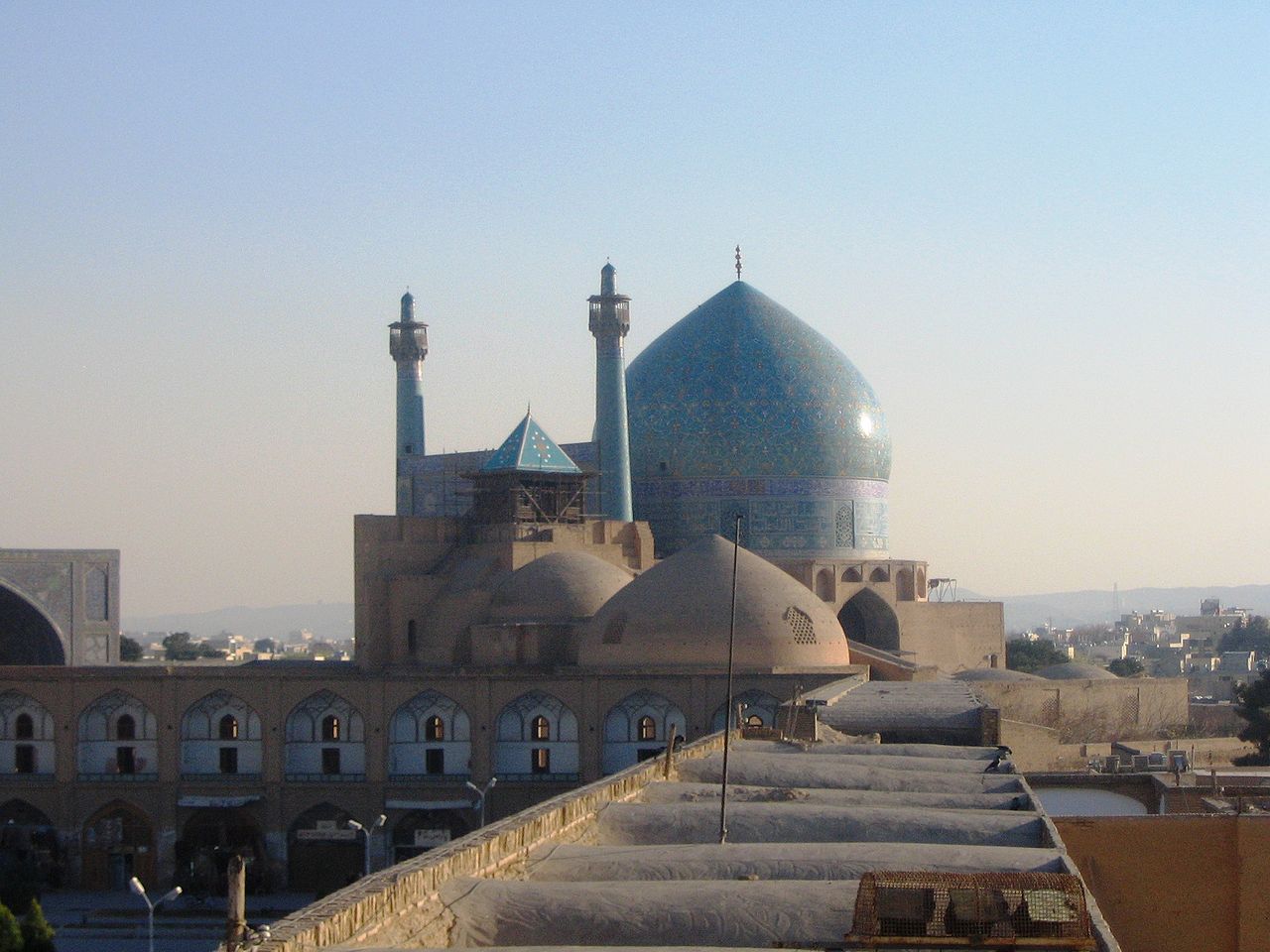
The mosque is an exemplary manifestation of Persian mosque design, combining a four-iwan plan around a large central courtyard with a pronounced axial approach from the public square. A monumental entrance portal (iwan) faces the square and leads into the courtyard, which is framed by iwans and covered prayer spaces on its sides. Above the main sanctuary rises a double-shelled dome clad in vibrant tilework. The double-shell technique allows a graceful external profile while creating an elaborated interior geometry; this structural solution is characteristic of major Persian domes and contributes to the building’s visual impact when seen from the square or from within the courtyard.
Decoration and materials
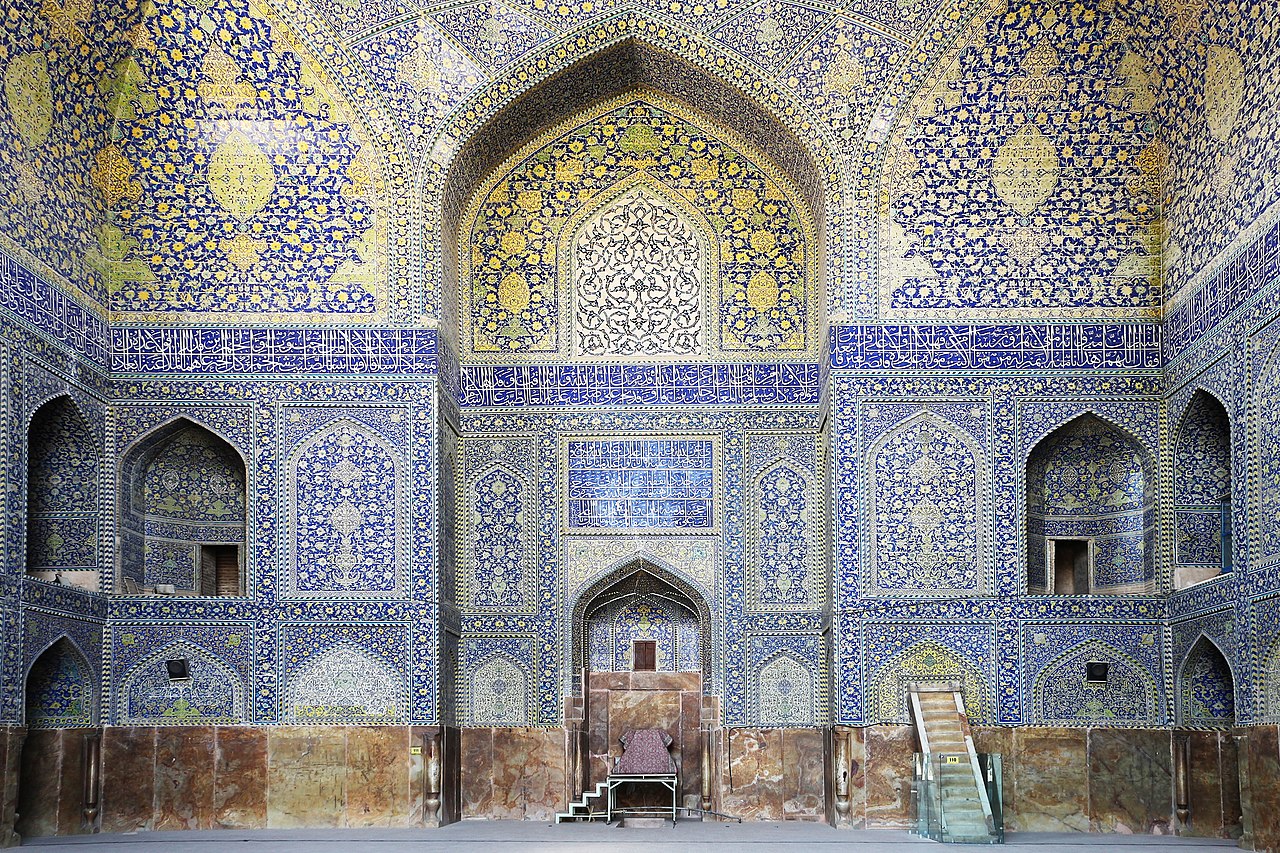
The mosque is celebrated for its tile decoration, which combines geometric patterns, arabesques, vegetal motifs and extensive Qur’anic calligraphy. Craftsmen employed polychrome glazed tiles using a technique often described as haft-rang or "seven-color" tilework to achieve intricate, multi-hued surfaces. Blues and turquoises dominate the domes and vaults, while warm tones punctuate the entrance portal and lower elevations. Calligraphic panels executed by leading artisans of the Safavid period provide religious and aesthetic framing for architectural elements; examples and studies of Persian calligraphy in monumental contexts can be consulted via general introductions to calligraphy.
Interior qualities and acoustics
Inside, the mosque’s sanctuary and domed chamber are noted for their spatial harmony and the interplay of light, color and pattern. The design produces subtle shifts in tone as daylight moves across tiled surfaces, enhancing the sense of depth in geometric compositions. Visitors and researchers also comment on the acoustic properties of the prayer hall: domes and vaulted surfaces concentrate and diffuse sound in ways that were appreciated for communal prayer and recitation.
Conservation and scholarly interest
Because of its artistic and historic importance, the mosque has been the subject of conservation and restoration efforts aimed at preserving its fragile tile surfaces, stucco work and structural elements. Conservators face typical challenges: weathering of glazed tiles, salt efflorescence, and the need to protect delicate calligraphic panels while maintaining the building’s liturgical function. The mosque is studied by historians of Islamic art and architecture, and it features prominently in surveys of Islamic architecture and Safavid art. Researchers and visitors may find further contextual material in Persian-language sources and local scholarship (Persian sources, Isfahan studies).
Visiting and significance
As part of the Naghsh-i Jahan ensemble, the Shah/Imam Mosque is widely regarded as one of the highest achievements of Safavid-era architecture in Iran. Its combination of urban placement, monumental form, finely executed tilework and calligraphy make it a frequent subject for photography, architectural study and public admiration. For visitors, the principal impressions typically noted are the scale of the portal, the vivid colors of the tiles, the intricate calligraphic bands that encircle the structure, and the richly ornamented inner dome.
Further resources
- UNESCO entries and summaries about the Naghsh-i Jahan complex and its world heritage status.
- General introductions to Islamic architecture and Persian architectural traditions.
- Local and Persian-language studies of the mosque and Isfahan’s urban history (Persian sources, Isfahan studies).
- Reference materials on mosque typology and communal use (mosque studies).
- Works on inscriptional art and calligraphy in mosque decoration.
- Catalogues and conservation reports available through cultural heritage institutions (World Heritage listings and related resources).
The Shah/Imam Mosque remains both an active place of worship and a key monument in the study of Persian art and urbanism. Its layered history, combination of structural ingenuity and decorative mastery, and continued presence in the fabric of Isfahan underscore its enduring cultural significance.
Questions and answers
Q: What is Shah Mosque?
A: Shah Mosque is a mosque located in Isfahan, Iran, known for its Islamic architecture during the Safavids period.
Q: Where is Shah Mosque located?
A: Shah Mosque is located on the south side of Naghsh-i Jahan Square in Isfahan, Iran.
Q: Has Shah Mosque undergone any changes after the Islamic Revolution?
A: Yes, Shah Mosque has been renamed to Imam Mosque after the Islamic Revolution.
Q: Why is Shah Mosque considered a masterpiece of Persian architecture?
A: Many people see Shah Mosque as the masterpiece of Persian art due to its seven-color mosaic tiles and calligraphic inscriptions.
Q: When was the construction of Shah Mosque started?
A: The construction of Shah Mosque began in 1611.
Q: Is Shah Mosque a registered UNESCO World Heritage Site?
A: Yes, Shah Mosque along with Naghsh-i Jahan Square has been registered as a UNESCO World Heritage Site.
Q: What makes the architecture of Shah Mosque everlasting?
A: The splendor of Shah Mosque's architecture is mainly due to the beauty of its seven-color mosaic tiles and calligraphic inscriptions, making it one of the everlasting masterpieces of architecture in Iran and all over the world.
Related articles
Author
AlegsaOnline.com Shah Mosque (Imam Mosque) — Isfahan's Safavid masterpiece Leandro Alegsa
URL: https://en.alegsaonline.com/art/89363