
Baloch people
The Baloch are an Iranian ethnic group native to Balochistan across southeastern Iran, southwestern Pakistan and southern Afghanistan. They speak Balochi, live in tribal communities, and are mainly Sunni Muslims.
The Baloch (بلوچ) are an Iranian ethnic group whose traditional homeland is the region commonly known as Balochistan. Their communities extend across modern borders into southeastern Iran, southern Afghanistan and southwestern Pakistan. Baloch identity rests on a shared language, customary practices and kinship ties; general classifications list them among the Iranian peoples of the plateau and adjacent areas (Iranian ethnic group).
Image gallery
10 Images



Language and culture
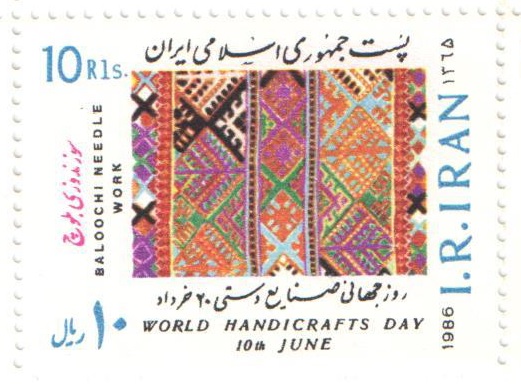
The Balochi language is an Iranian language of the Indo-Iranian branch and is the principal marker of Baloch identity; linguistic resources and overviews are available under Balochi language. The language has several regional dialects and a strong oral tradition. Poetry, storytelling and folk music play a major role in community life. Material culture includes distinctive dress, craft traditions and customary ceremonies connected to lifecycle and seasonal events. Most Baloch follow Sunni Islam, while local practices and beliefs produce considerable cultural variation between areas.
Geography and economy
The greater Balochistan region lies largely on the arid, often mountainous Iranian plateau, with deserts, ranges and a coastal fringe along the Arabian Sea. Traditional livelihoods included pastoralism and semi-nomadic herding, supplemented by agriculture in irrigated or coastal zones and by trade in caravan and coastal networks. In the 20th and 21st centuries, urbanization, wage labour and migration—both within the region and to neighbouring countries and beyond—have diversified economic life.
Social organization and customary law
Baloch society is commonly organized around tribes, clans and extended kin groups. Tribal elders and chiefs historically mediate disputes and lead communal affairs; customary mechanisms for conflict resolution and compensation remain important in many areas. Marriage, hospitality and reciprocal obligations among kin are central to social cohesion. These networks extend across national boundaries, sustaining connections among Baloch communities in different states.
History and contemporary context
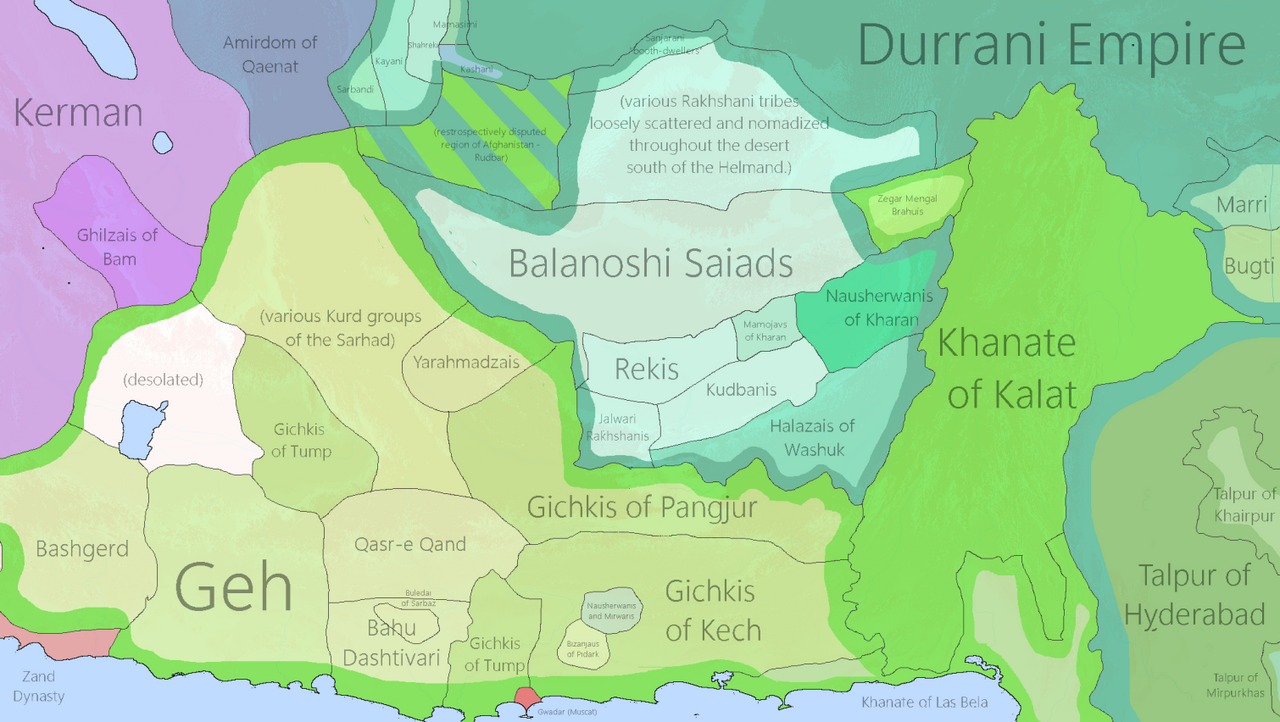
Scholars trace Baloch history as part of the wider Iranian cultural and linguistic world, with episodes of migration, settlement and contact with neighbouring peoples over many centuries. The Baloch region experienced varied political influence from regional polities and, later, from colonial and post-colonial states. Today the Baloch are a transnational people facing shared concerns such as economic development, access to services, environmental pressures and efforts to preserve language and traditions in changing social contexts.
Distinguishing features and notable facts
- Language: Balochi unites diverse communities and exists in several dialect groups; further information appears under Balochi language.
- Territory: The cultural region of Balochistan crosses parts of Iran, Pakistan and Afghanistan.
- Ethnic classification: The Baloch are commonly described among the Iranian peoples of the plateau (Iranian ethnic group).
- Landscape and livelihoods: Much of their homeland lies on the Iranian plateau, shaping pastoral and agricultural traditions.
- Regional resources: Overlapping economic and cultural networks link rural areas, ports and regional cities; see regional overviews under entries for Balochistan.
Related articles
Author
AlegsaOnline.com Baloch people Leandro Alegsa
URL: https://en.alegsaonline.com/art/8574
Sources
- cia.gov : "CIA World Factbook"
- iranprimer.usip.org : "Iran Minorities 2: Ethnic Diversity"
- ethnologue.com : "United Arab Emirates: Languages"
- ethnologue.com : "Oman: Languages"
- central-asia.su : KOKAISLOVÁ, Pavla, KOKAISL Petr. Ethnic Identity of The Baloch People. Central Asia and The Caucasus. Journal of Social and Political Studies. Volume 13, Issue 3, 2012, p. 45-55.
- joshuaproject.net : Baloch, Southern in Saudi Arabia
- gulf2000.columbia.edu : "Demography of Religion in the Gulf"