
London Borough of Islington
Inner London borough north of Central London, noted for dense residential districts, Victorian architecture, a lively cultural scene, theatres, and the Emirates Stadium.
The London Borough of Islington is an inner London borough located immediately north of Central London. It is a densely populated area with a mix of residential streets, commercial avenues and cultural venues. Islington combines well‑preserved Victorian and Georgian terraces with busy high streets, and it is known for its strong arts presence and lively local economy.
Image gallery
6 Images




Geography and transport
Islington sits north of the City of London and shares boundaries with several other boroughs. Its compact area makes public transport especially important: the borough is served by multiple Underground, Overground and rail stations, along with numerous bus routes. Key transport hubs and corridors provide direct links to central London and surrounding districts.
History and development
The area developed from rural villages and country estates into a suburban district in the 18th and 19th centuries, driven by London's expansion. Many of the terraces and civic buildings date from the Victorian era. In the 20th century parts of the borough experienced industrial decline and later regeneration; the late 20th and early 21st centuries saw rising property values and significant gentrification.
Islington has a varied cultural life, with notable venues such as theatres, live music spaces and galleries. The borough is home to Sadler's Wells and the Almeida Theatre, alongside independent cinemas, music venues and artisanal shops. Upper Street and Camden Passage are known for restaurants, boutiques and antiques.
- Landmarks: Emirates Stadium (Arsenal F.C.), Sadler's Wells, Almeida Theatre, Union Chapel.
- Parks: Highbury Fields and a number of smaller green spaces and community gardens.
- Education and economy: a mix of higher education facilities, creative and tech businesses, retail and professional services.
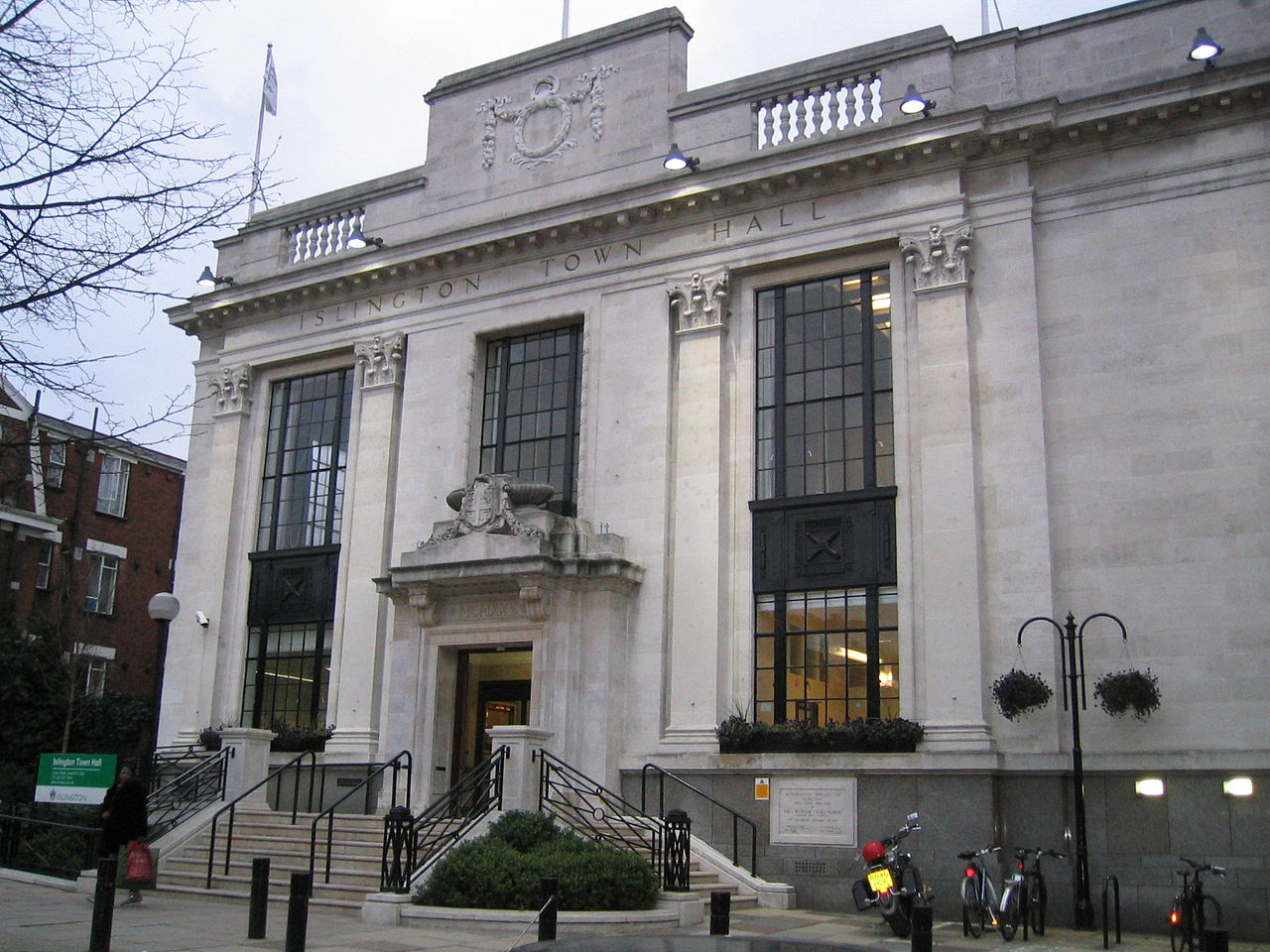
Governance is administered by the local borough council, and the area is notable for its social diversity: long‑standing communities live alongside newer residents and a growing professional population. Islington's combination of historic architecture, cultural institutions and urban amenities makes it a distinctive part of London.
Related articles
Author
AlegsaOnline.com London Borough of Islington Leandro Alegsa
URL: https://en.alegsaonline.com/art/58999