
Ball-jointed doll (BJD)
A ball-jointed doll (BJD) is a highly posable, often resin or urethane doll assembled with spherical joints. BJDs are prized for customization, artistic uses, photography, and collecting worldwide.
A ball-jointed doll (commonly abbreviated BJD) is a type of articulated figure whose limbs and sometimes torso are connected using spherical or ball-and-socket joints. This construction allows a wide range of motion and naturalistic poses, which has made BJDs popular with artists, photographers, designers, and collectors. For a general introduction and further links, see related resources.
Image gallery
5 Images
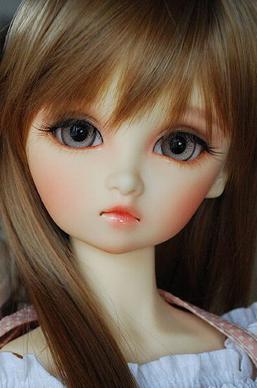


Characteristics and construction
The defining feature of a BJD is its joint system. Individual parts — head, upper torso, lower torso, arms, hands, thighs, lower legs, and feet — are fitted together with rounded joints that pivot and rotate. Many modern BJDs are made of polyurethane resin or urethane, which holds fine detail and a matte finish. Some models use softer materials or vinyl, but resin remains the most common among collectors.
- Joints: Single, double, or even triple-jointed limbs increase the range of motion and allow more natural poses.
- Assembly: Parts are held together internally with elastic cord, stringing, or peg-and-socket systems; restringing is a routine maintenance task.
- Customization: Interchangeable eyes, wigs, hands, and face-up (the painted makeup and eyelashes) let owners personalize appearance and character.
History and development
Ball-jointed mechanisms have existed in toys and puppets for many years, but the modern art and collector form of the BJD developed more recently. Artists explored jointed dolls for creative photography and surreal work in the early 20th century — a notable historical reference is the work of Hans Bellmer in the 1930s, who used articulated doll parts in art photography (see example).
In the late 20th century, Japanese dollmakers adapted and refined traditional dollmaking techniques to create more lifelike and highly poseable figures. During the 1980s and afterward, traditional and contemporary Japanese crafts helped shape the aesthetic now associated with BJDs (background on Japanese dollmaking). In 1999 a Japanese company, Volks, popularized a commercially successful line of resin BJDs, which broadened the hobby and inspired many other manufacturers across East Asia and beyond.
Uses, communities, and collecting
BJDs serve multiple roles: they are tools for artists and photographers, props for storytelling and stop-motion, and collectible art objects. Owners often create personas, design wardrobes, commission or perform custom face-ups, and participate in online communities that share tutorials, sales, and event information. Conventions and meet-ups allow enthusiasts to trade, exhibit, and photograph their dolls in planned settings.
Variations, care, and notable distinctions
Sizes range from small (around 10 cm) to large (60 cm or more), and aesthetics vary from realistic human likenesses to stylized anime-inspired faces. Resin can yellow over time with UV exposure; collectors take precautions like storing dolls away from sunlight and using protective sprays. Because many BJDs are marketed as adult collectibles, buyers should be mindful of age-appropriate designs and local regulations.
Several manufacturers and independent artists produce BJDs. Alongside Volks, notable companies and studios have emerged across Japan, Korea, and China, each contributing different sculpt styles, body types, and customization options. The combination of engineering, sculptural detail, and community-driven creativity is what continues to sustain the global interest in ball-jointed dolls.
Related articles
Author
AlegsaOnline.com Ball-jointed doll (BJD) Leandro Alegsa
URL: https://en.alegsaonline.com/art/8513