
Salade niçoise — traditional salad from Nice
A classic Mediterranean composed salad from Nice, featuring tomatoes, tuna or anchovies, hard‑boiled eggs, Niçoise olives and a vinaigrette; many regional variations exist.
Overview
Salade niçoise is a composed salad that originated in the coastal city of Nice in southeastern France. It is a staple of Provençal cooking and reflects Mediterranean ingredients and flavors: ripe tomatoes, preserved or fresh seafood, cured olives and a simple vinaigrette seasoned with olive oil and herbs.
Image gallery
5 Images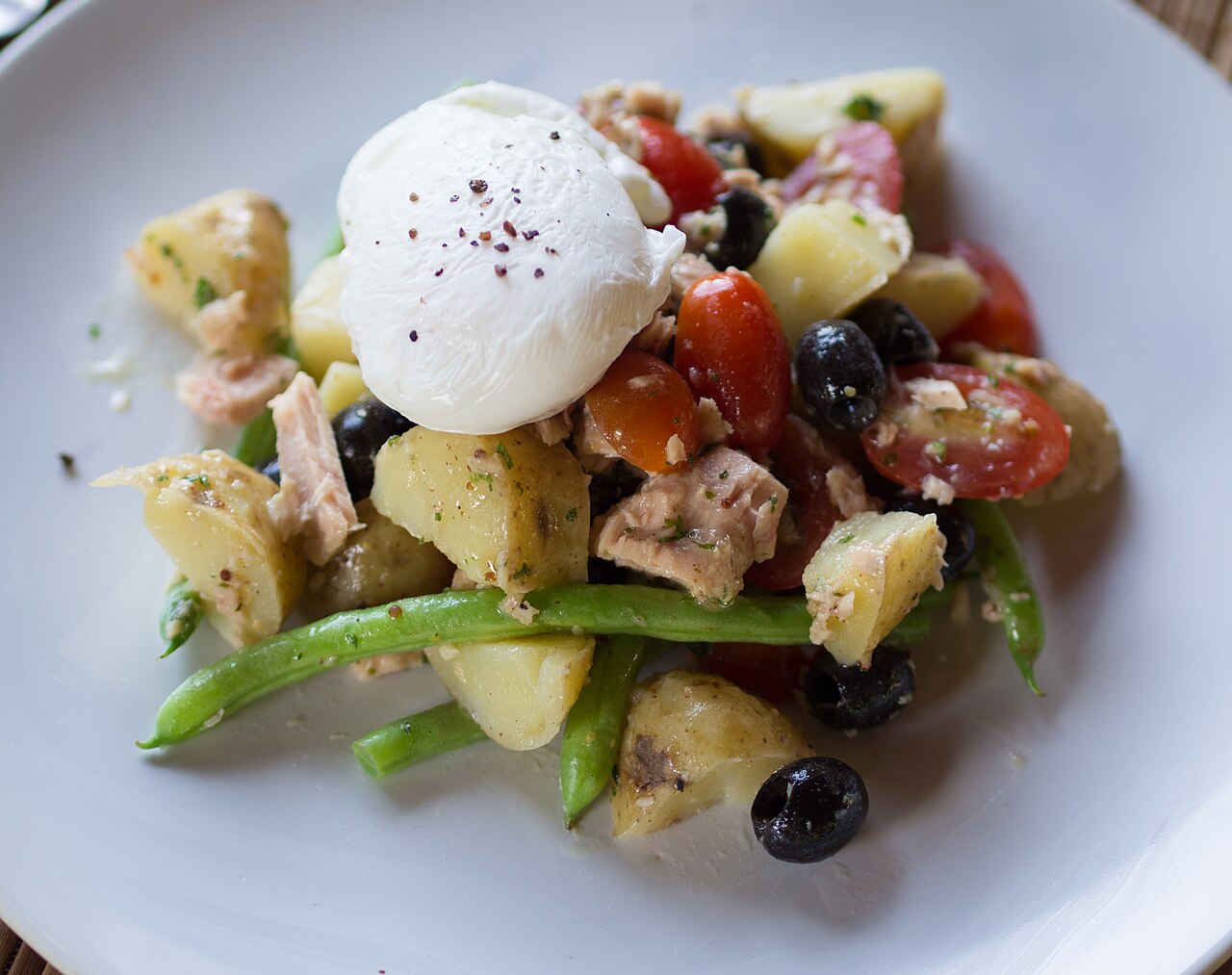



Typical ingredients and composition
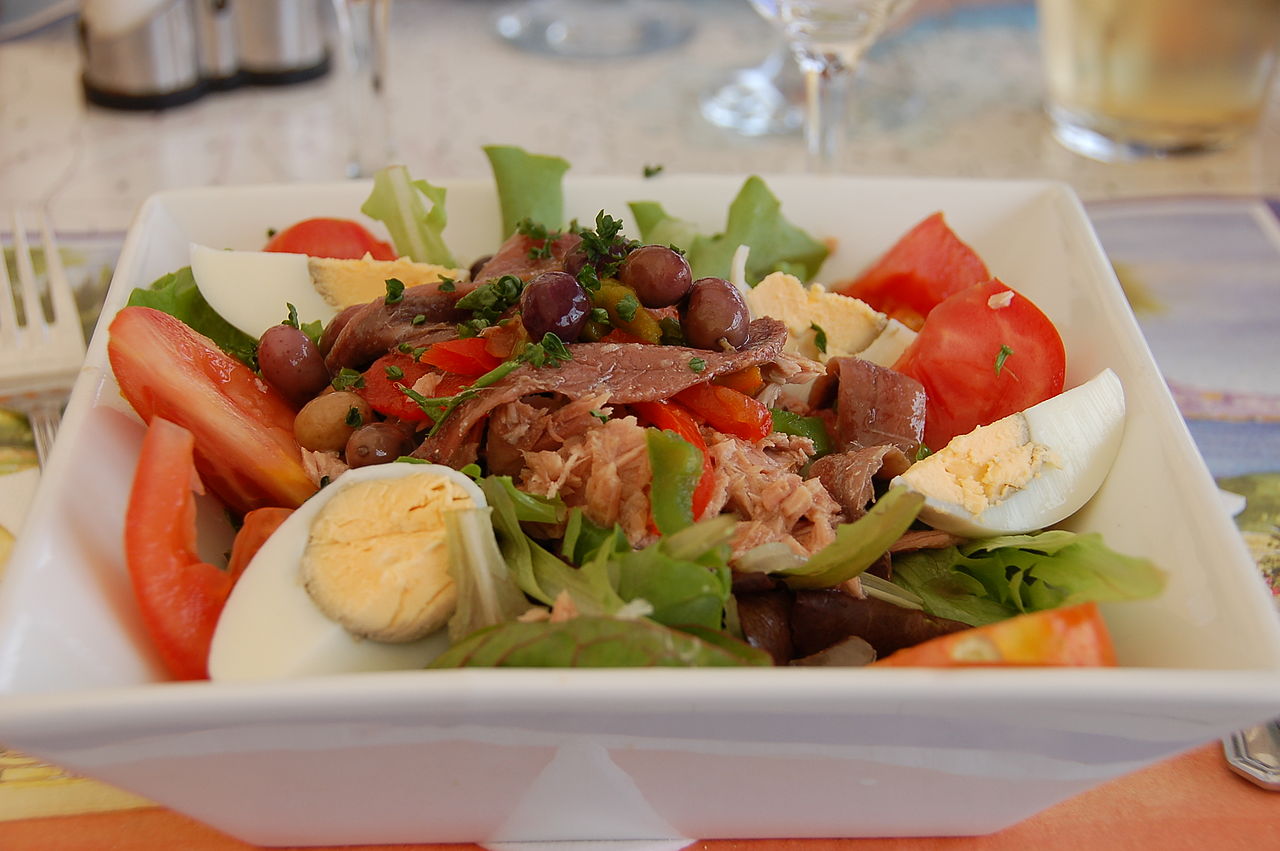
The canonical components of a salade niçoise are arranged, not tossed, so each item is visible on the plate. Common elements include:
- Tomatoes – ripe and firm.
- Tuna – either lightly cooked or canned in oil; some traditional versions emphasize anchovies instead of or alongside tuna.
- Hard‑boiled eggs – quartered or halved.
- Olives (traditionally Niçoise olives) and a drizzle of vinaigrette based on olive oil.
Variations and accepted ingredients
Outside Nice, cooks often adapt the recipe. Variations may add cooked vegetables such as green beans and potatoes, but many purists argue these are not part of the original. Other optional raw ingredients that appear in recipes include red peppers, shallots and artichoke hearts. A bed of lettuce is sometimes used, though it is optional in the traditional presentation.
History and culinary context
The salad grew from local produce and Mediterranean preservation methods: olives, cured fish and preserved tuna were readily available to coastal communities. It sits in the wider French practice of composed salads and shares techniques with regional specialities. While the dish bears the name of the city of Nice, it has become a global classic, adapted in bistros and homes worldwide.
Preparation and serving
Preparations range from rustic to refined. Ingredients are usually fresh and seasonal; dressing is kept simple to highlight them. Anchovies or tuna may be laid atop vegetables, with eggs, olives and herbs arranged to create contrasting colors and textures. Recipes and modern takes are widely available for both home cooks and professional kitchens — search a recipe to see specific instructions.
Notable distinctions
What distinguishes salade niçoise is its emphasis on Mediterranean freshness, its composed presentation and debates about authenticity. Whether served with or without certain vegetables, with anchovies or tuna, the salad remains an emblem of Niçoise cuisine and a flexible template for showcasing high‑quality, seasonal ingredients.
Questions and answers
Q: What is Salade niçoise?
A: Salade niçoise is a salad from the district of Nice that typically includes tomatoes, tuna, hard-boiled eggs, olives, and anchovies and is dressed with a vinaigrette.
Q: What other vegetables can be added to Salade niçoise?
A: Salade niçoise may include raw red peppers, shallots, artichoke hearts and other seasonal raw vegetables.
Q: Does Salade niçoise have cooked vegetables?
A: No, Salade niçoise does not have cooked vegetables (like green beans and potatoes) which are often served in variations of the salad around the world.
Q: What are raw vegetables served as appetizers in French cuisine called?
A: Raw vegetables served as appetizers in French cuisine are known as crudités.
Q: Is lettuce a required ingredient in Salade niçoise?
A: Lettuce is optional and the salad can be served with or without a bed of lettuce.
Q: Can the tuna in Salade niçoise be canned?
A: Yes, the tuna in Salade niçoise may be cooked or canned.
Q: Where is Salade niçoise originally from?
A: Salade niçoise is originally from the district of Nice.
Related articles
Author
AlegsaOnline.com Salade niçoise — traditional salad from Nice Leandro Alegsa
URL: https://en.alegsaonline.com/art/86387
Sources
- nicerendezvous.com : "The real Salade Niçoise recipe"