
Rungrado May Day Stadium: Pyongyang's multi-purpose arena and site of the Mass Games
Rungrado May Day Stadium in Pyongyang, completed 1989, is a large multi-purpose stadium noted for mass gymnastics (Arirang), political celebrations and an often-cited capacity of about 150,000 spectators.
Overview
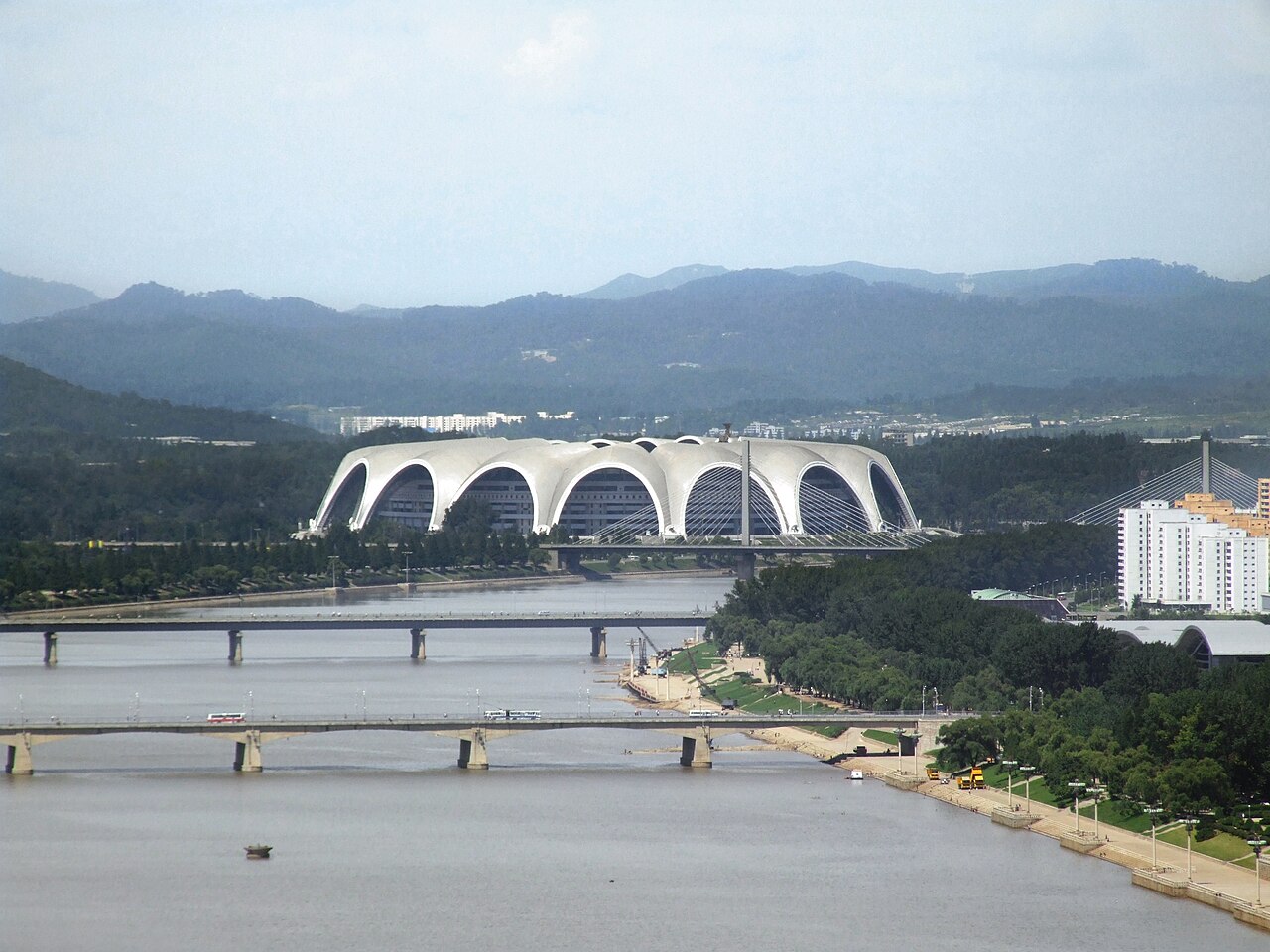
The Rungrado May Day Stadium, commonly called the May Day Stadium, is a large multi-purpose sports and performance venue on Rungra Islet in the Taedong River, in Pyongyang, North Korea. It was completed and officially opened on May 1, 1989, and was originally built as the principal stadium for the 13th World Festival of Youth and Students. Since then it has been used for sport, mass performances and major state ceremonies.
Image gallery
7 Images




Architecture and capacity
The stadium is distinguished by a broad, petal-like roof and an elliptical bowl designed to accommodate very large audiences. It is widely cited as having an official seating capacity of about 150,000, a figure that places it among the largest stadiums in the world. Different sources sometimes report differing totals and configurations depending on counting methods and temporary seating arrangements; the widely reported 150,000 number is the most commonly referenced figure.
Functions and regular uses
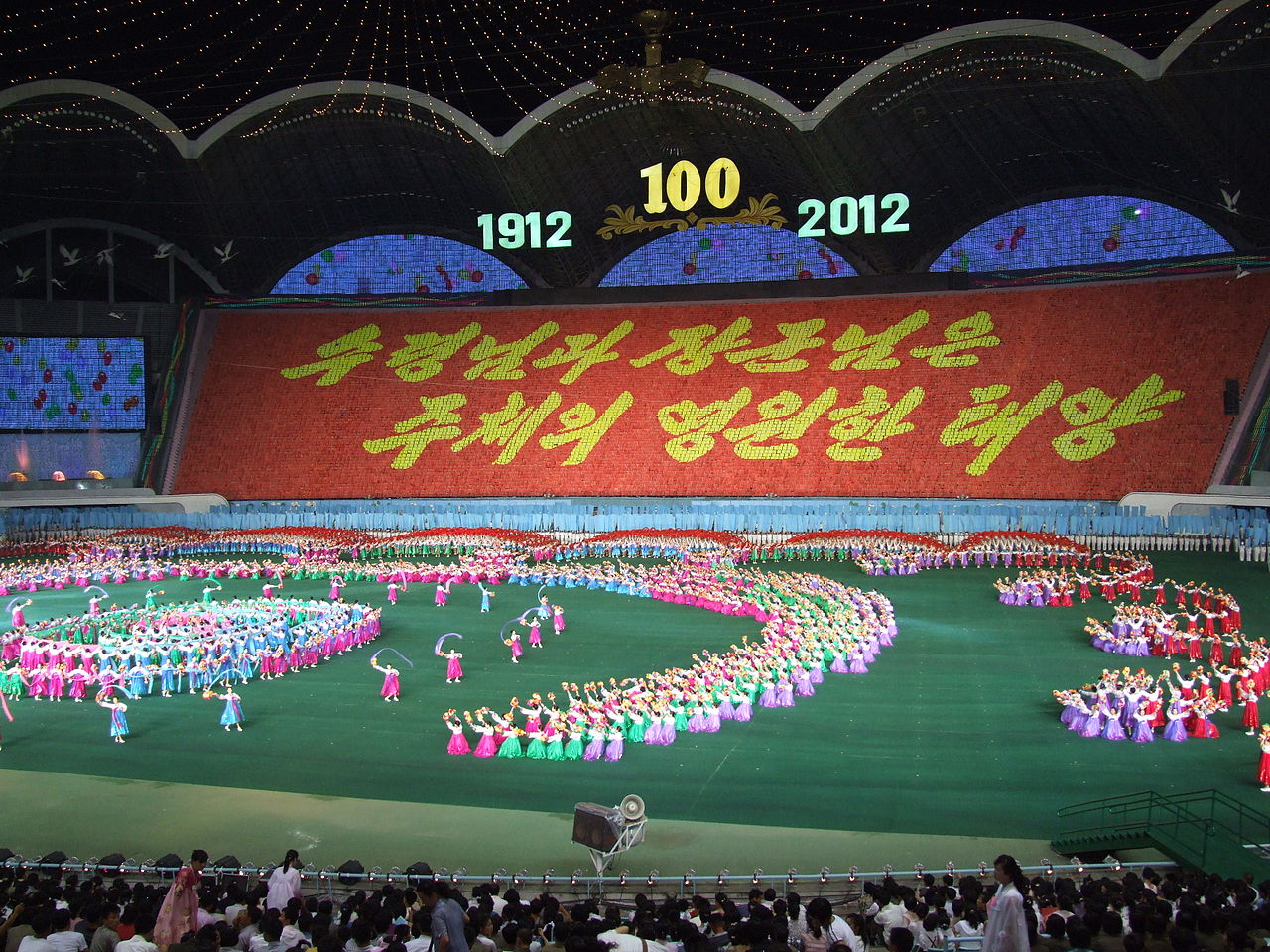
Rungrado serves multiple purposes. It hosts association football matches, occasional athletics events and, most prominently, large choreographed mass displays. The stadium became internationally known for the Arirang mass gymnastics and artistic performances (often called the Mass Games), which combine synchronized gymnastics, dance, and huge living mosaics created by thousands of performers and card-wielding participants. These spectacles are staged as grand national celebrations and are notable for their scale and precise coordination.
History and notable events
Constructed for a major international youth festival, the stadium quickly took on a symbolic role in national ceremonies and commemorations. It has been the venue for anniversary celebrations, political rallies and cultural presentations praising national achievements and leaders. In June–July 2002 the Arirang performances drew international attention when a large edition of the show was opened to foreign visitors. A well-publicized diplomatic visit occurred in 2000 when then U.S. Secretary of State Madeleine Albright was hosted there during talks with North Korean officials; she served as U.S. Secretary of State in the administration of President Bill Clinton.
Significance and public perception
Beyond its sporting use, the stadium functions as a focal point for large-scale public performance and state ritual. Shows staged at Rungrado often emphasize collective discipline, national history and social themes; their size has attracted attention from observers and record-keeping organizations. The mass gymnastic displays have been recognized in popular accounts and records as among the largest organized performances of their kind.
Key facts and events
- Opened: May 1, 1989, for the 13th World Festival of Youth and Students.
- Location: Rungra Islet, Taedong River, Pyongyang, North Korea.
- Reported capacity: commonly cited at about 150,000 spectators, though totals vary by source; often noted among the world's largest stadiums (capacity comparisons).
- Famous for: Arirang mass games and large state celebrations tied to national holidays such as May Day, the international day celebrating labour.
Rungrado May Day Stadium remains one of the most visible large-scale venues in North Korea, notable both for its size and for the mass performances that have defined much of its international reputation.
Further links
Related articles
Author
AlegsaOnline.com Rungrado May Day Stadium: Pyongyang's multi-purpose arena and site of the Mass Games Leandro Alegsa
URL: https://en.alegsaonline.com/art/84746
Sources
- football-lineups.com : www.football-lineups.com
- guardian.co.uk : "Despair, hunger and defiance at the heart of the greatest show on earth"
- commons.wikimedia.org : Rŭngrado May First Stadium