
Madeleine Albright: US Secretary of State, Diplomat and Scholar
Profile of Madeleine Albright (1937–2022), first female U.S. Secretary of State: early life, education, diplomatic career, policy priorities, later academic work, writings and legacy.
Madeleine Albright (born Marie Jana Korbelová; May 15, 1937 – March 23, 2022) was an influential American diplomat, scholar and public servant. Born in Prague, she emigrated as a child and built a career that combined academic work, multilateral diplomacy and high-level government service. She is widely remembered as the first woman to serve as United States Secretary of State and as a prominent voice on post–Cold War international affairs.
Image gallery
9 Images


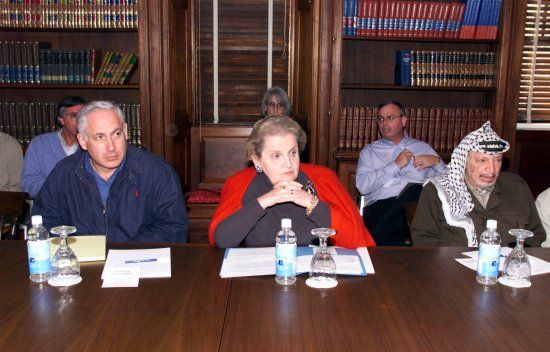
Early life and background
Albright was born in what was then Czechoslovakia into a family of Czech roots with Jewish ancestry noted in family histories; her father, Josef Korbel, worked as a diplomat and later as an academic, shaping her early exposure to international politics. The family left Europe during the upheavals of the mid‑20th century and eventually settled in the United States, an experience that informed her interest in refugees, democracy and transatlantic ties.
Education and academic career
Albright studied political science and international relations, attending Wellesley College and later earning graduate degrees at Columbia University. She combined scholarship and public engagement throughout her life, teaching and lecturing at universities and participating in policy research organizations. Her academic work emphasized the history of Central Europe, diplomacy and the challenges of democratic transitions.
Public service and United Nations
Albright held roles in Democratic administrations and policy institutions before joining the U.S. diplomatic corps at senior levels. She was appointed U.S. Ambassador to the United Nations, beginning that posting in early 1993, where she represented American positions in the UN Security Council and other multilateral forums. Her tenure at the United Nations brought her into sustained engagement with peacekeeping, sanctions and humanitarian issues.
Secretary of State (1997–2001)
In December 1996 President Bill Clinton nominated Albright as Secretary of State; the Senate confirmed her by a 99–0 vote, and she was sworn in on January 23, 1997, becoming the first woman to hold the office of United States Secretary of State. During her time as the nation’s top diplomat she focused on strengthening alliances, promoting the enlargement of NATO to include several Central European countries, and responding to crises in the Balkans, including the 1999 NATO action in Kosovo. She also worked on arms control, non‑proliferation, sanctions policy and diplomatic initiatives in the Middle East.
Policy approach and priorities
Albright combined robust support for multilateral institutions with advocacy for human rights and democratic governance. She argued that American leadership within alliances and international organizations was essential to managing security challenges after the Cold War. Her approach emphasized diplomacy backed by a readiness to use collective measures when necessary to prevent mass violence.
Writings, teaching and later work
After leaving government at the end of the Clinton administration, Albright returned to teaching and writing. She published books and memoirs, participated in public debates on foreign policy, and mentored students and younger practitioners. She maintained ties to academic institutions and think tanks, including continuing work at Georgetown University, and she spoke frequently on the responsibilities of leadership and the challenges facing democracies.
Legacy
Albright is remembered for breaking a gender barrier in American diplomacy and for a practical, alliance‑oriented foreign policy during a pivotal era. Her life—from exile in Europe to the highest ranks of U.S. diplomacy—became a reference point in discussions about refugee experience, transatlantic relations and women in public life. She was also known for encouraging the advancement of women in positions of influence.
Death
Albright died on March 23, 2022, in Washington, D.C., after an illness related to cancer. Her career connected scholarly analysis, multilateral engagement and practical statecraft, and her papers and interviews remain resources for students of diplomacy and contemporary history.
For further reference on aspects of her biography and work see materials associated with her birthplace and family (Czechoslovakia, Josef Korbel), her cultural background (Czech and Jewish), her service under Bill Clinton and her historic role as Secretary of State. Additional archival collections and institutional pages provide access to speeches, interviews and teaching materials at centers where she taught and lectured (Georgetown University) and to memorial statements issued following her death in Washington, D.C..
Related articles
Author
AlegsaOnline.com Madeleine Albright: US Secretary of State, Diplomat and Scholar Leandro Alegsa
URL: https://en.alegsaonline.com/art/125643