
Rouen Cathedral (Cathédrale Notre-Dame) — Gothic landmark in Rouen, Normandy
Major Gothic cathedral in Rouen, Normandy. Seat of the archbishop, celebrated for its façade, layered medieval building history, Monet paintings, and important art and funerary monuments.
Overview
Rouen Cathedral, officially known in French as Cathédrale primatiale Notre-Dame de l'Assomption de Rouen, is the principal medieval church of the city of Rouen in Normandy, northern France. It functions as the seat of the local archbishop and is one of France's best-known Gothic cathedrals. The building's exterior and interior reflect several centuries of construction, repair and stylistic change.
Image gallery
1 Image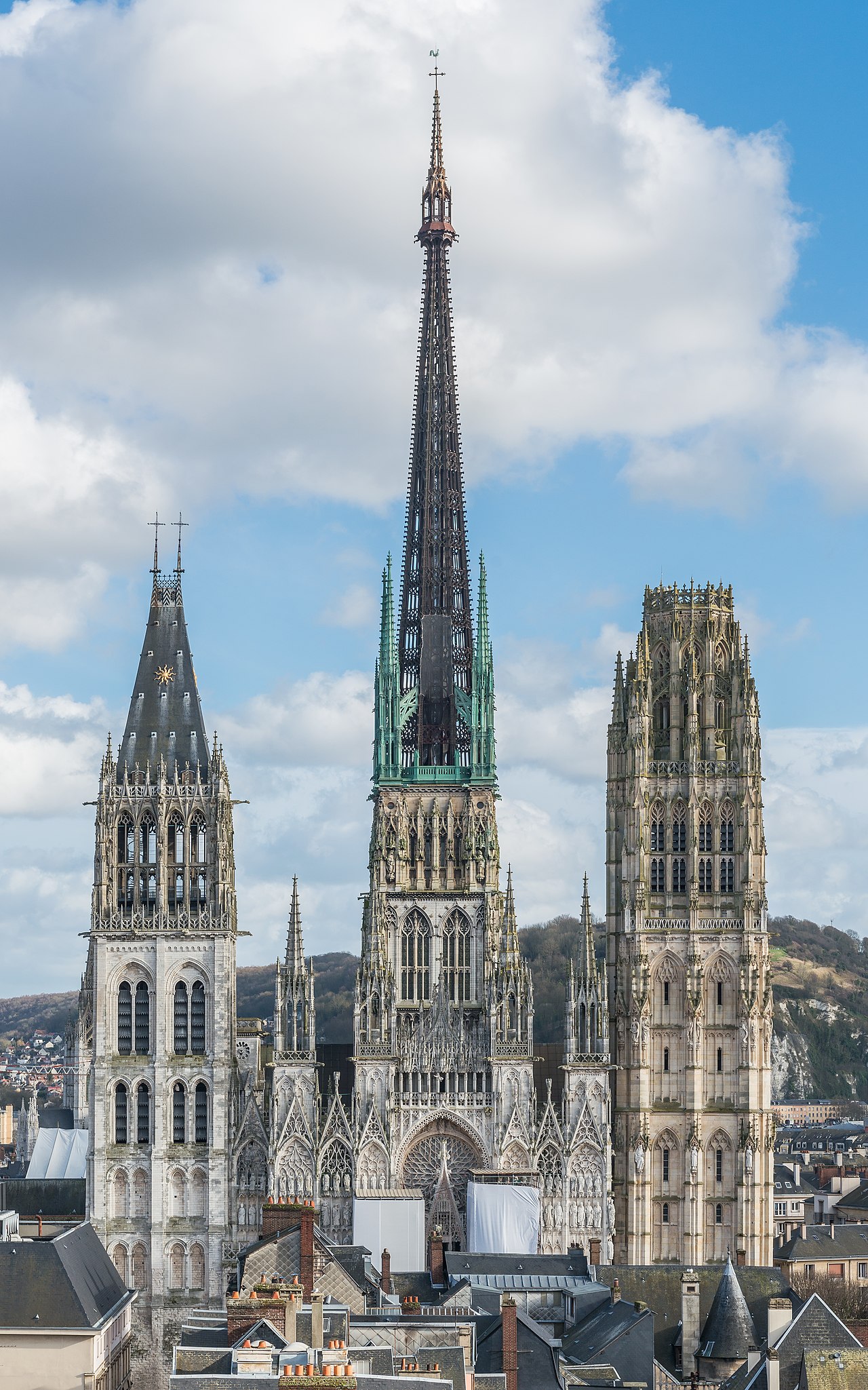
Architecture and components
The cathedral combines Romanesque origins with high Gothic and later Flamboyant Gothic details. Its main parts include a long nave, transepts, choir, ambulatory and radiating chapels. A prominent west façade with intricate stonework and portals presents a layered elevation of sculpted decoration. The tower and spire have been rebuilt multiple times and contribute to the cathedral's skyline presence.
History and development
Construction began in the medieval era and continued intermittently over many centuries, so the cathedral records changes in building technique and taste. It has suffered damage from fire, warfare and renovation campaigns, and later restoration efforts altered or replaced earlier fabric. The site has been a Christian center since the early medieval period.
Art, monuments and cultural importance
Interior furnishings, stained glass, tombs and carved memorials make the cathedral an important repository of religious art. It is associated with notable historical figures and events; some funerary remains and memorials of regional rulers and clergy are preserved within. The cathedral became an icon of modern art when Claude Monet painted a famous series of the west façade, exploring light and atmosphere.
Notable features and visitor information
- Striking west façade with layered sculptural program.
- Mixed architectural phases visible in the masonry and vaulting.
- Collections of stained glass and liturgical furnishings.
- Works and cultural associations that draw art historians and tourists.
Context and distinctions
As a major medieval cathedral in Gothic style, Rouen Cathedral sits among France's most studied religious monuments. Its long construction history, the visual record left by painters such as Monet, and its continuing role as an active diocesan church give it both scholarly and popular significance. Practical visitor details, guided tours and seasonal events are typically available for those exploring the building and the surrounding historic district.
Official French name and references to the city's heritage can help locate archival and conservation resources; for local context see Rouen and regional guides to Normandy and France.
Related articles
Author
AlegsaOnline.com Rouen Cathedral (Cathédrale Notre-Dame) — Gothic landmark in Rouen, Normandy Leandro Alegsa
URL: https://en.alegsaonline.com/art/84307
Sources
- sacred-destinations.com : sacred-destinations.com/france/rouen-cathedral
- culture.gouv.fr : culture.gouv.fr/public/mistral/dapamer_fr
- paccard.com : paccard.com/histoire-fonderie-paccard/fr/actus.php?eid=267
- paris-normandie.fr : paris-normandie.fr
- emporis.com : Rouen Cathedral